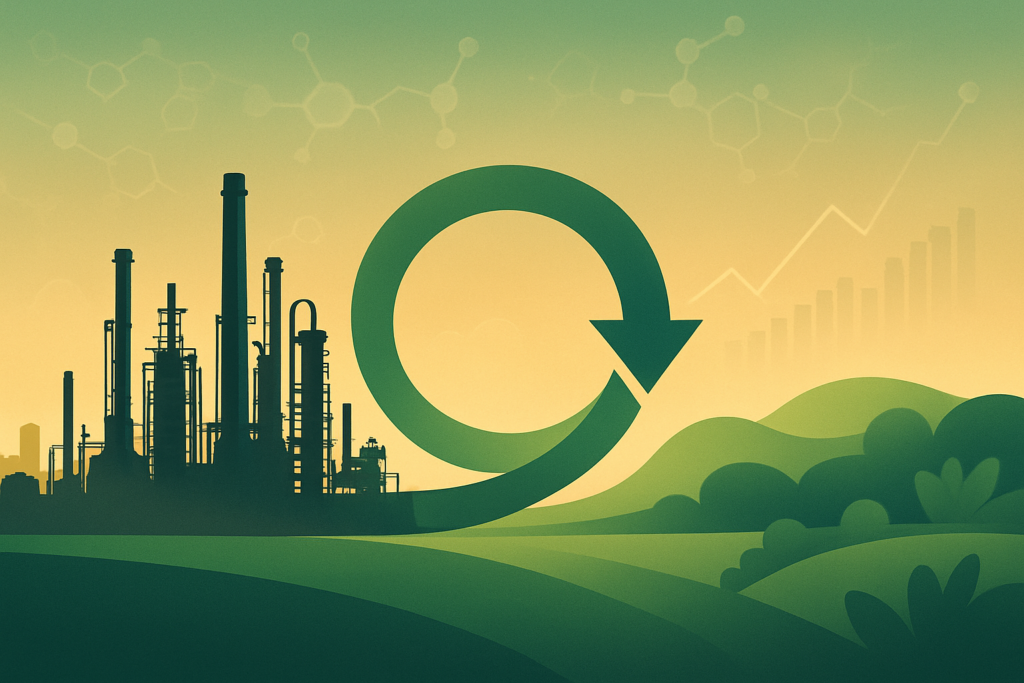
On February 23, 2026, LyondellBasell (NYSE: LYB) stands at a critical crossroads. Once celebrated as a high-yield dividend powerhouse of the petrochemical sector, the company has spent the early months of 2026 aggressively restructuring its identity. Today’s market developments—including a major recalibration of its 2030 sustainability targets and a significant shift in capital allocation—signal a definitive end to the "business as usual" era for the London-incorporated giant. Under the leadership of CEO Peter Vanacker, LyondellBasell is attempting to pivot from a volume-driven plastics manufacturer to a high-margin, circular-economy leader, navigating one of the most challenging global chemical cycles in decades.
Historical Background
The modern LyondellBasell was forged through the 2007 merger of the American company Lyondell Chemical and the European giant Basell Polyolefins. However, the timing of the $12.7 billion deal, heavily financed by debt on the eve of the 2008 financial crisis, forced the company into Chapter 11 bankruptcy in 2009. Emerging in 2010 as a leaner entity, LYB spent the next decade as a cash-flow juggernaut, leveraging low-cost U.S. shale gas to dominate the polyethylene and polypropylene markets. By the early 2020s, however, mounting pressure from plastic waste regulations and a global push for decarbonization necessitated a second major transformation, leading to the 2022 appointment of Peter Vanacker and the launch of the "Value Through Sustainability" strategy.
Business Model
LyondellBasell operates as one of the world's largest plastics, chemicals, and refining companies. Its revenue is derived from three primary segments:
- Olefins and Polyolefins (O&P): The company’s bread and butter, producing ethylene, polyethylene, and polypropylene across the Americas and EAI (Europe, Asia, and International).
- Intermediates and Derivatives (I&D): Manufacturing propylene oxide, oxyfuels, and related products used in everything from insulation to automotive parts.
- Advanced Polymer Solutions (APS): Producing specialized plastic compounds for the aerospace, medical, and electronics sectors.
In 2024, the company officially added Circular and Low-Carbon Solutions (CLCS) as a distinct segment, focusing on its "Circulen" brand of recycled and renewable-based polymers.
Stock Performance Overview
As of February 23, 2026, LYB stock is reacting to a turbulent 12-month period characterized by sector-wide overcapacity. Over the 1-year horizon, the stock has trailed the S&P 500, pressured by weak margins in Europe and China. On a 5-year basis, the stock has provided a moderate total return, though much of that was historically driven by its high dividend yield. Over the 10-year period, LYB has remained a staple for value investors, though it has struggled to break out of its cyclical trading range as the market grapples with the long-term viability of virgin plastics.
Financial Performance
The financial landscape for LYB in early 2026 remains constrained. The company reported a net loss of $738 million for the full year 2025, a result of nearly $1.3 billion in asset write-downs and a 45% compression in industry margins. In a move that shocked income-seeking investors today, February 23, the board announced a "dividend recalibration," cutting the quarterly payout by approximately 50% to $0.69 per share. This move is designed to preserve $800 million in annual cash flow to fund the company's "Cash Improvement Plan," which aims to find $1.3 billion in cumulative savings by the end of 2026.
Leadership and Management
CEO Peter Vanacker has doubled down on his "Value Through Sustainability" mantra, despite the fiscal headwinds. His leadership has been defined by "rationalizing" the portfolio—essentially selling off low-margin assets to fund higher-tech recycling platforms. The management team is currently focused on the "Step Up" program, a cultural and operational shift aimed at increasing agility. While some analysts have criticized the recent dividend cut, the board remains supportive of Vanacker’s view that the company must "innovate or evaporate" in a post-carbon economy.
Products, Services, and Innovations
Innovation at LYB is currently centered on MoReTec, its proprietary catalytic pyrolysis technology. This process breaks down hard-to-recycle plastic waste back into molecular feedstocks with a yield exceeding 80%.
- MoReTec-1: The first commercial-scale plant in Wesseling, Germany, is slated for a mid-2026 startup.
- Circulen Brand: This product family is split into CirculenRecover (mechanical recycling), CirculenRevive (advanced recycling via MoReTec), and CirculenRenew (bio-based feedstocks).
These innovations are designed to command a price premium over virgin plastics, catering to consumer-packaged-goods companies facing strict ESG mandates.
Competitive Landscape
LYB competes in a crowded field of giants, including Dow (NYSE: DOW), BASF (BASFY), and Saudi Basic Industries Corp (SABIC). While Dow remains a leader in North American cost-advantage, and BASF maintains a massive integrated "Verbund" footprint in Europe, LYB’s competitive edge is shifting toward its recycling technology and its strategic retreat from high-cost European assets. However, the company remains vulnerable to the aggressive capacity expansions of state-backed chemical firms in China and the Middle East.
Industry and Market Trends
The global chemical industry in 2026 is grappling with a "double whammy" of overcapacity and decarbonization costs. The supply glut of polyethylene from new plants in Asia has depressed global prices. Simultaneously, the "green premium"—the extra amount customers are willing to pay for recycled plastic—has been slower to materialize than expected. Consequently, many firms, including LYB, are shifting from aggressive growth to "capital discipline," prioritizing balance sheet health over market share.
Risks and Challenges
The most pressing risk for LyondellBasell is the successful commercialization of MoReTec. If the technology fails to scale efficiently at the Wesseling plant in mid-2026, the company’s "Circular" strategy could falter. Furthermore, regulatory risks remain high; if governments fail to mandate recycled content in packaging, the demand for LYB’s premium-priced Circulen products may not meet targets. Lastly, the company’s heavy exposure to the automotive and construction sectors makes it highly sensitive to global interest rate movements and macroeconomic slowdowns.
Opportunities and Catalysts
Several catalysts could drive a re-rating of LYB in late 2026:
- The Houston Hub: The conversion of the former Houston Refinery site into a circularity hub, featuring the proposed MoReTec-2 plant, represents a massive future revenue stream.
- European Divestments: The pending sale of European assets to AEQUITA, expected to close in Q2 2026, will shed roughly $400 million in annual fixed costs.
- Saudi Expansion: The 1.5 million ton cracker in Jubail (a JV with Sipchem) is expected to provide high-margin growth by leveraging low-cost feedstock.
Investor Sentiment and Analyst Coverage
Sentiment is currently "cautious to neutral." Wall Street analysts have largely maintained "Hold" ratings following the dividend cut, waiting for proof that the saved capital will be effectively deployed into the CLCS segment. Institutional investors are closely watching the "recalibrated" 2030 sustainability goals—now targeting 800,000 metric tons of circular polymers per year, down from the original 2 million—to see if this more realistic target improves execution.
Regulatory, Policy, and Geopolitical Factors
Geopolitical tensions continue to impact LYB's global supply chain. The EU Green Deal and the upcoming UN Global Plastic Treaty are the primary regulatory drivers, pushing for higher recycling rates. In the U.S., the company benefits from Inflation Reduction Act (IRA) incentives for low-carbon technologies, which are helping to subsidize the MoReTec-2 development in Texas. However, potential trade tariffs and regional conflicts remain wildcards for energy costs and feedstock prices.
Conclusion
LyondellBasell’s "Recalibration Day" on February 23, 2026, marks a painful but perhaps necessary pivot for the company. By slashing its dividend and lowering its 2030 sustainability targets, management is choosing survival and long-term modernization over short-term investor gratification. For the patient investor, LYB offers a high-stakes play on the future of circular plastics. The coming twelve months—particularly the mid-2026 startup of MoReTec-1—will determine whether LyondellBasell emerges as the green leader of the chemical industry or remains a victim of the sector's volatile cycles.
This content is intended for informational purposes only and is not financial advice.