As the final shopping days of the 2025 holiday season wind down, the American retail landscape is defined by a stark divergence between the "haves" and the "have-nots." Despite a cooling labor market and persistent, though moderating, inflation, total holiday spending is on track to surpass the historic $1 trillion mark for the first time. However, this milestone masks a complex economic reality: consumers are spending more in nominal terms, but they are doing so with surgical precision, favoring deep-discount titans and tech-heavy innovators while abandoning the traditional middle-market retailers.
The 2025 season has been a masterclass in "value-driven resilience." With the unemployment rate ticking up to 4.6% in November and interest rates still hovering in the 3.50%–3.75% range, the American shopper has become increasingly "choiceful." This year’s "Cyber Five"—the period from Thanksgiving to Cyber Monday—saw a record $44.2 billion in online sales, a 7.7% increase over 2024. Yet, much of this growth was captured by a handful of dominant players who successfully leveraged artificial intelligence and aggressive pricing to lure a cautious public.
The 2025 Holiday Timeline: From Tariff Fears to AI Agents
The lead-up to the 2025 holiday season was fraught with logistical and policy uncertainty. Early in the fall, many retailers "pulled forward" inventory to hedge against the threat of new tariffs and the fallout from a 43-day federal government shutdown that briefly paralyzed economic data reporting. By the time Black Friday arrived on November 28, the narrative had shifted from supply chain anxiety to technological disruption.
This year has been dubbed the "First AI Holiday." Generative AI shopping assistants and agentic bots influenced an estimated $9.3 billion in global online sales, with traffic from AI platforms to retail sites surging by over 700% compared to last year. Consumers used these tools to hunt for the absolute lowest prices, a trend that benefited retailers with the most robust digital infrastructure. While physical foot traffic saw a modest 1.17% uptick, the real battle was won on the smartphone, which accounted for 57.5% of Cyber Monday sales.
The Winners: Efficiency, Value, and the "Nintendo Effect"
The clear victors of 2025 are those who positioned themselves at the intersection of extreme value and high-tech convenience. Walmart Inc. (NYSE: WMT) emerged as a primary beneficiary of the "trade-down" effect, capturing significant market share from higher-income households. For the first time, Walmart’s U.S. e-commerce segment reached profitability, driven by a logistical network that delivered nearly half of its Black Friday orders in under three hours.
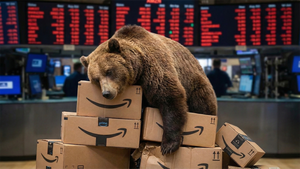
Amazon.com, Inc. (NASDAQ: AMZN) maintained its status as the holiday anchor, with 83% of shoppers making at least one purchase on the platform. Amazon’s heavy investment in regionalized fulfillment and AI-integrated shopping agents allowed it to dominate discretionary categories like electronics. Meanwhile, Best Buy Co., Inc. (NYSE: BBY) defied expectations of a tech slump. The retailer saw a 2.7% jump in comparable sales, fueled by a massive upgrade cycle for AI-powered laptops and the blockbuster launch of the Nintendo Switch 2, which became the season's "must-have" hardware.
In the discount space, The TJX Companies, Inc. (NYSE: TJX)—parent of T.J. Maxx and Marshalls—saw its stock hit record highs. Its "treasure-hunt" model successfully attracted shoppers who wanted brand-name gifts without the department store price tags. Conversely, the once-dominant Chinese platforms PDD Holdings Inc. (NASDAQ: PDD) (Temu) and Shein saw their growth decelerate sharply as the rollback of the de minimis rule and new tariffs forced them to raise prices, sending value-seekers back to domestic discount retailers.
The Losers: The Shrinking Middle and Mall Malaise
While the top end of the market thrived, the "K-shaped" recovery left mid-tier retailers in the cold. Target Corporation (NYSE: TGT) suffered a difficult season, reporting a 3.2% decline in comparable store sales. Analysts suggest Target was caught in a "no-man's land"—losing price-sensitive shoppers to Walmart and convenience-focused shoppers to Amazon. Its stock has plummeted over 30% year-to-date, reflecting investor concerns over its shrinking margins.
Legacy department stores faced an even bleaker reality. Macy’s, Inc. (NYSE: M) and Kohl’s Corporation (NYSE: KSS) continued to struggle with declining foot traffic and a "picky" consumer base. Kohl’s reported a staggering 9.4% drop in net sales, illustrating the continued erosion of the traditional mall-based model. The only bright spots for these legacy players were in the luxury segments, such as Macy’s-owned Bloomingdale’s, which saw 9% growth, further highlighting the divide between affluent consumers and the struggling middle class.
Looking Ahead: The 2026 Pivot
As we look toward 2026, the retail sector faces a transition period. The Federal Reserve’s December 10th meeting signaled a "sunnier" outlook for the coming year, with a GDP growth forecast of 2.3% and a belief that inflation will settle near 2.4%. For retailers, this suggests a potential stabilization of consumer sentiment, though the "Buy Now, Pay Later" (BNPL) boom—which hit a record $1.03 billion on Cyber Monday—indicates that many shoppers are still stretching their budgets to the limit.
The short-term challenge will be managing the "return tsunami" in January, which is expected to be particularly high given the record volume of online sales. Long-term, the industry is bracing for a shift in leadership at the Federal Reserve, as Chair Jerome Powell’s term expires in May 2026. Retailers will need to double down on AI integration and supply chain flexibility to survive a year that promises both fiscal support and continued labor market cooling.
Summary: A Season of Precision
The 2025 holiday season has proven that while the American consumer is still willing to spend, they are no longer willing to spend indiscriminately. The "K-shaped" performance of the retail sector is a clear signal that the middle market is under immense pressure, while those who offer the best "price-to-convenience" ratio are pulling away from the pack.
Investors should keep a close eye on inventory levels and margin health as year-end earnings reports emerge in early 2026. The dominance of Walmart (WMT) and Amazon (AMZN) appears more entrenched than ever, but the surprise resilience of Best Buy (BBY) and TJX Companies (TJX) suggests that specialized value and "newness" in tech remain powerful draws. As we cross the $1 trillion threshold, the story of 2025 is not just how much was spent, but who was left behind in the rush.
This content is intended for informational purposes only and is not financial advice.