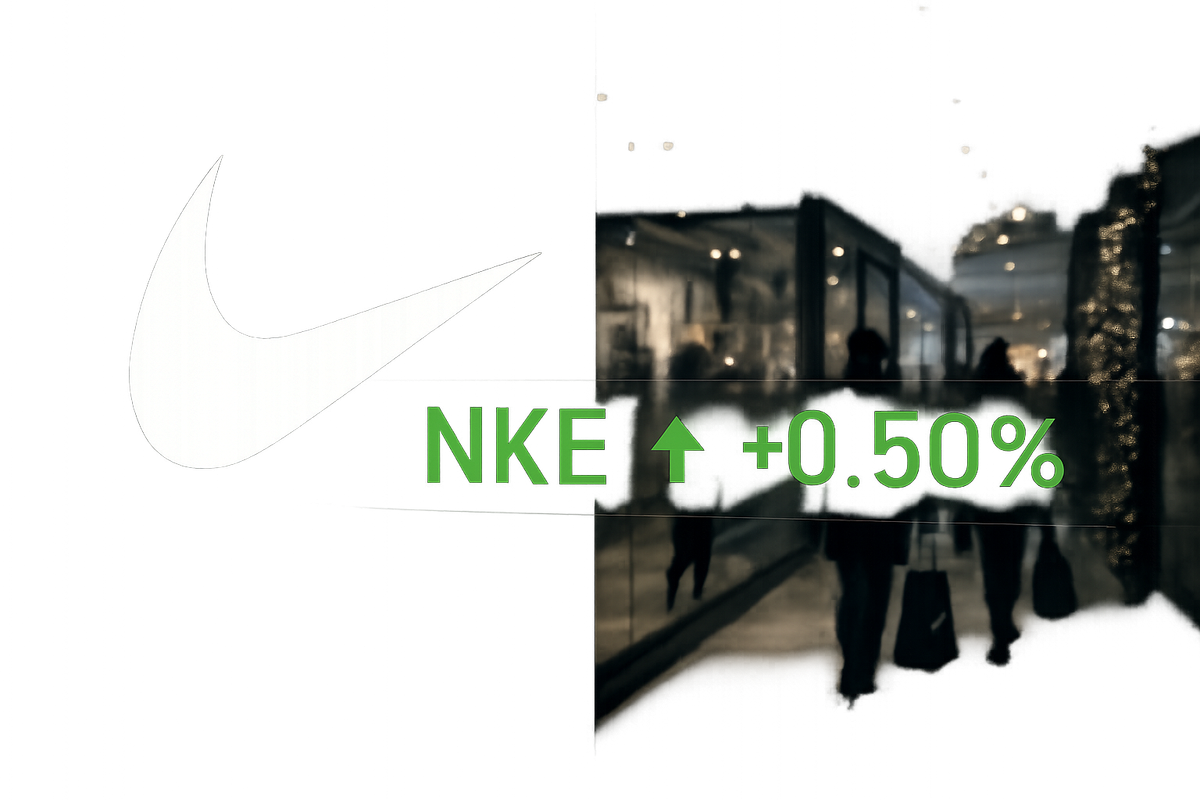
As the 2025 holiday shopping season reaches its post-Christmas crescendo, Nike (NYSE: NKE) finds itself at a critical juncture, serving as both a bellwether for consumer health and a case study in corporate transformation. Following a tumultuous second-quarter earnings report in mid-December that initially sent shares tumbling, the footwear giant has staged a late-December recovery, buoyed by strategic insider buying and a resilient North American consumer base. The company’s performance is currently dictating the pace of the broader retail sector, as investors weigh the success of CEO Elliott Hill’s "Win Now" turnaround strategy against persistent macroeconomic headwinds in international markets.
The immediate implications of Nike's holiday performance are far-reaching. While the company continues to grapple with a protracted slowdown in Greater China and the inflationary pressures of new North American tariffs, its renewed focus on wholesale partnerships is beginning to pay dividends. As shoppers flooded stores for post-holiday returns and gift card redemptions on December 26, 2025, Nike’s ability to reclaim shelf space in traditional retail outlets has positioned it to capture a larger share of the "K-shaped" recovery defining this year’s trillion-dollar holiday season.
The narrative of Nike’s 2025 holiday season was written in two distinct chapters: a mid-month reality check followed by a Christmas Eve surge of confidence. On December 18, 2025, Nike released its fiscal second-quarter 2026 results, reporting revenue of $12.4 billion. While the company beat earnings-per-share estimates—delivering $0.53 against a $0.37 consensus—the victory was hollowed out by a 17% revenue plunge in Greater China and a 300-basis-point contraction in gross margins. The market’s reaction was swift and severe; on December 19, shares plummeted nearly 13% to a multi-year low of approximately $58.00, erasing $10 billion in market value in a single session.
However, the tide turned during the final week of the year. On December 24, a regulatory filing revealed that Apple CEO Tim Cook, who serves as Nike’s Lead Independent Director, purchased 50,000 shares of the company, a $3 million vote of confidence that triggered a "Christmas Eve Rally." This insider activity, coupled with data showing a 9% revenue increase in North America, allowed the stock to reclaim the $60.00 level just as the post-holiday shopping rush began. The timeline reflects a company in the "middle innings" of a massive strategic pivot, moving away from the direct-to-consumer (DTC) obsession of previous years toward a more balanced "Omnichannel Equilibrium."
Key stakeholders, including CEO Elliott Hill, have spent the latter half of 2025 restructuring the organization into sport-specific categories like Running and Basketball to accelerate innovation. This internal reorganization, affecting roughly 8,000 employees, was designed to address criticisms that the brand had become overly reliant on "lifestyle" classics like the Dunk and Air Force 1 at the expense of performance technology. The initial industry reaction to these moves has been one of cautious optimism, with analysts noting that while the "reset year" is proving more difficult than anticipated, the brand's core resonance in its home market remains formidable.
The shifting dynamics of the footwear market have created a clear set of winners and losers. While Nike (NYSE: NKE) remains the undisputed volume leader, its strategic pullback from certain product lines has created a vacuum that "challenger" brands are aggressively filling. On Holding (NYSE: ONON) has been a primary beneficiary, reporting explosive 26% revenue growth and industry-leading gross margins exceeding 60%. Similarly, Deckers Outdoor Corp (NYSE: DECK), the parent company of Hoka and Ugg, has successfully captured the affluent "everyday runner" and healthcare worker demographics, with Hoka sales surging 24% during the 2025 holiday window.
In the wholesale space, the "Nike Reset" is providing a much-needed lifeline to traditional retailers. Foot Locker (NYSE: FL) and Dick’s Sporting Goods (NYSE: DKS) are emerging as winners as Nike repairs fractured relationships and restores inventory levels of high-demand performance gear to their shelves. Conversely, Nike’s own digital division has seen a 14% decline in revenue, signaling that the company’s previous "DTC-first" strategy may have reached its ceiling. Adidas (OTC: ADDYY) also remains a potent threat; under CEO Bjørn Gulden, the German rival has gained market share through its "Terrace" trend, capitalizing on Nike’s transition period to win over fashion-conscious consumers in Europe and North America.
The losers in this current environment are primarily mid-tier brands that lack the "brand heat" of Hoka or the scale of Nike. As consumer spending polarizes, shoppers are either gravitating toward discount giants like Walmart or investing in premium performance-lifestyle brands. Nike’s struggle in China also places it at a disadvantage compared to local Chinese giants like Anta and Li-Ning, which have successfully leveraged nationalistic consumer sentiment and more agile supply chains to dominate the Asian market.
Nike’s current trajectory is emblematic of a broader shift in the retail industry toward "The Great Polarization." The 2025 holiday season is the first to cross the $1 trillion mark in total U.S. sales, yet this growth is largely driven by price increases rather than volume, as companies pass on the costs of new tariffs to consumers. Nike’s move back to wholesale is a tacit admission that the "DTC-only" model, which many pandemic-era analysts predicted would become the industry standard, lacks the reach and physical presence required for global dominance.
Furthermore, the surge in "Buy Now, Pay Later" (BNPL) services, which reached a record $18.2 billion this season, suggests that even as Nike sees a 9% bump in North American revenue, the underlying consumer credit environment is under stress. This event mirrors the historical precedents of the late 2000s, where market leaders had to balance premium brand equity with the reality of a more frugal, debt-conscious consumer. Nike’s decision to intentionally reduce the supply of its "Classics" to make room for new innovations like the Nike Mind series is a classic "scarcity play" intended to protect long-term brand value at the expense of short-term quarterly gains.
From a regulatory standpoint, the $1.5 billion projected annual impact of North American tariffs on Nike’s bottom line is a significant policy implication that other multinational retailers are watching closely. Nike’s response—aggressive cost-cutting and a focus on higher-margin performance products—will likely serve as a blueprint for other public companies navigating an increasingly protectionist global trade environment.
Looking ahead to 2026, Nike faces a period of "strategic patience." In the short term, the company must stabilize its operations in Greater China, where a 17% revenue drop continues to weigh on the consolidated balance sheet. Investors should expect continued volatility as the company works through its inventory of older "lifestyle" models and ramps up production of its new performance-focused lines. The success of the "Win Now" plan will hinge on whether the upcoming spring and summer launches can recapture the imagination of the serious athlete, a demographic Nike ceded to Hoka and On during its recent DTC pivot.
In the long term, Nike’s pivot back to wholesale may require a significant adaptation of its logistics and marketing spend. The company will need to balance supporting its retail partners with maintaining its own digital ecosystem, which remains its most profitable channel on a per-unit basis. Potential scenarios for 2026 include a gradual recovery as China’s economy stabilizes or a more prolonged slump if domestic competitors in Asia continue to outpace Nike’s localized innovation. The 2026 World Cup and other global sporting events will provide a critical platform for Nike to demonstrate whether its "sport-specific" restructuring has actually led to better products.
As the 2025 holiday season draws to a close, the key takeaway for investors is that Nike is a brand in transition, not in decline. The "Christmas Eve Rally" led by Tim Cook’s insider buying suggests that those closest to the company see a floor in the stock price and a clear path to recovery. However, the road back to record highs will be paved with challenges, from navigating geopolitical trade tensions to fending off high-growth challengers like On Holding and Hoka.
Moving forward, the market will be watching for signs of gross margin expansion and a stabilization of sales in the Greater China region. Investors should also keep a close eye on inventory levels at wholesale partners like Foot Locker, as these will serve as a leading indicator of brand demand. While Nike has successfully defended its home turf this holiday season, the coming months will determine if the "Swoosh" can once again outrun the competition on a global stage. For now, the retail leader has moved the market back into a position of cautious hope, proving that even in a "reset year," Nike remains the player to watch.
This content is intended for informational purposes only and is not financial advice.