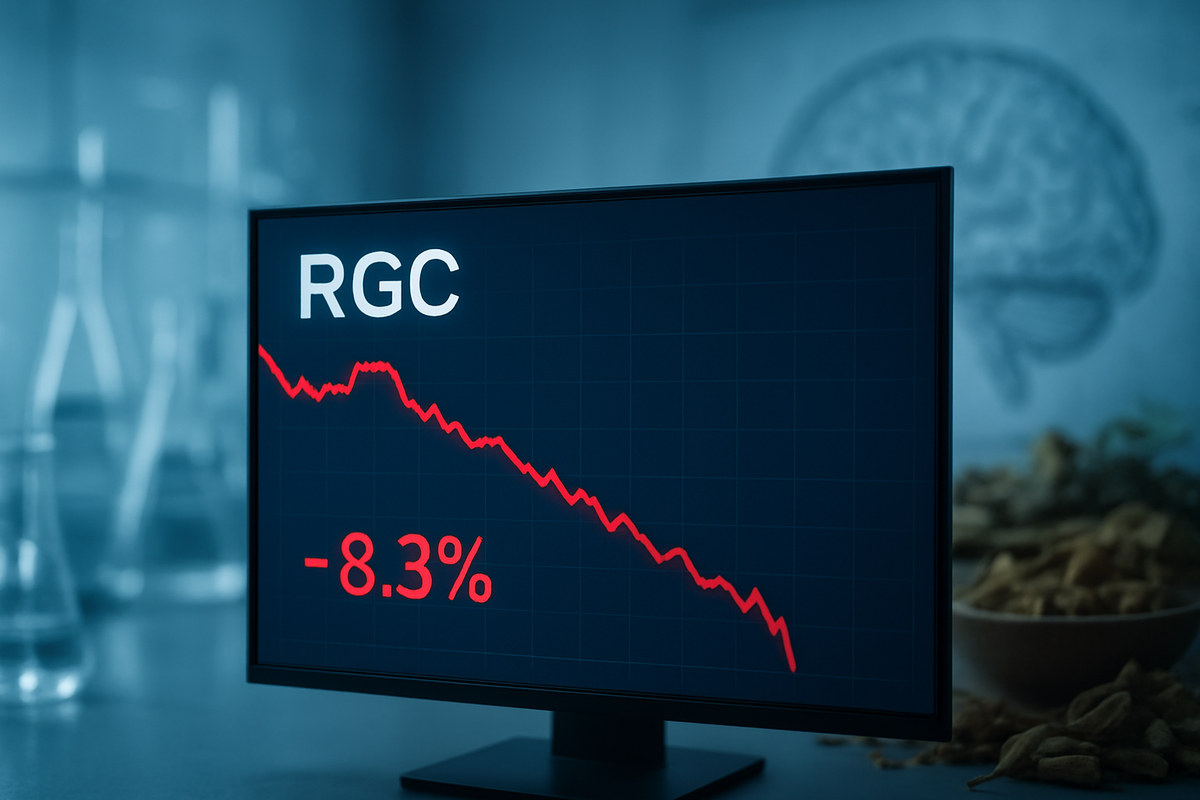
As the final bells rang on the 2025 trading year, investors in Regencell Bioscience (NASDAQ: RGC) were met with a sobering reality check. The Hong Kong-based biotech firm, which has enjoyed a meteoric and often volatile rise over the past twelve months, saw its stock slide 8.3% on December 31, 2025, closing the session at $21.00. This year-end retreat has erased a significant portion of the gains made during a mid-December rally, leaving traders to grapple with a technical landscape that looks increasingly precarious as the market enters 2026.
The immediate implications of this slide are twofold: it marks a definitive break below key psychological support levels and signals a potential shift in sentiment from speculative optimism to cautious "wait-and-see." While Regencell remains a unique player in the neurocognitive space with its focus on Traditional Chinese Medicine (TCM), the lack of revenue and persistent internal control concerns are beginning to weigh more heavily on its valuation than the promise of its clinical pipeline.
A Technical Breakdown and the "Going Concern" Shadow
The descent into the New Year was not an isolated event but rather the culmination of a technical breakdown that began in late December. After reaching a pivot top of $24.84 earlier in the week of Christmas, RGC triggered a "sell signal" on December 23 when it failed to maintain its momentum above the $23.50 resistance level. By the time the final trading day of 2025 arrived, the stock had breached its $22.22 support floor, accelerating the sell-off as automated stop-losses were triggered across retail accounts.
This volatility follows a transformative year for the company, highlighted by a massive 38-for-1 stock split in June 2025, which significantly increased the share count but also heightened the stock's susceptibility to retail-driven swings. Key stakeholders, including founder and CEO Yat-Gai Au, maintain an exceptionally high level of insider ownership—exceeding 96%—which has historically contributed to low float and extreme price sensitivity. However, recent filings have dampened the mood; in its October 2025 20-F report, the company disclosed material weaknesses in its internal controls over financial reporting, a revelation that has made institutional investors hesitant to step in and provide a floor for the falling price.
Winners and Losers in the ADHD Treatment Arena
The primary "winners" in the wake of Regencell’s recent weakness are the established giants of the ADHD and Autism spectrum disorder (ASD) markets. Takeda Pharmaceutical (NYSE: TAK), the manufacturer of the industry-leading stimulant Vyvanse, continues to dominate the space, benefiting from a "flight to quality" as speculative biotech plays like RGC falter. Similarly, Supernus Pharmaceuticals (NASDAQ: SUPN), which markets the non-stimulant treatment Qelbree, stands to gain market share if Regencell’s "natural" TCM alternative faces further regulatory or commercial delays.
On the losing side are the retail investors who chased the 2025 rally, many of whom are now underwater following the 8% year-end slide. Other small-cap biotech firms focusing on Central Nervous System (CNS) disorders, such as Axsome Therapeutics (NASDAQ: AXSM), may also feel the ripple effect of cooling sentiment in the sector. For Regencell, the "loser" tag is temporary but poignant; the company remains in a pre-revenue stage, and its auditors have included a "going concern" explanatory paragraph in recent filings, suggesting that without a successful capital raise or a breakthrough in commercialization, its 2026 operations remain at risk.
TCM vs. Western Medicine: The Broader Market Significance
The struggle of Regencell Bioscience highlights a broader industry trend: the difficult path of integrating Traditional Chinese Medicine into a Western-dominated pharmaceutical landscape. Regencell’s Sik-Kee Au TCM Brain Theory posits that neurocognitive disorders like ADHD and ASD are caused by restricted blood flow to specific brain regions. While their interim trial data showed a 21% to 22% improvement in symptoms—comparable to some non-stimulant Western drugs—the company has yet to secure the "gold standard" FDA approval required to disrupt the US market.
Historically, the market has treated TCM-based companies with skepticism until they can produce large-scale, double-blind clinical results. Regencell’s current predicament mirrors past events in the biotech sector where "story stocks" face a harsh reckoning when clinical timelines stretch and cash reserves dwindle. The wider significance for the market lies in whether 2026 will be the year that "natural" and "non-synthetic" treatments finally gain institutional legitimacy, or if they will remain relegated to niche markets.
The 2026 Outlook: Support Levels and Strategic Pivots
As we look ahead into the first quarter of 2026, traders should keep a close eye on the $19.67 support level. If RGC fails to hold this floor, the next major support doesn't appear until the 200-day moving average at $16.18. Conversely, a rebound would need to clear the $23.48 resistance to regain a bullish posture. The short-term outlook remains "choppy," but the long-term potential hinges on the company’s ability to transition from a clinical-stage entity to a commercial one.
A potential strategic pivot for Regencell in 2026 could involve focusing entirely on the Hong Kong and broader Asian markets for its "standardized TCM" products to generate immediate cash flow. This would alleviate the "going concern" pressure and provide the necessary capital to fund more rigorous US-based trials. Investors should watch for any announcements regarding product registration in Hong Kong or partnerships with regional distributors, as these would serve as the catalysts needed to reverse the current downward trend.
Conclusion: A "Prove-It" Year for Regencell
The 8% slide into the New Year serves as a stark reminder of the risks inherent in high-insider-ownership biotech stocks. While the underlying science of Regencell’s TCM formulae remains a compelling alternative to synthetic stimulants, the market is currently demanding more than just "interim data" and "brain theories." The company must address its internal control weaknesses and provide a clear path to revenue if it hopes to regain its 2025 momentum.
Moving forward, the key takeaways for investors are the importance of technical support levels and the looming necessity of a capital raise. The market will be watching closely for the full data readout of the second efficacy trial and any signs of commercialization in Asia. In the coming months, Regencell Bioscience will either prove itself as a legitimate disruptor in the $25 billion ADHD market or remain a cautionary tale of speculative volatility.
This content is intended for informational purposes only and is not financial advice.