As of January 1, 2026, the global energy landscape is reeling from a New Year’s Day escalation in rhetoric from the Trump administration, which has effectively weaponized federal sanctions to force a resolution to the protracted Ukrainian conflict. Following a New Year’s Eve incident involving alleged drone activity near Moscow—which President Trump dismissed as an “embellished narrative” designed to sabotage peace talks—the White House has signaled a move toward a “bigger stick” policy. This shift has sent shockwaves through energy corridors from Houston to New Delhi, as the administration leverages a “pressure-to-negotiate” strategy that treats Russian sanctions not just as a penalty, but as the ultimate bargaining chip for a new global order.
The immediate implications are stark: global oil prices spiked 4% in early Asian trading today, building on the volatility seen since the U.S. Treasury imposed blocking sanctions on Russian giants Rosneft and Lukoil in late 2025. For investors, the message is clear: the Trump administration is willing to endure short-term market turbulence to achieve its twin goals of a supervised peace in Eastern Europe and total U.S. “energy dominance.” This high-stakes gambit has placed the 20-Point Peace Plan at the center of the geopolitical stage, leaving market participants to weigh the risks of a potential breakthrough against the reality of a fractured global supply chain.
The Path to the "10% Impasse"
The current volatility is the culmination of a turbulent 2025, a year defined by the administration’s aggressive use of transactional diplomacy. The timeline of this crisis began in earnest in July 2025, when the U.S. and the European Union signed a landmark $750 billion Energy Pact. This agreement committed the EU to purchasing $250 billion per year in U.S. liquefied natural gas (LNG), oil, and nuclear fuel through 2028, effectively aiming to permanently excise Russian energy from the European grid. However, when a high-stakes peace summit in Budapest collapsed in October 2025, the Trump administration pivoted from "carrots" to "sticks," blacklisting Russia’s largest oil majors to starve the Kremlin of the hard currency needed to maintain its front lines.
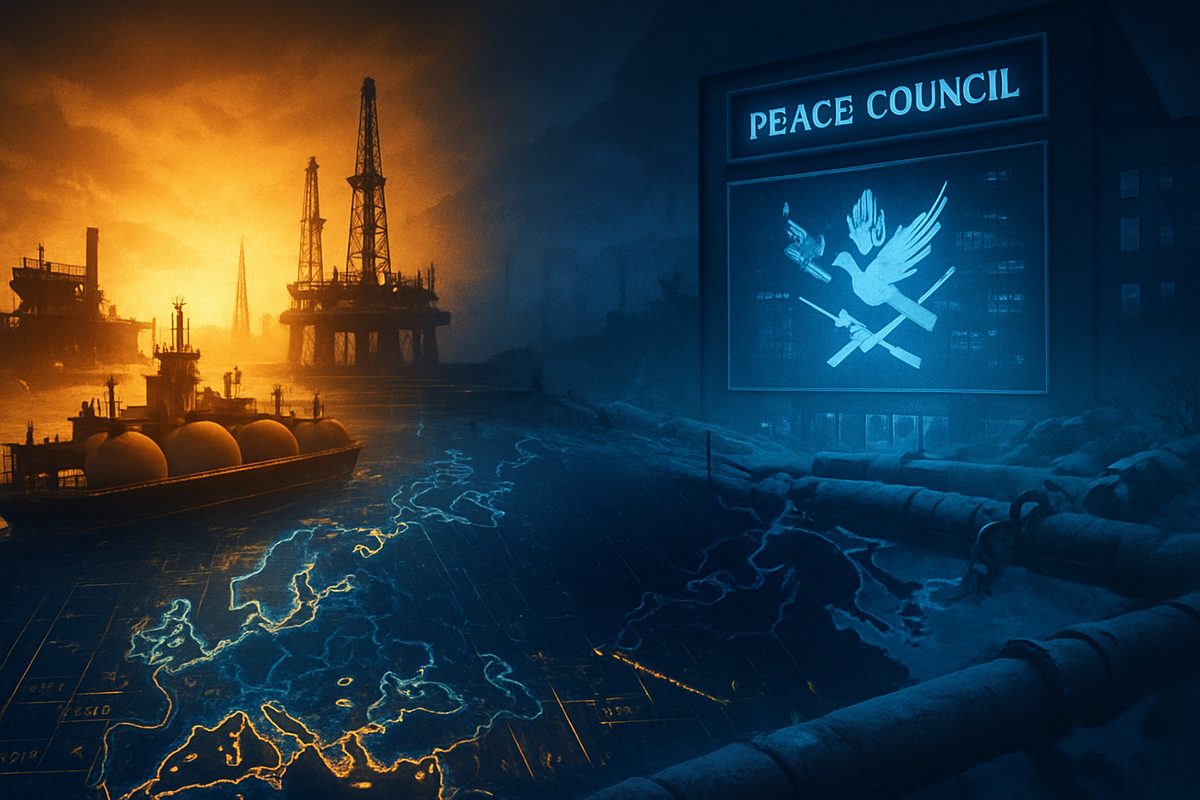
Key players in this drama include the newly formed "Peace Council," a Trump-led monitoring body proposed in December 2025 to oversee a potential ceasefire. While President Volodymyr Zelenskyy and Vladimir Putin have reportedly agreed to "90% of the framework," a significant "10% impasse" remains regarding territorial concessions in the Donbas and the long-term status of Russian assets frozen in Western banks. The New Year’s Day rhetoric suggests that the U.S. is now prepared to tighten the screws even further, threatening secondary sanctions on neutral nations like India and China if they continue to facilitate the "shadow fleet" of Russian tankers.
Corporate Winners and the Erosion of European Autonomy
The primary beneficiaries of this "Energy Dominance" policy are the American energy and defense titans who have been integrated into the administration’s diplomatic framework. Cheniere Energy (NYSE: LNG) has emerged as a cornerstone of the $750 billion EU pact, with its stock rising significantly as it secures long-term offtake contracts that were once the province of Russian pipelines. Similarly, integrated majors like ExxonMobil (NYSE: XOM) and Chevron (NYSE: CVX) are leveraging the deal to expand their European infrastructure, effectively turning the continent into a captive market for U.S. shale.
In the defense sector, the "Peace Council" framework—which includes a $150 billion European commitment to purchase U.S. military hardware—has created a massive backlog for "Big Defense." Lockheed Martin (NYSE: LMT) and RTX Corporation (NYSE: RTX), formerly Raytheon, have seen sustained demand for F-35 fighters and Patriot missile systems, which are now viewed as the essential "security tax" for European nations seeking U.S. protection outside of traditional NATO structures. Boeing (NYSE: BA) has also found a strategic reprieve, as the 2025 trade deal exempted the aerospace sector from broader tariffs, stabilizing its commercial and defense outlook.
Conversely, European energy giants like Shell (NYSE: SHEL) and TotalEnergies (NYSE: TTE) find themselves in a precarious "mixed" position. While they benefit from the general rise in energy prices, they are increasingly marginalized in their home markets by the influx of U.S. exports. This has forced a strategic pivot toward African and Middle Eastern markets to maintain margins. Meanwhile, European defense firms like Rheinmetall (ETR: RHM) have faced volatility as the "Peace Council" rhetoric prioritizes U.S.-made equipment, prompting a wave of defensive mergers among European contractors like Airbus (EPA: AIR) and Leonardo (BIT: LDO) to maintain a semblance of "strategic autonomy."
A New Paradigm for Global Trade and Security
This event marks a definitive shift in how global superpowers utilize economic tools. The Trump administration has moved beyond the "sanctions as punishment" model of the previous decade, instead using them as a dynamic dial to control the pace of diplomatic negotiations. This "Grand Bargain" strategy—offering the lifting of Arctic energy sanctions and a return to the G8 in exchange for territorial concessions—fits into a broader trend of "transactionalism" that prioritizes bilateral trade balances over long-standing multilateral alliances.
The ripple effects are being felt far beyond the Atlantic. The October 2025 sanctions on Rosneft forced Indian refiners to pause deliveries, creating a temporary supply vacuum that U.S. exporters were quick to fill. This has set a historical precedent: for the first time, the U.S. is using sanctions not just to isolate an adversary, but to actively capture that adversary's market share for its own domestic industries. Critics argue this undermines the long-term stability of the U.S. dollar as a neutral reserve currency, but for now, the market is focused on the immediate shift in the flow of global commodities.
The Road Ahead: Scenarios for 2026
In the short term, investors should prepare for continued volatility as the "10% impasse" in peace talks plays out. If the Trump administration successfully forces a signature on the 20-Point Peace Plan by the end of Q1 2026, we could see a "relief rally" in European utilities and a potential cooling of oil prices. However, a failure to break the stalemate could lead to the "nuclear option" of sanctions: a total secondary boycott of any nation purchasing Russian commodities, which would likely send Brent crude toward the $120 mark.
Strategic pivots will be required for companies currently caught in the crossfire. We may see more European firms seeking joint ventures with U.S. counterparts to "Americanize" their supply chains and avoid the brunt of transactional trade policies. The long-term challenge will be the "Arctic Carrot"—the potential opening of Russian Arctic reserves to U.S. technology and investment. If this becomes a reality, it would represent the most significant shift in global energy geography since the discovery of the North Sea reserves.
Investor Takeaways and Market Outlook
The "New Year's Pivot" of 2026 confirms that the intersection of energy policy and national security has never been more entangled. The key takeaway for the market is that the Trump administration views the $750 billion Energy Pact as a non-negotiable floor for U.S.-EU relations, and any deviation from this path by European partners will likely be met with renewed sanctions pressure.
Moving forward, the market will be hyper-focused on three indicators: the specific language of the "Peace Council" enforcement mechanisms, the volume of U.S. LNG exports hitting European terminals, and any signs of a "thaw" in Arctic energy restrictions. For investors, the 2026 landscape favors the "arms and fuel" of the American economy—XOM, LNG, and LMT—while demanding a cautious approach to European industrial and defense stocks that lack a clear U.S. partnership. The coming months will determine if this "Energy Dominance" gamble results in a lasting peace or a permanent fracture in the global economic order.
This content is intended for informational purposes only and is not financial advice.