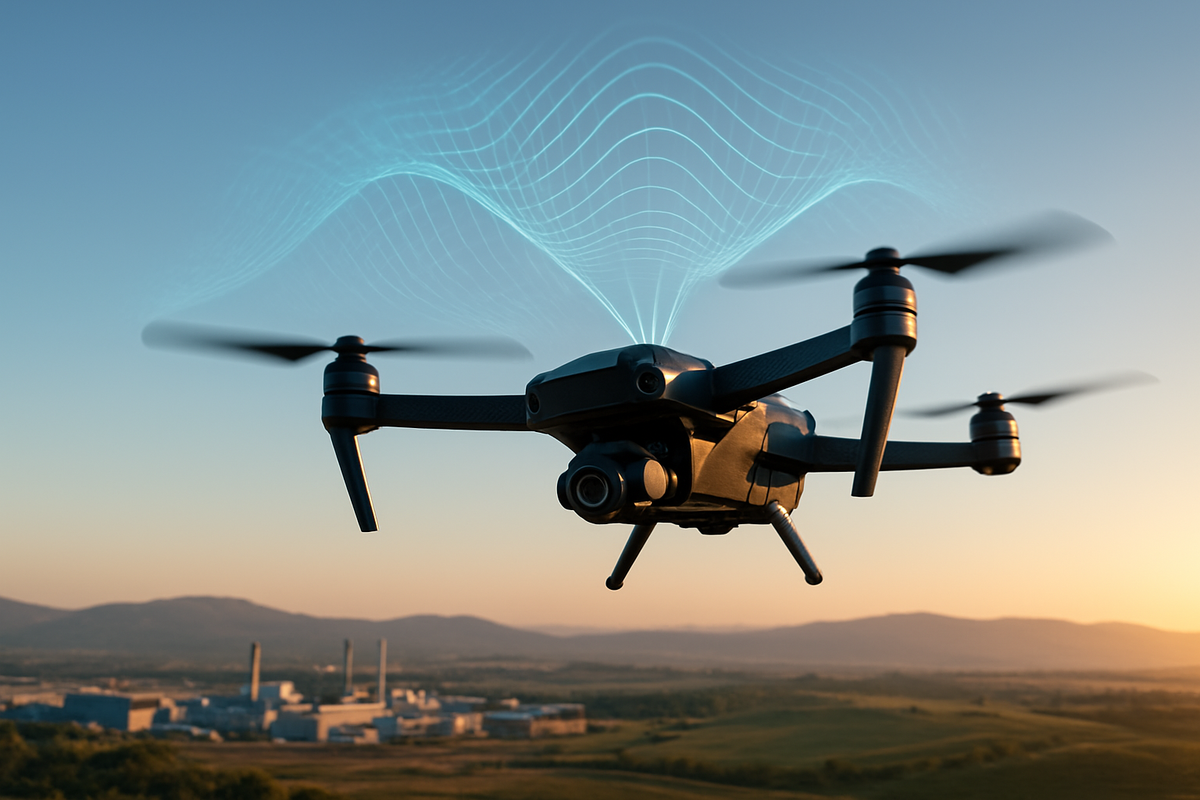
In a landmark series of regulatory shifts culminating in late December 2025, the Federal Communications Commission (FCC) has effectively cleared the flight path for domestic drone manufacturers, sending shares of Red Cat Holdings (Nasdaq: RCAT) into a high-altitude rally. The dual-pronged approach—opening a dedicated 5 GHz spectrum for uncrewed aircraft and implementing a sweeping ban on new equipment authorizations for foreign-made drones—has fundamentally altered the competitive landscape of the multi-billion dollar Unmanned Aircraft Systems (UAS) industry.
As of early January 2026, the market is still digesting the full implications of the FCC’s decision to add major Chinese manufacturers to its "Covered List" under Section 1709 of the FY25 National Defense Authorization Act (NDAA). For Red Cat, the timing could not be more fortuitous. The company’s stock surged more than 25% in the final week of 2025, as investors bet on a "domestic-first" era where U.S. government agencies and commercial enterprises are mandated to pivot away from low-cost foreign hardware toward secure, "Blue UAS" compliant platforms.
The Regulatory One-Two Punch: Spectrum and Security
The current market enthusiasm is the result of a regulatory timeline that began in earnest in August 2024, when the FCC adopted Report and Order FCC-24-91. This order established the first-ever dedicated service rules for the 5030-5091 MHz band, specifically for Control and Non-Payload Communications (CNPC). Historically, drones operated on crowded, unlicensed bands like 2.4 GHz and 5.8 GHz, which are prone to interference from everything from Wi-Fi routers to microwave ovens. By carving out a protected "licensed-by-rule" spectrum, the FCC has elevated drones from the status of consumer toys to regulated aircraft, enabling the safe integration of UAS into the National Airspace System.
The momentum accelerated sharply on December 23, 2025, when the FCC formally implemented Section 1709. This move effectively banned new equipment from entities like DJI and Autel Robotics by denying them the FCC authorizations required to sell or import new models in the United States. This "nuclear option" in trade policy was driven by long-standing national security concerns regarding data privacy and the potential for foreign-made drones to serve as "Trojan horses" for surveillance. The immediate result was a vacuum in the middle-market and enterprise drone sectors, which Red Cat and its peers are now rushing to fill.
Winners and Losers in the Post-DJI Era
The clear victor in this regulatory shakeup is Red Cat Holdings (Nasdaq: RCAT). Its flagship "Black Widow" drone—the successor to the Teal 2—was specifically engineered to be "spectrum-ready" through a partnership with Doodle Labs. By utilizing Helix radios that already support the newly opened 5030-5091 MHz band, Red Cat’s hardware is uniquely positioned as the most compliant option for federal and public safety missions. Other domestic players likely to benefit include AeroVironment (Nasdaq: AVAV), which dominates the tactical loitering munition market, and private firms like Skydio, which has long advocated for these security restrictions.
Conversely, the "losers" are led by DJI, the world’s largest drone maker. While existing DJI drones in the U.S. may continue to fly for a limited time, the inability to launch new products or receive FCC certification for updated components creates a "death by a thousand cuts" scenario for their U.S. operations. Commercial sectors that relied on DJI’s low-cost hardware, such as agriculture and real estate photography, now face a period of forced transition. This shift is expected to increase capital expenditure for these firms in the short term as they replace fleets with more expensive, but secure, American-made alternatives.
A Shift Toward Aircraft Standards and National Security
The FCC’s actions represent a broader industrial trend: the "de-commoditization" of the drone industry. For the past decade, drones were treated as consumer electronics. However, the shift to the 5030-5091 MHz band signals that regulators now view drones as critical infrastructure. This move aligns the U.S. with international aviation standards, potentially opening the door for more complex operations like Beyond Visual Line of Sight (BVLOS) flights and urban air mobility.
Furthermore, the implementation of Section 1709 mirrors the "Rip and Replace" programs previously seen in the telecommunications sector with Huawei and ZTE. By removing foreign hardware from the ecosystem, the U.S. government is effectively subsidizing the growth of a domestic industrial base. This has significant ripple effects on the supply chain; companies providing flight controllers, sensors, and secure data links are seeing a surge in domestic orders. The "Blue UAS" certification, once a niche requirement for Department of Defense (DoD) contracts, is now becoming the de facto standard for the entire U.S. commercial market.
The 2026 Outlook: Production Ramps and AI Integration
Looking ahead, the primary challenge for Red Cat will be scaling production to meet the sudden surge in demand. Following its win in the U.S. Army’s Short Range Reconnaissance (SRR) Program of Record, Red Cat is reportedly ramping up production of the Black Widow from 500 units to over 1,000 units per month in early 2026. The company’s strategic pivot is also increasingly software-focused. A recent partnership with Palantir Technologies (NYSE: PLTR) to integrate Visual Navigation (VNav) software allows Red Cat drones to operate in GPS-denied environments—a critical capability for modern electronic warfare.
In the short term, investors should watch for the rollout of the FCC’s Dynamic Frequency Management System (DFMS), which will automate frequency assignments in the new 5 GHz band. This system will be the "air traffic control" for the drone age. If successful, it could trigger a secondary wave of investment in UAS service providers and software firms that can manage these complex flight environments. Long-term, the focus will shift to NATO and other international allies, who are expected to follow the U.S. lead in banning foreign-made drones, potentially creating a massive export market for Red Cat’s NDAA-compliant systems.
Conclusion: A New Frontier for Domestic UAS
The FCC’s recent decisions have created a "moat" around the domestic drone industry that few could have predicted two years ago. By combining the technical necessity of dedicated spectrum with the geopolitical necessity of secure hardware, regulators have handed Red Cat Holdings and its domestic peers a generational opportunity. The rally in RCAT stock is not merely a speculative jump but a reflection of a fundamental shift in the total addressable market for American-made drones.
Moving forward, the market will transition from a phase of regulatory excitement to one of operational execution. Investors should keep a close eye on Red Cat’s quarterly production numbers and its ability to maintain margins as it scales. While the "foreign threat" has been legally sidelined, the pressure is now on domestic manufacturers to prove they can deliver the same level of innovation and reliability that the market has come to expect. For now, the wind is firmly at Red Cat’s back, and the skies over the U.S. are looking increasingly red, white, and blue.
This content is intended for informational purposes only and is not financial advice.