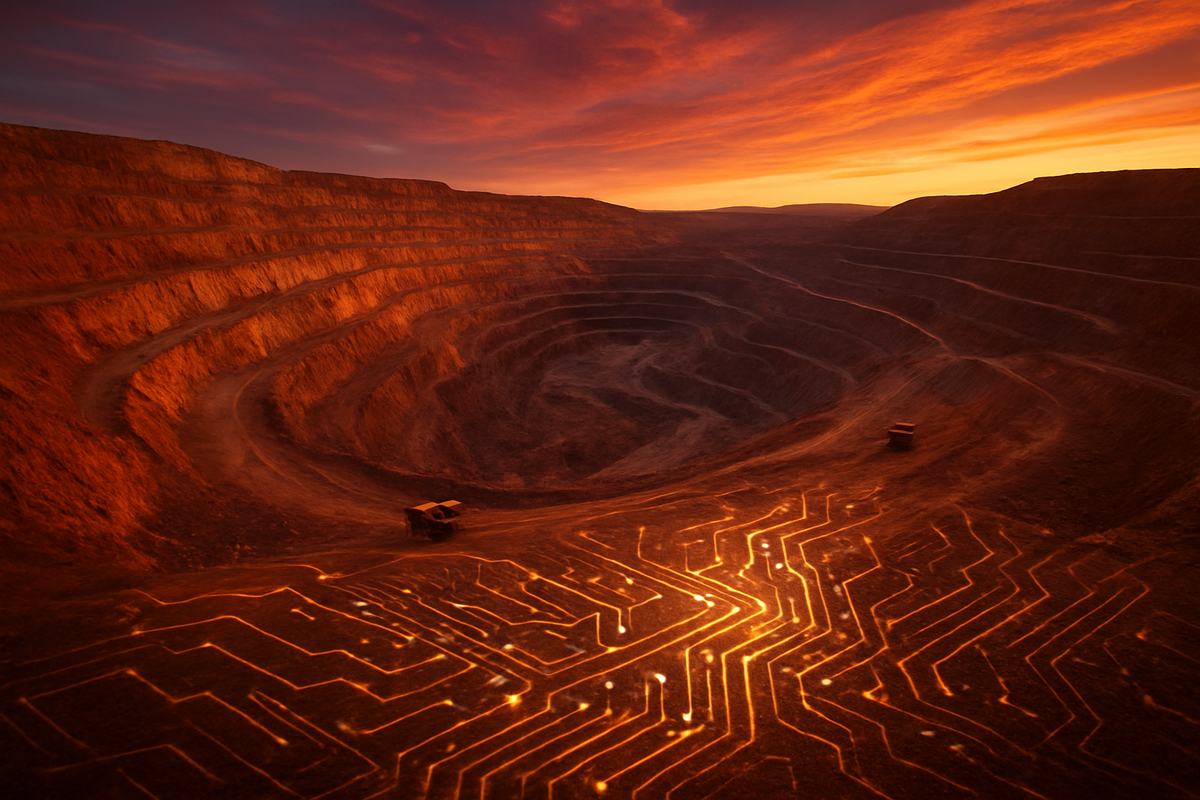
As of January 9, 2026, the global financial markets are witnessing an unprecedented surge in the price of "red gold"—copper. Prices on the London Metal Exchange (LME) have shattered previous records, frequently trading above $13,000 per metric ton this month. This rally is driven by a "perfect storm" of structural supply deficits and an insatiable demand from the artificial intelligence (AI) sector, which has joined the global energy transition as a primary consumer of the industrial metal.
The immediate implications are profound: a widening "copper gap" is forcing industrial giants to reconsider their supply chains while investors flock to major miners. With a projected global deficit of up to 330,000 tons for 2026, the metal has transitioned from a cyclical industrial commodity to a strategic national asset, essential for both the digital revolution and the decarbonization of the global economy.
The 2026 Outlook: A Market in Structural Deficit
The current market state is the culmination of years of underinvestment in new mining projects and a sudden, exponential increase in demand. A landmark report released by S&P Global on January 8, 2026, titled "Copper in the Age of AI," warned that the world is entering a period of chronic scarcity. According to the report, the "copper gap"—the difference between projected demand and available supply—could reach 10 million metric tons by 2040 if current trends continue. In the short term, the 2026 outlook remains incredibly tight, with J.P. Morgan and Citigroup raising their price targets as inventories in non-U.S. warehouses hit critical lows.
The timeline leading to this moment was marked by a series of supply-side shocks in late 2025, including a significant mudslide at the Grasberg mine in Indonesia and ongoing regulatory hurdles for new projects in Chile and Peru. Simultaneously, the rapid build-out of AI data centers has added a massive new layer of demand that few analysts predicted five years ago. These facilities require 4 to 6 tons of copper per megawatt for high-capacity power lines and cooling systems, creating a "scarcity premium" that is currently driving the market.
Initial industry reactions have been a mix of urgency and strategic maneuvering. Major economies are increasingly viewing copper through the lens of national security, leading to aggressive stockpiling. In the United States, COMEX inventories quintupled over the course of 2025 as companies sought to hedge against potential trade distortions and tariffs, further tightening the global spot market.
The Titans of the Transition: Winners and Losers
In this high-price environment, a handful of major mining companies are positioned to reap historic profits. Freeport-McMoRan (NYSE: FCX) remains a top pick for analysts despite operational setbacks at its Grasberg facility in late 2025. The company is currently navigating a phased recovery, with a 2026 consolidated production target of 4.3 billion pounds. Investors are particularly bullish on FCX due to its large domestic U.S. footprint, which shields it from many of the geopolitical and tariff-related risks affecting its peers.
Rio Tinto (NYSE: RIO) is another primary winner, having successfully pivoted its portfolio away from a heavy reliance on iron ore. The company’s Oyu Tolgoi underground mine in Mongolia is ramping up significantly, with 2026 copper guidance set between 800,000 and 870,000 tonnes. Meanwhile, Teck Resources (NYSE: TECK)—which recently completed a transformative merger with Anglo American in late 2025 to form a copper powerhouse—is now a "pure-play" favorite. Despite minor development delays at its Quebrada Blanca (QB2) project in Chile, the company is expected to see earnings growth of nearly 19% in 2026. Other winners include BHP Group (NYSE: BHP), which is benefiting from record throughput at its Escondida mine, and Southern Copper (NYSE: SCCO), which holds the industry’s largest reserves.
Conversely, the "Red Gold" rally is creating significant headwinds for high-intensity manufacturers. Tesla (NASDAQ: TSLA) and other electric vehicle (EV) makers are facing margin compression as the cost of wiring harnesses and motors—which use roughly 83kg of copper per vehicle—skyrockets. Similarly, HVAC and electrical equipment giants like Trane Technologies (NYSE: TT) and Carrier Global (NYSE: CARR) have seen their stocks pressured as high material costs hit the production of cooling systems and heat exchangers.
AI and the "Copper Cliff": A Paradigm Shift
The wider significance of the 2026 copper outlook lies in how it intersects with the most dominant trend of the decade: Artificial Intelligence. While the energy transition (EVs, wind, and solar) was long expected to drive copper demand, the AI data center boom has accelerated the timeline. Data center installations in 2026 alone are expected to consume roughly 475,000 tons of copper, a 30% increase year-over-year. This has forced a realization that the digital and green economies are competing for the same limited resource.
This event fits into a broader industry trend known as the "Copper Cliff"—the point where declining ore grades at the world's largest mines make it impossible to keep up with demand. In Chile, the world's top producer, ore grades have fallen by approximately 40% since 1991. The historical precedent for this level of market tightness is rare; one would have to look back to the post-WWII reconstruction or the rapid industrialization of China in the early 2000s to find a similar surge in fundamental demand.
Furthermore, regulatory and policy implications are mounting. Governments in the EU and North America are fast-tracking mining permits under "Critical Minerals" acts, but the lag time for new production remains a hurdle. Wood Mackenzie estimates that $210 billion in new investment is required over the next decade to close the gap, yet the time to bring a new mine from discovery to production has stretched to an average of 17 years.
Strategic Pivots and the Path to 2027
Looking ahead, the market is bracing for a period of intense volatility and strategic adaptation. In the short term, the high copper-to-aluminum price ratio (now exceeding 3.7:1) is expected to trigger a wave of substitution. Manufacturers are already exploring the use of aluminum for certain wiring and HVAC applications, which could eventually act as a ceiling on copper prices. However, for high-performance AI chips and high-voltage grid infrastructure, copper remains largely irreplaceable.
We are also likely to see an acceleration in M&A activity as mid-tier miners become targets for giants looking to bolster their reserves. The "Anglo Teck" merger of 2025 is seen as the first of many such consolidations. Additionally, recycling initiatives are expected to take center stage. With refined production struggling to keep pace, the "secondary" market—copper recovered from old electronics and demolished infrastructure—will become a vital component of the global supply chain.
Potential scenarios for the remainder of 2026 range from a continued rally toward $15,000/mt if data center demand exceeds expectations, to a moderate correction if high prices successfully stimulate a massive increase in scrap recycling. Regardless of the short-term fluctuations, the underlying narrative remains one of scarcity.
Conclusion: Navigating the Red Gold Era
The 2026 copper outlook confirms that the metal has reached a new status as the "indispensable element" of the modern age. The key takeaways for the market are clear: the era of cheap, abundant copper is over. The structural deficit is no longer a future projection but a current reality, driven by the dual engines of decarbonization and the AI revolution.
Moving forward, the market will be defined by a race for supply. Investors should keep a close watch on the operational updates from leaders like Freeport-McMoRan (NYSE: FCX) and Rio Tinto (NYSE: RIO), as any further production disruptions could send prices into a vertical climb. Simultaneously, the ability of manufacturers to pass on costs or pivot to substitutes like aluminum will determine the winners and losers in the industrial sector.
In the coming months, the focus will shift to the "Copper Cliff" and whether the industry can unlock the $210 billion in investment needed to prevent a decade-long shortage. For now, copper remains the primary barometer for the health and direction of the global economy—a "red gold" standard for the 21st century.
This content is intended for informational purposes only and is not financial advice.