NEW YORK — The U.S. stock market staged a tentative recovery on Tuesday, February 24, 2026, as investors scrambled to digest the implications of a sudden pivot in global trade policy. Following a brutal "Monday Disaster" that saw the Dow Jones Industrial Average plunge over 820 points, the S&P 500 (NYSEARCA: SPY) managed a marginal gain of 0.11%, closing at approximately 6,844 points. The stabilization comes as a relief to a market rattled by a 15% uniform global tariff announcement, though the atmosphere on Wall Street remains thick with uncertainty ahead of tonight’s State of the Union address.
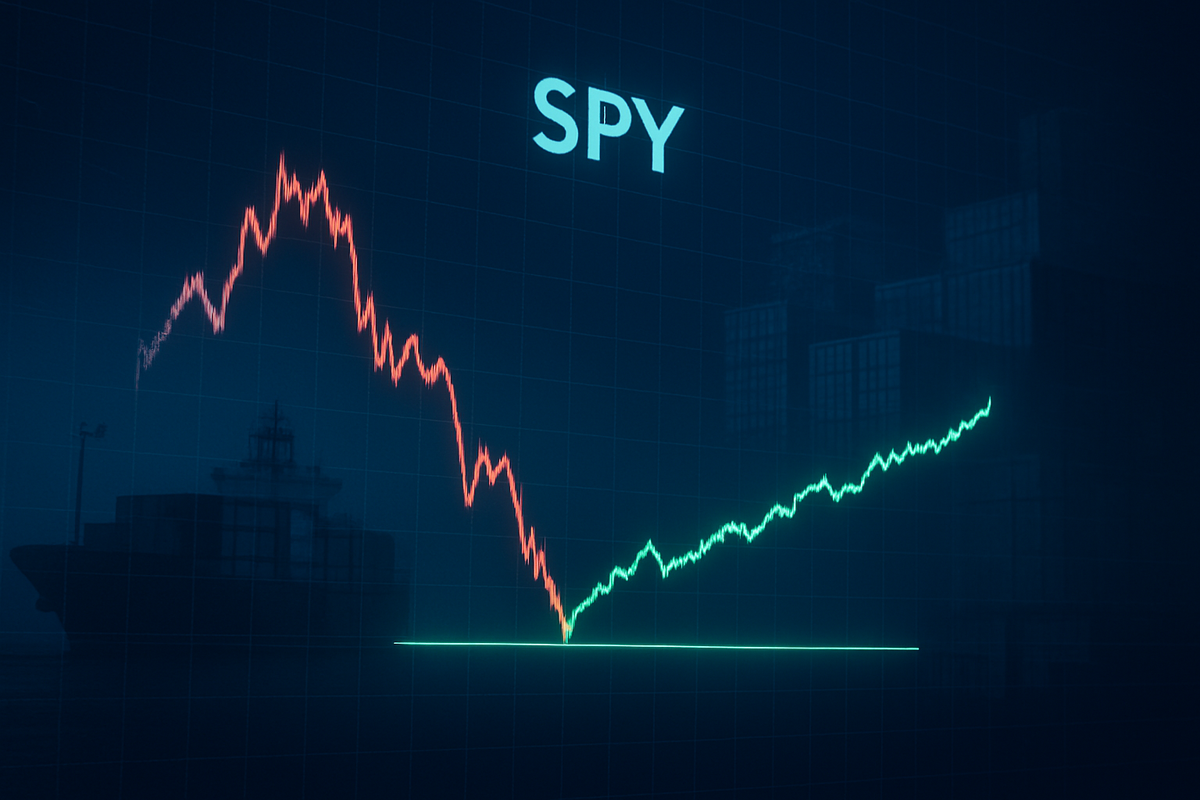
The day’s price action was a tug-of-war between "dip-buyers" seeking value in oversold technology names and institutional sellers concerned about the long-term inflationary impact of the new trade regime. While the early session saw the S&P 500 dip to a precarious low of 6,803—testing a critical psychological "line in the sand"—a late-day bid in mega-cap tech helped the indices finish in the green. The resilience of the 6,800 support level suggests that, for now, the bull market's structural integrity remains intact, even as the "Gamma Wall" at 7,000 continues to act as a formidable ceiling.
Anatomy of a Stabilization: From IEEPA to Section 122
The volatility began in earnest on Monday, February 23, triggered by a 6-3 U.S. Supreme Court ruling that invalidated the administration's previous "reciprocal tariffs" enacted under the International Emergency Economic Powers Act (IEEPA). The legal defeat was met with an immediate and aggressive counter-move: President Trump invoked Section 122 of the Trade Act of 1974, imposing a 15% uniform global tariff on all imports for a temporary 150-day window. This policy pivot effectively erased the S&P 500’s year-to-date gains in a single session, as traders feared a resurgence of inflation and a potential $175 billion refund liability for past duties collected under the now-illegal orders.
Tuesday’s session was defined by a shift from panic to calculation. Treasury Secretary Scott Bessent spent the day on a media circuit, attempting to soothe the bond and equity markets. Bessent characterized the $175 billion refund estimate as "bad framing," asserting that the administration would fight refund claims in court and that the Treasury's $900 billion cash reserve was more than sufficient to handle any eventualities. This messaging, combined with the 150-day "predictability window" provided by Section 122, allowed the market to catch its breath. By mid-afternoon, the initial shock had transitioned into a "wait-and-see" approach, with eyes fixed on the potential for legislative or executive refinements to the trade policy.
Winners, Losers, and the 'Meta-AMD' Catalyst
While the broader market struggled for direction, specific pockets of the tech sector provided much-needed leadership. Advanced Micro Devices (NASDAQ: AMD) was the undisputed star of the session, surging more than 10% after announcing an expanded partnership with Meta Platforms (NASDAQ: META) to accelerate the deployment of next-generation AI infrastructure. This partnership served as a powerful reminder that corporate spending on artificial intelligence remains a dominant secular tailwind, largely independent of trade disputes. Nvidia (NASDAQ: NVDA) also saw a 1.4% bounce, acting as the primary vehicle for "liquidity hunters" ahead of its highly anticipated earnings report scheduled for Wednesday.
However, the recovery was not uniform. IBM (NYSE: IBM) continued to face pressure, still reeling from a 13% drop on Monday after Anthropic’s "Claude Code" release raised existential questions about legacy systems modernization. In the consumer space, Home Depot (NYSE: HD) provided a rare bright spot, gaining 2.8% on the back of a Q4 earnings beat ($2.72 per share vs. $2.52 expected). Conversely, companies with deep reliance on global supply chains, such as Apple (NASDAQ: AAPL) and Microsoft (NASDAQ: MSFT), saw more muted gains of 0.4% and 0.2%, respectively, as analysts at firms like Evercore ISI emphasized their "durable free cash flow" as a defensive moat against tariff-induced margin compression.
Analyzing the Significance: A New Era of 'Stagflationary' Volatility?
The events of this week mark a significant shift in the market's relationship with trade policy. Analysts from Goldman Sachs and the Yale Budget Lab suggest that the 15% tariff regime could drag 2026 GDP down by as much as 0.5 percentage points while potentially adding 1% to Core PCE inflation by early 2027. This has created a "stagflation challenge" that the Federal Reserve must now navigate. Despite these headwinds, Fed funds futures are still pricing in two 25-basis-point rate cuts for the remainder of 2026, a "dovish floor" that likely prevented a deeper selloff on Tuesday.
This week’s volatility also echoes historical precedents, such as the trade-war jitters of 2018-2019, but with the added complexity of a much higher valuation starting point. With the S&P 500 trading at multiples near historic highs, any disruption to the global "just-in-time" supply chain is magnified. The immediate ripple effects are already being seen in the bond market, where yields on the 10-year Treasury note fluctuated wildly as investors weighed the twin threats of increased government borrowing for potential refunds and the inflationary pressure of higher import costs.
Looking Ahead: The State of the Union and NVDA Earnings
The short-term trajectory of the market now hinges on two critical events in the next 24 hours. First is the State of the Union address on the night of February 24, where President Trump is expected to lay out a "muscular" trade agenda. Markets are looking for clarity on whether the 15% tariffs are a permanent negotiating tactic or a temporary bridge to a more granular trade agreement. A pivot toward a "reciprocal" rather than "universal" approach could trigger a relief rally, while a double-down on protectionist rhetoric may force a re-test of the 6,800 support level.
Secondly, the "Nvidia Earnings Test" on Wednesday, February 25, will determine if the AI trade still has the momentum to carry the broader indices through this period of geopolitical friction. If the semiconductor giant provides a bullish outlook that offsets tariff concerns, the S&P 500 could make another run at the 7,000 "Gamma Wall." Conversely, a lackluster guide would leave the market vulnerable to a 5-10% correction, as technical indicators suggest a "topping process" may be underway.
Market Wrap-Up and Investor Outlook
The "Tuesday Rebound" of February 24, 2026, will likely be remembered as a moment of critical resilience for the bull market. By holding the 6,800 level in the face of a historic trade policy shift, the S&P 500 demonstrated that the underlying demand for high-quality earnings remains robust. However, the modest 0.11% gain is a far cry from a full recovery, and the "Monday Disaster" serves as a stark reminder that political and legal risks can disrupt the market's momentum with little warning.
Moving forward, investors should keep a close watch on the "inflation-protection" trade, as the 15% tariff environment may favor companies with high domestic production or significant pricing power. The 6,730 level—the February low—now stands as the ultimate "line in the sand"; a break below that mark would signal a shift from a "buy the dip" environment to a defensive posture. For the time being, the market remains in a state of watchful stabilization, awaiting the next major catalyst from Washington or the tech titans of Silicon Valley.
This content is intended for informational purposes only and is not financial advice.