MENLO PARK, CA — In a move that has sent shockwaves through Silicon Valley and Wall Street alike, Meta Platforms (NASDAQ: META) has unveiled a staggering $135 billion capital expenditure plan for 2026, aimed at cementing its dominance in the global artificial intelligence race. Following a blockbuster Q4 2025 earnings report on January 28, which saw the social media giant crush analyst expectations across the board, CEO Mark Zuckerberg signaled that the company is pivoting from a "Year of Efficiency" to an era of unprecedented infrastructure expansion.
The immediate implications of this record-breaking investment are profound. Meta is no longer just a social media company; it is transforming into a vertically integrated AI utility. By committing upwards of $135 billion—a figure that nearly doubles its 2025 spending—Meta is placing a massive bet that the future of the internet lies in what Zuckerberg calls "Personal Superintelligence." While the market initially cheered the Q4 beat with a 10% share price surge, the sheer scale of the 2026 guidance has sparked a heated debate among investors regarding the long-term return on investment (ROI) and the sustainability of such gargantuan spending.
A Blockbuster Quarter and a "Gigawatt-Scale" Vision
Meta's Q4 2025 financial results provided the necessary cushion for its ambitious future plans. The company reported revenue of $59.9 billion, a 24% year-over-year increase, comfortably beating the consensus estimate of $58.4 billion. Earnings per share (EPS) came in at $8.88, far outstripping the $8.19 predicted by analysts. This financial firepower is driven by a resurgent advertising business, where AI-powered models like Lattice and GEM have significantly boosted ad targeting efficiency, leading to an 18% climb in ad impressions and a 6% increase in the average price per ad.
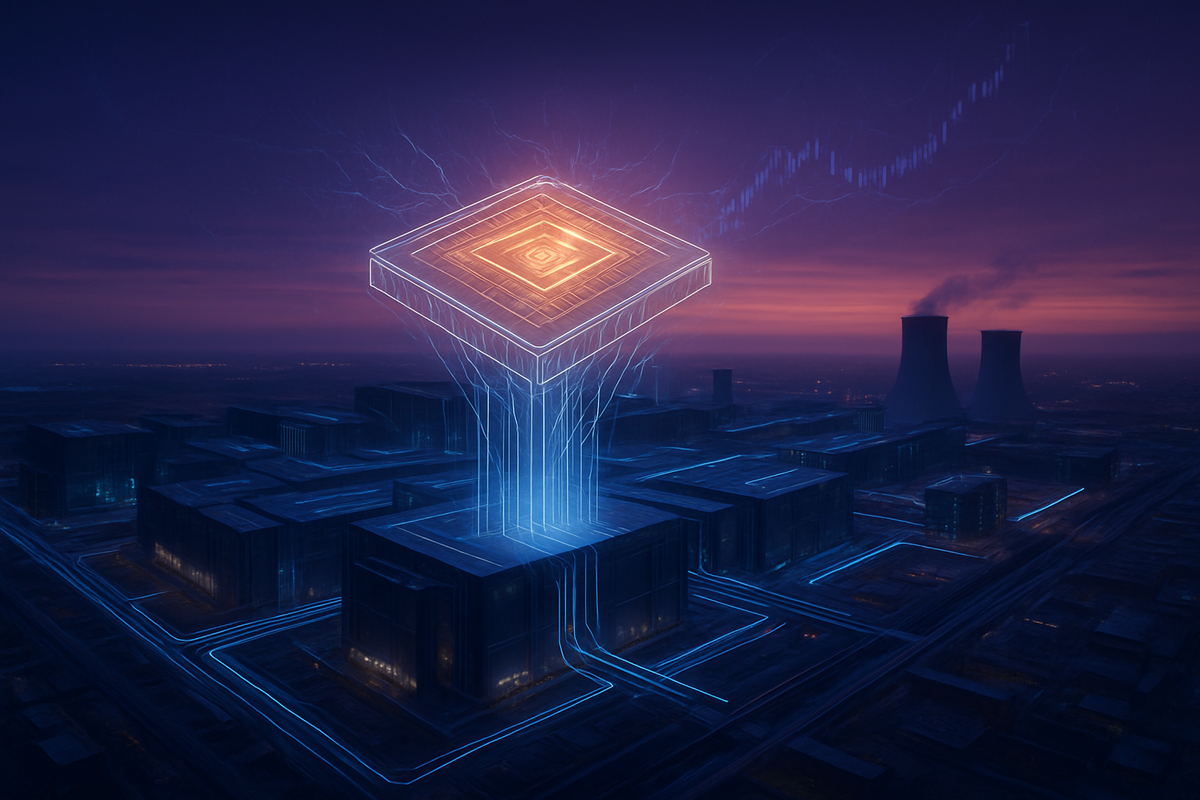
The centerpiece of the announcement, however, was the 2026 capital expenditure guidance of $115 billion to $135 billion. This capital is earmarked for two "Titan-class" infrastructure projects: the "Hyperion" project in Louisiana and the "Prometheus" cluster in Ohio. Hyperion is envisioned as a $50 billion facility in Richland Parish, designed for 5 gigawatts of capacity—a physical and digital footprint roughly the size of Manhattan. Prometheus, a 1-gigawatt training cluster in New Albany, Ohio, is expected to come online in late 2026 to power the company's next generation of Large Language Models (LLMs).
To fund this "gigawatt-scale" transition, Meta has moved beyond traditional cash reserves. In late 2024, the company issued $30 billion in bonds and secured a $29 billion infrastructure financing deal with a consortium including PIMCO and Blue Owl Capital (NYSE: OWL). This sophisticated financial engineering underscores the urgency Zuckerberg feels in securing the hardware and energy required to lead the AI frontier before competitors can close the gap.
The Silicon Kings and the Power Players: Winners and Losers
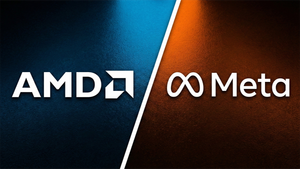
Meta's spending spree has created a clear set of winners in the hardware and energy sectors. Advanced Micro Devices (NASDAQ: AMD) emerged as a primary beneficiary following a historic multi-year deal announced in February 2026. Meta will reportedly purchase up to 6 gigawatts of AI chips, including custom MI450-based GPUs and Zen6 EPYC Venice CPUs. The deal even includes an equity warrant that could allow Meta to eventually own 10% of AMD, effectively making the chipmaker a semi-captive design partner.
NVIDIA (NASDAQ: NVDA) also remains a critical pillar of Meta’s strategy, with an estimated $50 billion commitment for the Grace/Vera CPU and Blackwell GPU architectures. Meanwhile, Broadcom (NASDAQ: AVGO) is seeing its custom ASIC business soar as it collaborates with Meta to reduce the company's long-term reliance on off-the-shelf components. The ripple effects extend to physical infrastructure as well; Corning (NYSE: GLW) secured a $6 billion fiber-optic deal to link Meta’s sprawling data center campuses, while energy providers like Vistra (NYSE: VST) and Oklo (NYSE: OKLO) have signed massive agreements to provide the nuclear power necessary to keep the lights on in these "AI cities."
Conversely, traditional data center Real Estate Investment Trusts (REITs) like Equinix (NASDAQ: EQIX) and Digital Realty (NYSE: DLR) may face headwinds. As Meta shifts its "frontier" workloads—the most advanced AI training and inference—into its own proprietary, utility-scale campuses, these third-party providers are being relegated to "burst" capacity roles. While they still provide essential services, the loss of Meta’s core infrastructure business to self-build projects represents a significant shift in the data center power dynamic.
Vertical Integration and the New AI Arms Race
This $135 billion plan fits into a broader industry trend of hyper-verticalization. Just as Amazon (NASDAQ: AMZN) built its own logistics network to decouple from FedEx and UPS, Meta is building its own silicon and energy supply chains to decouple from the whims of the merchant semiconductor market. This move is a direct response to the "compute crunch" of 2023-2024, ensuring that Meta never again finds itself waiting in line for the hardware it needs to innovate.
The regulatory implications are also beginning to surface. As Meta signs multi-gigawatt power deals and builds Manhattan-sized data centers, it is increasingly being viewed through the lens of a public utility. Policymakers in Washington and Brussels are already questioning the environmental impact of such energy-intensive operations. However, by partnering with nuclear startups like TerraPower and Oklo, Meta is positioning itself as a leader in "green AI," potentially mitigating some regulatory blowback by funding the next generation of carbon-free energy infrastructure.
Historically, this level of capital intensity is only seen during major industrial shifts, such as the building of the transcontinental railroads or the early days of the telecommunications boom. Compared to the $28 billion Meta spent in 2023, the $135 billion figure represents a four-fold increase in just three years—a rate of acceleration that is virtually unprecedented in corporate history.
What Lies Ahead: The ROI Clock is Ticking
In the short term, Meta must prove to Wall Street that this infrastructure can be monetized quickly. The company has already pointed to a $10 billion annual run rate for its AI video generation tools and a 30% increase in Reels watch time as early proof of concept. However, as the 2026 spending begins in earnest, the pressure will be on to deliver more than just incremental improvements to the ad business. Investors will be looking for entirely new revenue streams, possibly in the form of AI-powered consumer devices or "Personal Superintelligence" subscriptions.
The primary risk is "infrastructure exhaustion." If the expected breakthroughs in AI utility do not materialize by 2027, Meta could find itself with billions of dollars in specialized hardware that depreciates rapidly. Strategically, the company may need to pivot its Meta AI assistant from a free tool into a high-margin enterprise service to offset the massive depreciation costs that will inevitably hit the balance sheet once the Hyperion and Prometheus projects are fully operational.
Closing Thoughts for the Modern Investor
Meta’s $135 billion investment is a defining moment for the 2020s. It represents a total commitment to an AI-first future, funded by the most profitable advertising engine the world has ever seen. The key takeaway for investors is that Meta is no longer playing the same game as other social media platforms; it is competing on the scale of nation-states, building the physical and digital foundations for the next century of computing.
Moving forward, the market will be hyper-focused on Meta’s quarterly Capex execution and its ability to secure reliable energy. Any delays in the "Hyperion" project or hiccups in the AMD partnership could lead to significant volatility. For now, Meta has the momentum, the cash, and the vision to lead the charge, but in a race where the entry fee is $135 billion, there is very little room for error.
This content is intended for informational purposes only and is not financial advice.