As of February 27, 2026, the landscape of the digital infrastructure sector has undergone a seismic shift, led by the aggressive transformation of one of the world’s largest Bitcoin miners. Marathon Digital Holdings (NASDAQ: MARA), which officially rebranded to MARA Holdings in 2025, has successfully pivoted from a pure-play cryptocurrency miner to a vertically integrated energy and High-Performance Computing (HPC) powerhouse. This transition, punctuated by a massive joint venture earlier this month, has fundamentally altered how Wall Street values the company, decoupling its stock performance from the volatile swings of the crypto market and repositioning it as a critical player in the global Artificial Intelligence (AI) supply chain.
The immediate implications of this pivot are already visible in the company’s capital structure and market valuation. Despite reporting a significant $1.7 billion net loss for the fourth quarter of 2025—driven primarily by non-cash write-downs of its substantial Bitcoin treasury—the company’s share price has surged over 15% in recent weeks. Investors are increasingly looking past the quarterly volatility of Bitcoin, focusing instead on MARA’s massive 2.5 gigawatt (GW) power pipeline and its newly minted partnerships with institutional infrastructure giants and sovereign energy firms.
The Infrastructure Gambit: A Multi-Year Transformation
The transformation of MARA Holdings did not happen overnight. It was the result of a calculated, multi-year strategy to secure energy assets and diversify compute workloads. The turning point came in late 2024, when the company began articulating an "Energy First" framework at industry conferences, moving away from the "mining-only" narrative. By 2025, this strategy accelerated with the $168 million acquisition of a 64% stake in Exaion, a high-performance computing subsidiary of the French state-owned utility EDF. This deal, which was finalized in early February 2026 after clearing complex regulatory hurdles in France, provided MARA with immediate access to tier-III and tier-IV data centers, over 1,250 enterprise-grade GPUs, and a foothold in the European "sovereign cloud" market.
The most significant catalyst for the current market enthusiasm was the February 2026 announcement of a transformative joint venture with Starwood Digital Ventures. Under this agreement, the two entities aim to develop and operate an initial 1.0 GW of IT capacity, with a long-term roadmap to scale to 2.5 GW across MARA’s power-rich sites. MARA contributes the energy assets and site infrastructure, while Starwood provides the institutional capital and management expertise to attract "hyperscale" tenants like major cloud providers and AI development labs. This partnership, combined with a separate agreement with MPLX LP (NYSE: MPLX) to build integrated gas-fired power generation in West Texas, has effectively turned MARA into its own utility, insulating its data centers from the rising costs and reliability issues of the traditional power grid.
Winners and Losers in the New Compute Economy
The pivot by MARA Holdings has created a clear divide between "adaptive" miners and those remaining tied strictly to the Bitcoin hash rate. MARA, along with early mover Core Scientific (NASDAQ: CORZ), is emerging as a primary winner in this new era. While CORZ has focused on the lucrative market for large-scale AI model training via massive hosting contracts with firms like CoreWeave, MARA has carved out a distinct niche in AI Inference. By focusing on inference—the stage where AI models are actually used to process data rather than just being trained—MARA can utilize lower-density hardware and more flexible power loads, allowing it to toggle between Bitcoin mining and AI workloads depending on which is more profitable at any given second.
On the other side of the ledger, pure-play miners like Riot Platforms (NASDAQ: RIOT) and CleanSpark (NASDAQ: CLSK) are facing increased scrutiny. While they remain highly efficient at extracting Bitcoin, they lack the diversified revenue streams and high-density power infrastructure required to capture the AI premium. Furthermore, traditional data center Real Estate Investment Trusts (REITs) like Equinix (NASDAQ: EQIX) and Digital Realty (NYSE: DLR) are finding themselves in an unexpected competitive battle. These giants are grappling with power constraints in traditional hubs like Northern Virginia, while "energy-first" players like MARA are building data centers directly at the source of power in regions like West Texas and Nebraska, often at a significantly lower cost per kilowatt.
A Wider Significance: Electrons as the New Oil
The significance of MARA’s pivot extends far beyond the crypto industry; it reflects a broader global trend where energy availability has become the ultimate bottleneck for technological progress. CEO Fred Thiel’s assertion that "electrons are the new oil" has become a mantra for the 2026 market. By owning the power generation (via gas-to-power and renewables) and the digital infrastructure, MARA is pioneering a model of vertical integration that mirrors the industrial titans of the early 20th century. This "Digital Energy" play allows the company to participate in what analysts call "computational arbitrage"—using its energy surplus to mine Bitcoin when grid demand is low and selling that power or compute to AI clients when demand spikes.
Regulatory and policy implications are also coming to the forefront. The successful completion of the Exaion deal in France, which required the involvement of French billionaire Xavier Niel’s NJJ Capital to satisfy national security requirements, highlights the growing importance of "sovereign AI." Governments are increasingly wary of hosting sensitive data in foreign-controlled clouds. By partnering with local utilities and complying with strict GDPR standards in Europe, MARA is positioning itself as a trusted provider of secure, localized AI infrastructure, a move that could serve as a template for other American technology firms operating in sensitive international markets.
The Road to 2.5 Gigawatts: What Comes Next
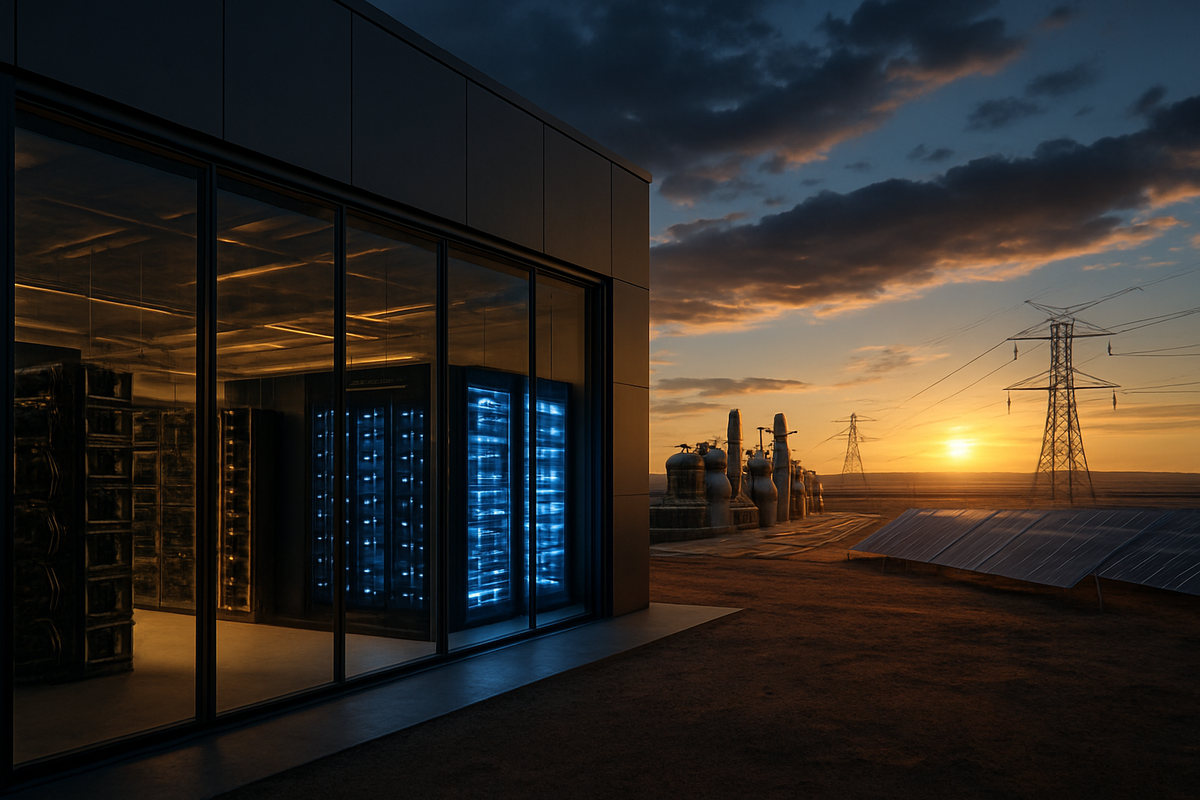
As MARA Holdings moves into the latter half of 2026, the focus will shift from site acquisition to operational execution. The primary challenge will be the "load balancing" technology required to switch seamlessly between Bitcoin mining and AI inference. The company has already begun deploying specialized modular racks in its Granbury, Texas facility, utilizing advanced battery technology to manage sub-millisecond load transitions. If successful, this technology will allow MARA to maintain a 100% uptime for its AI clients while still serving as a "dispatchable load" that can stabilize the power grid during extreme weather events.
In the long term, the market will be watching to see if MARA can successfully transition from being a "landlord" of power to a high-margin "service provider." The integration of the Exaion "Inference as a Service" model into its North American sites could significantly boost margins compared to traditional hosting. However, the company still faces risks, including the potential for GPU oversupply or a significant downturn in the AI market. Investors will need to monitor the "revenue per megawatt" metric closely, as this will likely replace the "Bitcoin per exahash" metric as the primary driver of the company’s valuation.
Final Assessment: A New Blueprint for Digital Growth
The strategic pivot of MARA Holdings represents a landmark moment in the evolution of the digital economy. By transforming its volatile mining operations into a stable, utility-scale infrastructure business, the company has provided a blueprint for how other energy-intensive industries can adapt to the AI era. The market’s "re-rating" of the stock suggests that investors are willing to pay a premium for companies that control their own power destiny and possess the flexibility to pivot between different types of digital work.
For investors, the key takeaways are clear: the line between "crypto" and "AI" is blurring into a broader "compute" sector. Moving forward, the most valuable companies will be those that own the "full stack"—from the generation of the electron to the processing of the AI token. While the volatility of Bitcoin will always be a factor for MARA due to its massive treasury, its future now lies in the massive data halls of Texas and the cloud regions of Europe. The coming months will be a critical test of whether the company can deliver on its 2.5 GW promise, but as of early 2026, MARA Holdings has successfully reinvented itself for the next decade of the digital age.
This content is intended for informational purposes only and is not financial advice.