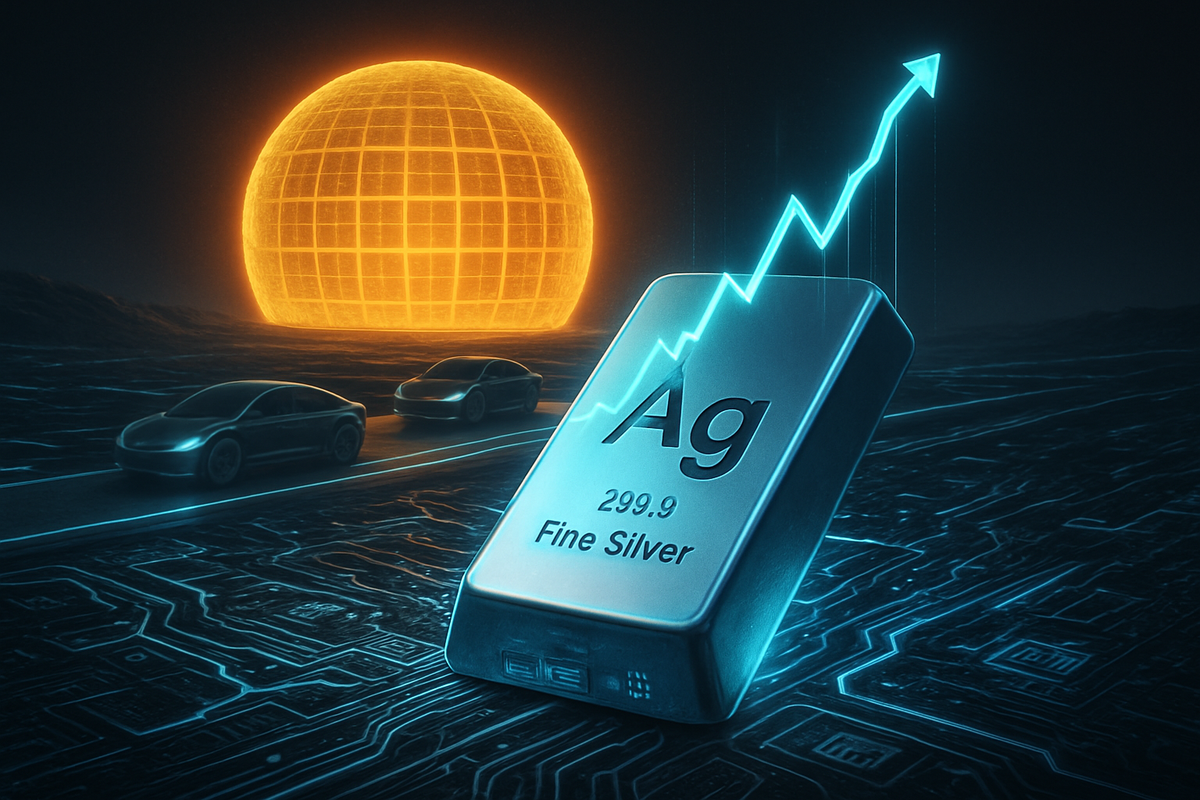
The silver market has undergone a historic transformation in the first two months of 2026, with prices skyrocketing 34% as a perfect storm of industrial desperation and geopolitical maneuvering collided. Once relegated to the shadow of gold, silver has broken free of its traditional correlations, shattering the psychological $100 per ounce barrier and peaking at a staggering $121.30 in late January. This rally marks the most significant vertical move for the metal in decades, fundamentally altering the landscape for investors and industrial manufacturers alike.
The immediate implications are profound: a massive transfer of wealth into the mining sector and a growing panic among high-tech manufacturers who rely on the metal’s unique conductive properties. As silver evolves from a speculative "poor man’s gold" into an indispensable "strategic technology metal," the market is grappling with a structural deficit that shows no signs of abating. With global inventories at multi-year lows, the 34% surge in early 2026 represents more than just a price spike—it is a repricing of silver’s role in the modern global economy.
The Road to $100: A Timeline of the 2026 Silver Squeeze
The seeds of this historic rally were sown on November 6, 2025, when the U.S. Geological Survey (USGS) made the landmark decision to officially add silver to the US Critical Minerals List. This designation was a watershed moment, recognizing silver as essential to national security and the domestic economy. The policy shift unlocked federal support for domestic mining projects and streamlined permitting processes through the Fast-41 program, signaling to the world that the U.S. government viewed silver as a strategic asset on par with lithium and cobalt.
As 2026 began, the market was already tight, but a sudden convergence of demand factors triggered the 34% explosion in price. By mid-January, a frenzy of buying from both institutional safe-haven seekers and industrial procurement officers pushed futures contracts into a "gamma squeeze" scenario. The timeline was punctuated by a frantic late-January session where silver gained nearly 8% in a single day as short-sellers were forced to cover positions. This volatility was further stoked by "Project Vault," a rumored federal initiative to begin stockpiling silver for defense and high-tech applications, which added a layer of scarcity-driven panic to the market.
Key stakeholders, including the Silver Institute and major bullion banks, have noted that this surge was not merely speculative. Unlike previous rallies driven by retail "silver squeezes," the 2026 move has been underpinned by physical delivery requests from industrial giants. By the time prices reached their 34% year-to-date peak in February, the "gold-to-silver ratio"—a key metric for commodity traders—had compressed to levels not seen in the modern era, reflecting silver's newfound status as a primary industrial driver rather than a secondary precious metal.
Industrial Giants and Mining Titans: Winners and Losers in the Silver Boom
The primary beneficiaries of this price explosion have been the pure-play silver miners. First Majestic Silver (NYSE: AG) has seen its valuation triple in the three months leading into late February, bolstered by its strategic acquisition of Gatos Silver which expanded its production capacity just as prices breached the $90 mark. Similarly, Pan American Silver (NYSE: PAAS) reported record-breaking preliminary revenues for the first quarter of 2026, with management raising production guidance for its La Colorada Skarn project to capitalize on the high-margin environment.
Streaming and royalty companies have also emerged as major winners. Wheaton Precious Metals (NYSE: WPM), which provides upfront capital to miners in exchange for the right to purchase silver at fixed, low costs, has seen its stock price surge over 115% in the past year. Because WPM’s costs are largely locked in, the 34% rise in market price translates almost entirely into pure profit, making it a favorite for investors seeking leveraged exposure with lower operational risk.
However, the surge has created a crisis for industrial consumers. Manufacturers of N-type solar cells—the new industry standard as of late 2025—are facing a "silver cliff." These high-efficiency cells require significantly more silver paste than older models, and the price spike has threatened the thin margins of the global solar transition. Automotive giants like Tesla (NASDAQ: TSLA) and Rivian (NASDAQ: RIVN) are also feeling the burn; with the average electric vehicle (EV) consuming between 25 and 50 grams of silver, the 34% price increase has added hundreds of dollars to the cost of production per vehicle, complicating the push for affordable mass-market EVs.
AI, Energy, and the New Strategic Paradigm
The wider significance of silver’s 2026 surge lies in its role as the "connective tissue" of the Fourth Industrial Revolution. The ongoing "AI race" has created a ravenous appetite for silver, as the metal’s superior electrical and thermal conductivity makes it irreplaceable in high-performance computing chips and the liquid cooling systems of massive data centers. In 2025, U.S. and Chinese data centers consumed an estimated 350 million ounces of silver, and that figure is projected to rise as the global infrastructure for artificial intelligence continues to expand.
This event mirrors the "lithium fever" of previous years but with a critical difference: silver is also a monetary asset. The convergence of industrial demand with traditional safe-haven flows—triggered by ongoing geopolitical tensions and inflationary fears—has created a "dual-engine" demand profile. This has led to a regulatory shift; beyond the Critical Minerals List, there are now discussions in Washington about creating a formal "Strategic Silver Reserve" to ensure that the U.S. defense industry and green energy sectors are not vulnerable to supply chain disruptions from major producers like Mexico and Peru.
Historically, silver has undergone periods of extreme volatility, such as the Hunt Brothers' attempt to corner the market in 1980. However, analysts argue that the 2026 surge is different because it is driven by consumption rather than hoarding. The "thrifting" or substitution of silver in electronics is reaching its physical limits; there is simply no other metal that can match silver’s conductivity at scale. This suggests that the 34% rise is a structural adjustment to a world where silver supply can no longer keep pace with the electrification of everything.
The Path Forward: Volatility or a New Floor?
In the short term, the market is bracing for continued volatility as traders digest the 34% move. High margin requirements on futures exchanges could lead to temporary "flash crashes" as leveraged players are forced out. However, the long-term outlook remains bullish for many analysts. The strategic importance of silver means that major players are likely to use any significant price dips as an opportunity to build long-term positions.
Strategic pivots are already underway. Solar manufacturers are desperately researching "copper-plating" technologies to reduce silver usage, though widespread commercial viability remains years away. Meanwhile, investors looking for a diversified way to play this commodity super-cycle are increasingly turning to vehicles like the Invesco Optimum Yield Diversified Commodity Strategy No K-1 ETF (NASDAQ: PDBC). As of February 2026, the PDBC ETF has maintained a significant weighting in precious and base metals (approximately 34%), allowing investors to gain exposure to the silver rally while mitigating the risk of a single-commodity collapse through a broader basket of energy and agricultural futures.
The primary challenge moving forward will be the supply response. Mining projects typically take a decade to move from discovery to production. While the new "Critical Mineral" status helps with permitting, it will not bring new silver to market overnight. This suggests that the market may remain in a state of "perpetual deficit" through the late 2020s, potentially making $100 silver the "new normal" rather than a temporary peak.
Final Assessment: A Permanent Shift in the Commodity Landscape
The 34% surge in silver prices during early 2026 is a defining event for the global markets. It represents the moment when the world finally acknowledged that the transition to a green, AI-driven economy is physically constrained by the availability of raw materials. The inclusion of silver on the US Critical Minerals List in late 2025 was the catalyst that changed the narrative, and the subsequent price action has confirmed silver’s status as a high-stakes strategic asset.
Moving forward, the market is likely to remain characterized by extreme sensitivity to industrial data, particularly from the solar and data center sectors. Investors should keep a close eye on inventory levels at the COMEX and London Bullion Market Association (LBMA), as well as any further policy moves regarding strategic stockpiling. The era of "cheap silver" appears to be over, replaced by a complex market where industrial necessity and monetary security are inextricably linked.
As we move into the second quarter of 2026, the key question is no longer how high silver can go, but how the world’s most critical technologies will adapt to a future where their most essential ingredient is no longer a bargain.
This content is intended for informational purposes only and is not financial advice