Copper-Rich Zone Grading 3.4% Cu and 2.1% Ni also Intersected in Follow-up Drilling
Vancouver, British Columbia--(Newsfile Corp. - January 8, 2026) - Perseverance Metals Inc. (TSXV: PMI) ("Perseverance", "PMI" or the "Company") is very pleased to provide assay results from six additional diamond drill holes (BAS-25-003 to 008), including 2.1m of massive sulphides previously announced. These holes were drilled to target Ni-Cu-Co-PGE magmatic sulphide mineralization within the Baseline Zone Discovery, part of the 6km long by 2km wide Venus East Mineralized Trend in the eastern portion of the district scale Lac Gayot project, northern Québec. The first 2 holes from Baseline, including discovery hole BAS-25-002, were reported in the Nov 5, 2025 PMI News Release.
Highlights of Baseline Zone Drilling
- High Grade Polymetallic Intersection: The 2.1m shallow intersection of massive magmatic sulphides (see Figure 1 below) intersected in hole BAS-25-004, is 25 metres along strike from discovery hole BAS-25-002, yielding 4.03% Ni, 0.69% Cu, 0.12% Co, and 1.79 g/t Pd (see Table 1).
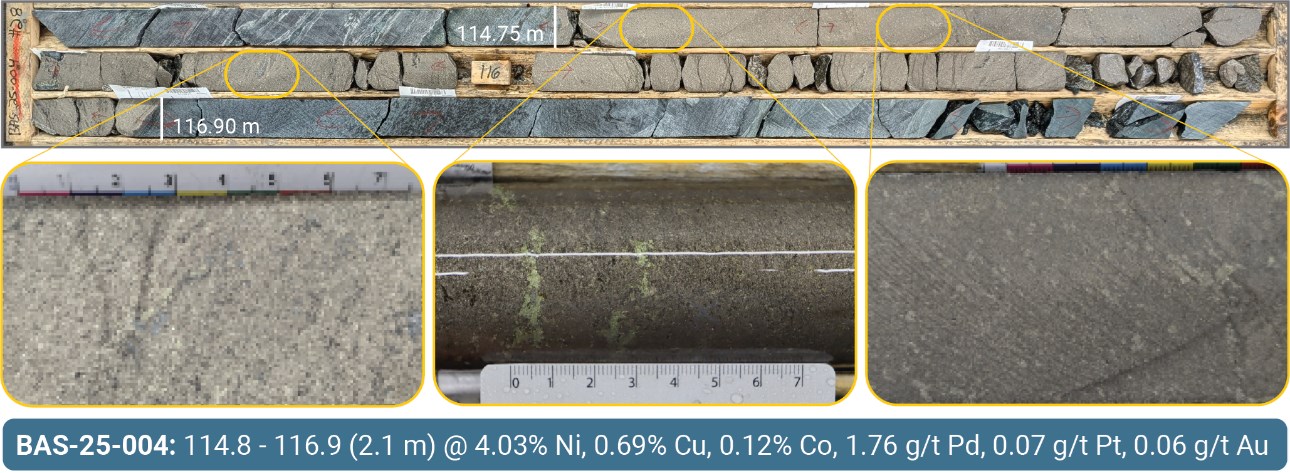
Figure 1: Photos of the 2.1 metre massive sulphide intersection from BAS-25-004 (click image to enlarge). Note the pentlandite "eyes" in the lower right close-up image.
To view an enhanced version of this graphic, please visit:
https://images.newsfilecorp.com/files/9861/279785_1a78d0a714504b04_001full.jpg
- Copper-Rich Zone Discovered: BAS-25-003, drilled ~25 metres up-dip from BAS-25-004 encountered 3.39% Cu, 2.06% Ni, 0.35% Co, 1.62 g/t Pd, 0.20 g/t Pt and 0.32 g/t Au over a 0.50 metre interval of massive sulphide, within a broader 1.31m intersection of 1.39% Cu, 1.31% Ni, 0.15% Co, 0.90g/t Pd, 0.13g/t Pt and 0.14g/t Au.
This intersection highlights the variable metal content of the high-grade polymetallic magmatic massive sulphides of the Baseline Zone and broader Venus East Trend.
Significance of Baseline Zone Drilling
- Immediate Expansion Potential via off-hole BHEM Anomalies: Multiple conductors interpreted in downhole borehole EM ("BHEM") surveys correlate strongly to the massive sulphide drill intersections documented in the Baseline Zone. Management believes that this validates a direct detection exploration technique that can be applied broadly using detailed surface surveys. These conductors extend along-strike +100m NE and +60m SW (see Figure 2 below) from the area drilled.
- Broader Potential - the Nasique, 'L' and De Champlain Zones: The Baseline Zone has now been established as an at least 1.3km long trend of fertile ultramafic rocks with airborne and ground EM conductive targets within the 6km by 2km Venus East Ni-Cu-Co-PGE Mineralized Trend extending NE from the southern to northern Baseline Zone drill intersections (see Figure 2 below).
This permissive stratigraphy, correlated to the contact between the upper and lower volcanic (komatiitic) packages, has the clear potential to extend over 3 kilometres further north to mineralization hosted in the same stratigraphy at the 'L' and De Champlain Zones, and over 1 km south to the Nasique Zone (see Figure 3 below and Sept 9 2024 PMI Nasique Zone News Release).
Historical results*1 from the 'L' and De Champlain Zones include:
- 'L' Zone (2000 drilling, BHP)*1: 2.2% Ni, 1.6% Cu & 2.4 g/t PGEs over 11.4 metres
- including 6.2% Ni, 0.9% Cu & 5.9 g/t Pt+Pd+Au over 1.9 metres - De Champlain Zone (2000 trenching, BHP)*1: 1.9% Ni, 0.3% Cu & 1.0 g/t Pt+Pd over 2.0 metres
- including 10.0% Ni, 0.3% Cu & 4.5 g/t Pt+Pd over 0.3 metres
"I am thrilled with what is developing at the Baseline Zone, in particular what it indicates for the potential of the broader Venus East Trend to host a significant, high-grade Ni-Cu-Co-PGE deposit. Multiple, sequential intersections of high-grade nickel sulphide strengthen our conviction in the overall fertility of the trend," said Michael Tucker, CEO. "This, coupled with the validation of our geophysical targeting methodology will allow us to expand on the known zones of mineralization and more effectively vector into additional zones, with an emphasis on finding thick massive sulphides, within the Venus East Trend and the broader Lac Gayot Project."
Baseline Zone Results - Background and Discussion
The Baseline drill target was initially identified as a strong subsurface (blind) conductor detected during the Company's 2024 Helitem2 airborne survey, 600 metres SW of a nickel sulphide-mineralized boulder. Ground-truthing of these conductors did not reveal surface mineralization, but a moving loop SQUID EM survey conducted in the summer of 2024 confirmed the airborne conductor location, with the resulting 3,000 Siemen per metre ("S/m") conductive plate becoming the initial Baseline conductor shallow drill target.
Holes BAS-25-001 and 002 early in the summer/fall 2025 program both intersected Ni-Cu-Co-PGE mineralization correlating to this plate (see Table 1 below and Nov 5, 2025 PMI News Release). Subsequent BHEM surveys within these two holes led to the modelling of a 200m long, 7,000 S/m plate trending to the NE, which became the target of follow up holes BAS-25-003, 004, 005, and 008. Final BHEM modelling further increased the conductance of the Maxwell plate to 10,000 S/m and indicates extensions along strike over 100m to the NE and over 60m to the SW from current drilling.
The magmatic massive sulphide mineralization at the Baseline Zone appears to be a lens that loosely tracks the contact of an ultramafic unit (see Figure 4 below). Based on textures within the sulphides and their localized presence within hanging wall rocks above the ultramafic unit, it is probable that this lens of sulphides is structurally mobilized from where it was initially deposited. This is further supported by a lack of disseminated mineralization in the immediate vicinity of the massive sulphide zones.
Importantly, this provides a means to use this sulphide lens and its strong geophysical signature to trace it back to the more fertile ultramafic rocks responsible for the sulphide generation. The longitudinal section (see Figure 5 below) illustrates the trend of the zone shallowing to the NE and plunging the SW - an orientation that is supported by the geophysical model. In 2026, step-out drilling will be directed at testing down-plunge of the massive sulphide mineralization and will be continuously guided by BHEM data with the goal of vectoring towards the source of deposition as well as zones of structural thickening of massive sulphide lenses.
Baseline Zone - Next Steps in 2026
A high-resolution ground SQUID (Superconducting Quantum Interference Device) - a high sensitivity ground EM survey specifically designed to detect similar massive sulphide zones at the Raglan Ni-Cu-Co-PGE mine - will be conducted in early 2026 over the entire Venus East Trend. This will include the Baseline and five other mineralized zones identified to date, with the goal of identifying additional conductive targets for the spring/summer 2026 drill campaign, which will focus on the Venus East Trend of the Lac Gayot project.
Baseline Zone 2026 drill results - Significant Assays
| Hole ID | From | To | Length (m) | Ni (%) | Cu (%) | Co (%) | Pd (g/t) | Pt (g/t) | Au (g/t) | Ag (g/t) |
| BAS-25-001*2 | 96.00 | 97.60 | 1.60 | 0.21 | 0.25 | 0.01 | 0.51 | 0.32 | 0.27 | 2.35 |
| BAS-25-002*2 | 110.90 | 112.00 | 1.10 | 1.69 | 0.59 | 0.07 | 0.69 | 0.07 | 0.41 | 4.99 |
| including*2 | 110.90 | 111.20 | 0.30 | 4.13 | 0.33 | 0.14 | 1.53 | 0.19 | 0.02 | 7.80 |
| BAS-25-003 | 98.80 | 102.30 | 3.50 | 0.68 | 0.64 | 0.07 | 0.42 | 0.07 | 0.07 | 3.55 |
| including | 98.90 | 100.20 | 1.30 | 1.31 | 1.39 | 0.15 | 0.90 | 0.13 | 0.14 | 7.18 |
| including | 99.15 | 99.65 | 0.50 | 2.06 | 3.39 | 0.35 | 1.62 | 0.20 | 0.32 | 16.20 |
| BAS-25-004 | 114.8 | 117.20 | 2.40 | 3.63 | 0.61 | 0.11 | 1.59 | 0.07 | 0.06 | 5.40 |
| including | 114.8 | 116.90 | 2.10 | 4.03 | 0.69 | 0.12 | 1.79 | 0.07 | 0.06 | 5.93 |
| BAS-25-005 | 166.50 | 169.00 | 2.80 | 0.06 | 0.02 | 0.00 | 0.12 | 0.16 | 0.01 | 0.38 |
| BAS-25-006 | 34.40 | 34.90 | 0.50 | 1.31 | 0.05 | 0.04 | 0.09 | 0.10 | 1.05 | 6.60 |
| BAS-25-007 | 70.00 | 73.70 | 3.70 | 0.15 | 0.01 | 0.00 | 0.01 | 0.01 | 0.25 | 2.39 |
| BAS-25-008 | 93.45 | 93.80 | 0.35 | 0.14 | 0.27 | 0.05 | pending | 2.10 | ||
Table 1: Significant assay results from the Baseline Zone.'*2' indicates previously reported results, see PMI News Release Nov 5 2025]
Note to Table 1: At this point in time, thicknesses and orientations of mineralized zones are still being understood, as a result, intersections are not necessarily indicative of the true width of the zone. However, given the dip of stratigraphy and orientation drilled, it is expected that the intersections are between 60-100% of true thickness
*1 Drill results for "L" Zone drill hole GA00-23B are sourced from assessment report GM 58741 prepared by BHP (2000). De Champlain trench results from the 'fall 2000 trench' sourced from assessment report GM 58440 prepared by BHP (2000). These results are historical in nature and have not been verified by the Company. Further exploration is required to verify the historical results, and they may not be indicative of mineralization of the Lac Gayot project. For further information on historical exploration completed at the Lac Gayot project, see the Company's technical report titled "NI 43-101Technical Report, Lac Gayot Ni-Cu-PGE project, Quebec" prepared by Claude Duplessis and dated September 10, 2025, which is available on SEDAR+ (http://www.sedarplus.ca).
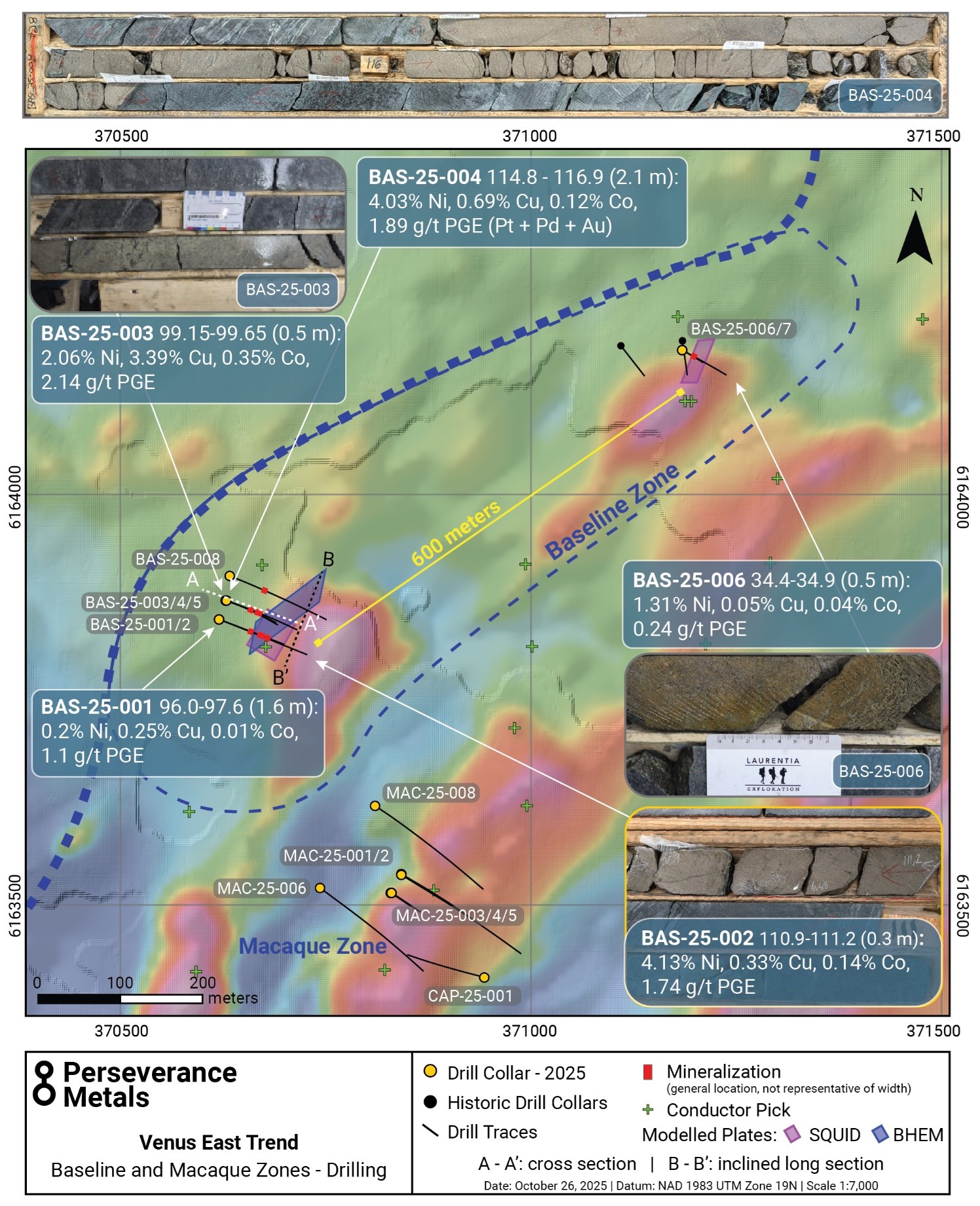
Figure 2: Drill holes and traces for the Baseline Zone drilling over airborne magnetics including conductive Maxwell plate models from Borehole EM and SQUID Ground EM surveys (click to enlarge)
To view an enhanced version of this graphic, please visit:
https://images.newsfilecorp.com/files/9861/279785_1a78d0a714504b04_002full.jpg
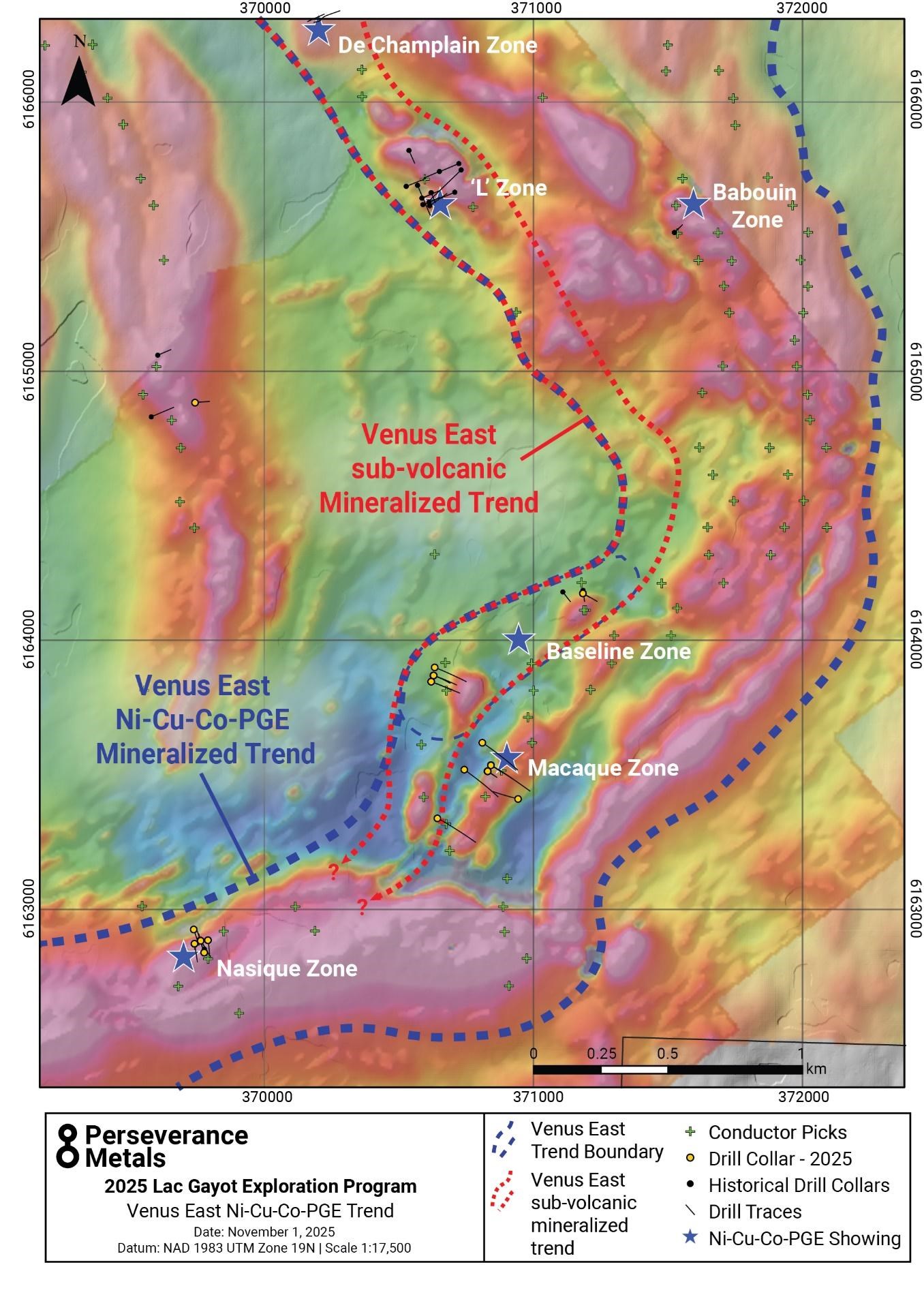
Figure 3: The Venus East Trend, highlighting the potential of the Baseline Zone to extend over 4 kms to include the Nasique, L" and De Champlain Zones (click to enlarge)
To view an enhanced version of this graphic, please visit:
https://images.newsfilecorp.com/files/9861/279785_1a78d0a714504b04_003full.jpg
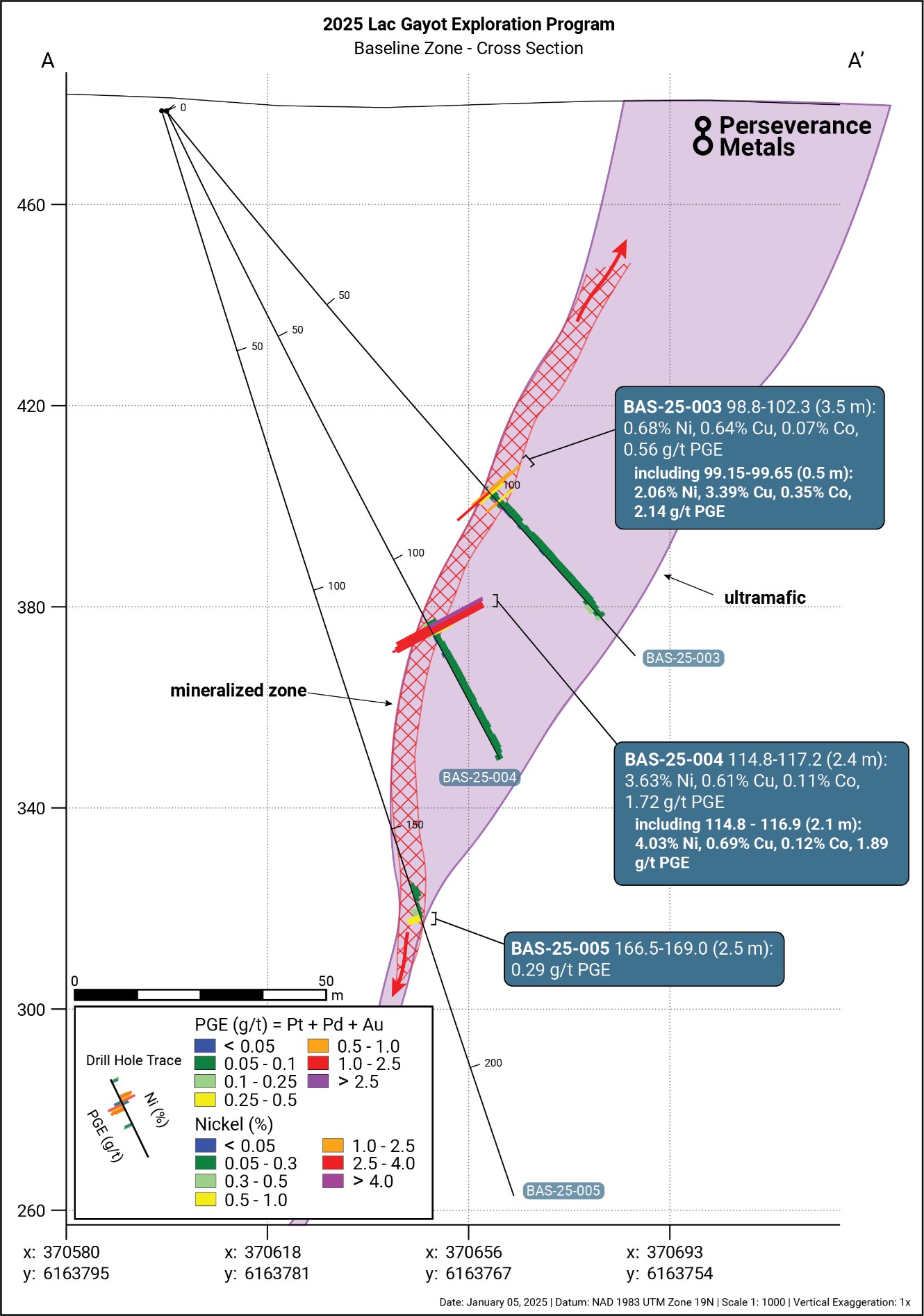
Figure 4: Cross-section through the Baseline Zone mineralization (click to enlarge).
To view an enhanced version of this graphic, please visit:
https://images.newsfilecorp.com/files/9861/279785_1a78d0a714504b04_004full.jpg
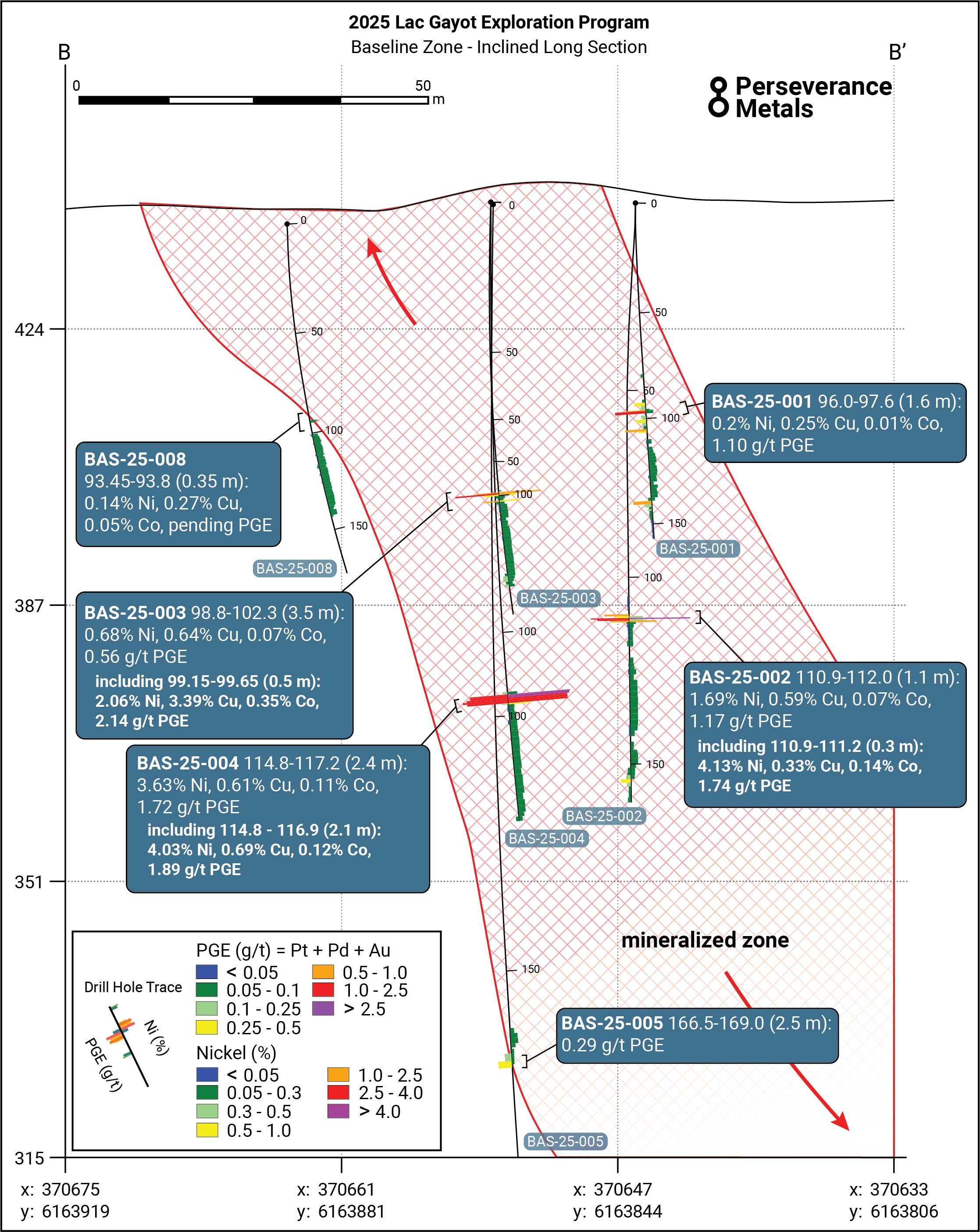
Figure 5: Long section of the Baseline Zone mineralization (click to enlarge)
To view an enhanced version of this graphic, please visit:
https://images.newsfilecorp.com/files/9861/279785_1a78d0a714504b04_005full.jpg
| Hole ID | Easting | Northing | Length (m) | Azimuth | Dip | Elevation (m) |
| BAS-25-001 | 370620 | 6163847 | 157.00 | 110 | -45 | 480 |
| BAS-25-002 | 370620 | 6163847 | 160.25 | 110 | -60 | 480 |
| BAS-25-003 | 370629 | 6163870 | 143.00 | 110 | -52 | 479 |
| BAS-25-004 | 370629 | 6163870 | 145.10 | 110 | -64 | 479 |
| BAS-25-005 | 370628 | 6163870 | 227.00 | 110 | -73 | 479 |
| BAS-25-006 | 371184 | 6164175 | 86.00 | 120 | -45 | 475 |
| BAS-25-007 | 371184 | 6164175 | 92.60 | 120 | -72 | 475 |
| BAS-25-008 | 370633 | 6163900 | 173.00 | 110 | -45 | 476 |
Table 2: Baseline drill hole collar locations and orientations. Coordinates are in UTM Nad 83, Zone 19
QA/QC
Drill core description and sampling were completed by Laurentia Exploration. The quality assurance and quality control protocols include insertion of blank and standard samples in the sampling. A regular insertion of blank, duplicate, and standard samples accredited by ALS Minerals during the analytical process was also completed. The drilling operation was performed by Forage Fusion from Hawkesbury in Ontario. The drill core is NQ size.
During drilling program, the drill core was logged and sampled at Gayot camp. The drill core was cut by a diamond saw and put in plastic bags with their unique sample numbers. They were grouped in large rice bags at the camp. All the samples were flown by helicopter between the Gayot Camp and the Lac Pau outfitter before being transported by truck to the Laurentia Exploration office in Saguenay, Quebec. All samples were then sent to the ALS Minerals laboratory in Val d'Or, Québec for PREP-31a preparation protocol. They were then sent to the ALS Minerals Vancouver laboratory for analysis. ALS Minerals is independent from the Company.
The results available in this News Release come from samples analyzed by two different methods. Gold, platinum and palladium values were determined using the PGM-ICP24 procedure which involves fire assay using a 50-gram charge with an inductively coupled plasma-atomic emission spectroscopy finish ("ICP-AES"). The same samples were also analyzed using the ME-ICP61 method to determine their cobalt, copper, nickel and silver content. The ME-ICP61 method is a 4-Acid digestion with an ICP-AES finish. Samples exceeding the detection limit (10,000ppm) for nickel or copper were reanalyzed using method Ni-OG62 for Nickel and Cu-OG62 for Copper, a 4-acid digestion and ICP finish.
Technical Information & QP Statement
The technical and geological information contained in this news release has been reviewed, verified and approved by Hugues Guérin-Tremblay, P. Geo (OGQ #1584), who is recognized as a Qualified Person under the guidelines of National Instrument 43-101. Mr. Guérin-Tremblay is a geologist consultant with Laurentia Exploration who is responsible for the exploration work on the Gayot property. M. Guérin-Tremblay has read and approved the technical contents of this news release.
Drilling and sampling results may be influenced by factors such as core recovery, sample representativity, or analytical limitations; however, none of these factors are considered to materially affect the accuracy or reliability of the data at this stage.
About Perseverance Metals
Perseverance Metals is a critical minerals explorer with a project portfolio that is strategically located in key North American Ni-Cu-Co-PGE and hard rock lithium regions, including Québec's prolific James Bay district and Michigan's productive Mid-Continent Rift.
Our strict science-driven approach and extensive track record of discovery as leveraged via an exceptional technical advisory board, coupled with an industry-leading team armed with next-generation exploration tools, provide us with a distinct competitive advantage. This offers a unique opportunity for investors to be exposed to a portfolio of projects with the potential for multiple discoveries. Perseverance's exploration assets include:
the Lac Gayot high-grade Ni-Cu-Co-PGE and lithium pegmatite project, which covers the entirety of the 30km Venus Greenstone Belt in Québec, featuring multiple, very high-grade Ni-Cu-Co-PGE showings and zones along with numerous large spodumene-bearing pegmatites with consistent high lithium grades in channel sampling;
the Voyageur Ni-Cu-Co-PGE project which covers 680 km2 of the Upper Peninsula in Michigan, 65 kilometres west of the only producing nickel mine in the United States is drill-ready, and;
the Armit Lake Ni-Cu-Co project, which is the consolidated and underexplored western half of the nickel- and gold-rich Savant Lake Greenstone Belt in Ontario.
Additional information about Perseverance Metals can be found at perseverancemetals.com.
On Behalf of the Board,
Michael J. Tucker
CEO and Director
FOR FURTHER INFORMATION PLEASE CONTACT:
| Perseverance Metals Inc. Michael J. Tucker, CEO +1 (778) 834-3528 mtucker@perseverancemetals.com | Perseverance Metals Inc. John Foulkes, President +1 (604) 614-2999 jfoulkes@perseverancemetals.com |
Forward-Looking Statements
This news release contains "forward-looking information" within the meaning of applicable Canadian securities legislation. "Forward-looking information" includes, but is not limited to, statements with respect to the activities, events or developments that the Company expects or anticipates will or may occur in the future, including expectations regarding the accuracy, timing and outcome of the sample, assay and drill results; the characterization of the Venus Greenstone Belt; the option on the Lac Gayot project; and the Company's exploration and business plans, and the cost and timing thereof.
Generally, but not always, forward-looking information and statements can be identified by the use of words such as "plans", "expects", "is expected", "budget", "scheduled", "estimates", "forecasts", "intends", "anticipates", or "believes" or the negative connotation thereof or variations of such words and phrases or state that certain actions, events or results "may", "could", "would", "might" or "will be taken", "occur" or "be achieved" or the negative connation thereof.
Such forward-looking information and statements are based on numerous assumptions, including among others, that the sample, assay and drill results will align with the expectations of management in terms of accuracy, outcome and timing; that the characterization of the Venus Greenstone Belt is accurate; that the Company will continue to pursue the option on the Lac Gayot project; and that the Company's exploration and business plans, and the cost and timing thereof will not change significantly from management's current expectations.
Although the assumptions made by the Company in providing forward-looking information or making forward-looking statements are considered reasonable by management at the time, there can be no assurance that such assumptions will prove to be accurate and actual results and future events could differ materially from those anticipated in such statements. Important factors that could cause actual results to differ materially from the Company's plans or expectations include risks that the sample, assay and drill results will not align with the expectations of management in terms of accuracy, outcome and timing; that the characterization of the Venus Greenstone Belt is not accurate; that the Company will not continue to pursue the option on the Lac Gayot project; and that the Company's exploration and business plans, and the cost and timing thereof may change significantly from management's current expectations.
Although the Company has attempted to identify important factors that could cause actual results to differ materially from those contained in the forward-looking information or implied by forward-looking information, there may be other factors that cause results not to be as anticipated, estimated or intended. There can be no assurance that forward-looking information and statements will prove to be accurate, as actual results and future events could differ materially from those anticipated, estimated or intended. Accordingly, readers should not place undue reliance on forward-looking statements or information.
Neither TSXV nor its Regulation Services Provider (as that term is defined in the policies of the TSXV) accepts responsibility for the adequacy or accuracy of this release.

To view the source version of this press release, please visit https://www.newsfilecorp.com/release/279785