 Remote work sounded simple at first. Laptop. Coffee. Wi-Fi. Done.
Then reality hit.
Frozen video calls. Uploads stuck at 97%. “You’re cutting out” every five minutes. And your internet always wants to fail you at the very time when you need it the most.
An appropriate home office design does not involve purchasing the most costly table or the most stylish chair. It has to do with the creation of a network that does not give up. Your connection must be there whenever you need it whether it be hosting client meetings, co-working in the cloud, or uploading your content through an online video editor
This is the real checklist to ensure that it does.
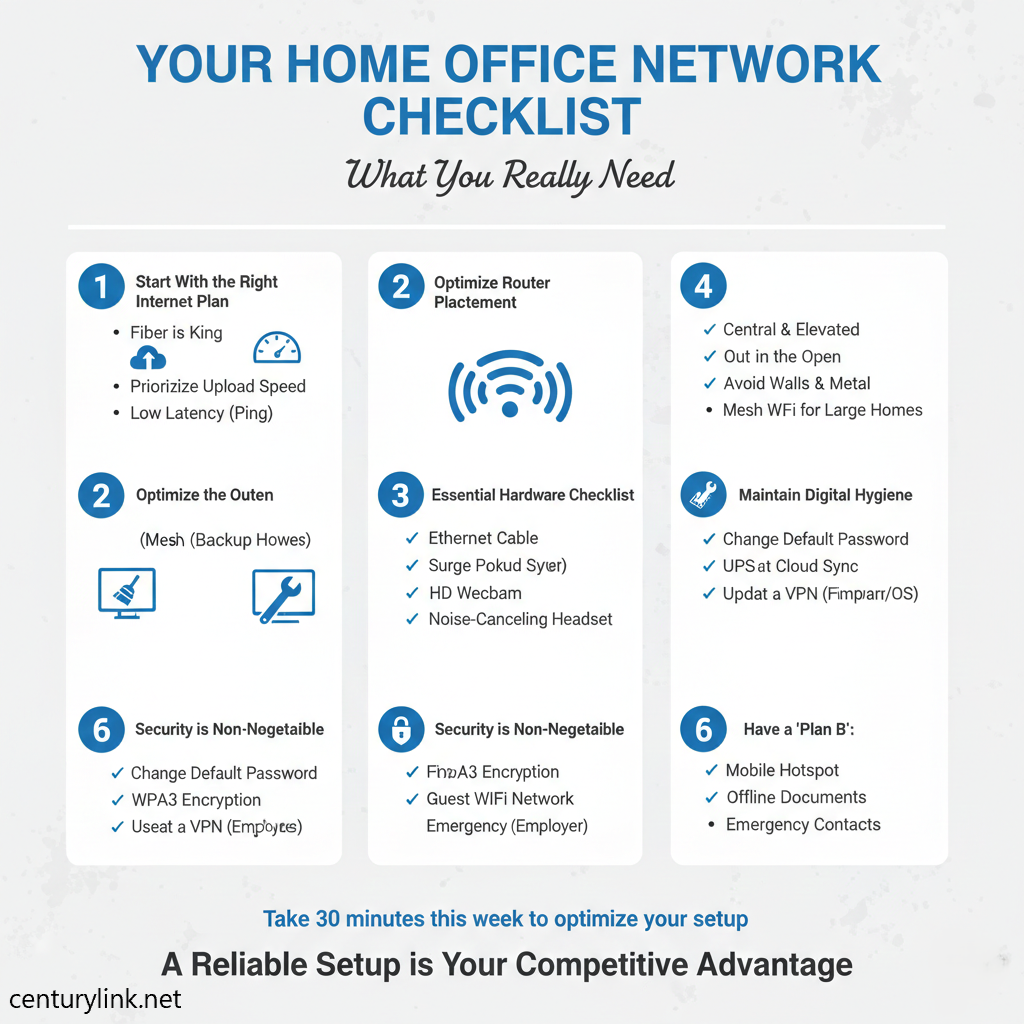
1. Start With the Right Internet Plan
Your internet plan is the foundation. When it is unsteady, the rest will be annoying.
When it is unsteady, the rest will be annoying.
Many individuals select a plan according to the speed of downloads. However, working remotely requires more than film rentals. Speed of upload is equally important: in particular, when you:
- Share large files
- Participate in regular video calls
- Work in cloud platforms
- Sync data across devices.
The reason behind call freezing or crawling files has a concealed cause, which is low upload speeds.
Latency (or “ping”) also plays a role. High latency can cause delays during meetings and voice calls, even if your speed looks fine on paper.
Quick checklist:
- Do a speed test on the work time
- Compare your actual speeds to your plan
- Take into account upgrading in case more than one person works at home
- Critical calls should be done using a wired Ethernet.
Whether it is the cloud dashboards or the apps that you have downloaded in the App Store of your gadget, your everyday routine is reliant on the consistency of bandwidth.When your connection is not up to it, it seems like everything is more difficult than it should be.
When fiber internet is offered in your location, then it is usually worth considering. The maximum upload speed and steadiness of performance is usually better with fiber than with older technologies – particularly in remote working situations.
2. How To Place Your Router (Yes, It Matters)
The router is the device most neglected in the house. It’s usually:
- Hidden in a cabinet
- Tucked in a corner
- Sitting on the floor
- Placed next to a microwave.
And then we wonder why the signal drops.
Wi-Fi works best when the router is:
- In a central location
- Elevated (on a shelf or desk)
- Out in the open
- Away from thick walls and large metal objects.
Assuming that your office is distant to the router, consider:
- Running an Ethernet cable
- Installing a mesh Wi-Fi system
- Adding a Wi-Fi extender.
Also, check for firmware updates in your router settings. Updates are able to enhance performance and security using only a couple of clicks.
At times the solution does not lie in purchasing a new item. It is merely a relocation of what you have.
3. The Necessary Hardware Checklist
You don’t need a tech lab. But some fundamentals are everything.
Here’s what actually matters:
 Reliable Modem and Router
Ensure that you have an equipment that can support your maximum speed plan. Older hardware can bottleneck even the fastest connection.
Ethernet Cable
When a stable video-call or massive upload is required in the course of your work, plug in directly. Hard wired connection eliminates interference and enhances reliability.
Surge Protector
The bursts of power may destroy networking devices. A surge protector is cheap insurance.
Noise-Canceling Headset
The proper audio makes you appear professional even when the dog is barking in the background.
HD Webcam
Inbuilt laptop cameras are usually of moderate quality. An external web camera enhances light and quality.
Backup Power Option (UPS)
A small uninterruptible power supply can keep your modem and router running during short outages. That can be the difference between finishing a meeting or disappearing mid-sentence.
Focus on stability over flashy features. The goal is fewer disruptions, not more gadgets.
4. Keep Your Digital Workspace Clean
Hardware is only half the story. Software can quietly slow you down too.
Remote work often means juggling:
- Video conferencing tools
- Cloud storage platforms
- Collaboration apps
- File-sharing systems.
When it all works simultaneously, your computer and your network can drag.
Simple improvements:
- Close unused browser tabs
- Shut down background apps before meetings
- Have an updated operating system
- Use lightweight web versions of tools when possible
- Enable automatic cloud backups.
When you frequently upload or down load big files, schedule your heavy transfers when you will not be attending a meeting. Small habits add up.
5. Don’t Ignore Security
Business data is now being moved through your home network. That is why security is more crucial than ever.
Start with the basics:
- Change your router’s default username and password
- Use WPA3 or WPA2 encryption
- Create a separate guest Wi-Fi network
- Keep router firmware updated
- Use work accounts with strong and exclusive passwords.
In case you deal with sensitive data, you should use a VPN offered by the employer. It also provides an additional encryption in the event of remote work.
Security does not necessarily have to be a complex matter. It only requires being deliberate.
6. Have a Backup Plan (Because Outages Happen)
The most dependable networks are subject to failures.
The difference between panic and productivity is preparation.
Consider:
- Having a mobile hot-spot on hand
- Saving copies of vital documents to use them offline
- Storing useful contacts not in the email
- A backup plan of a different method of communication in case of emergency.
Redundancy is important should you be time-sensitive in your work. A simple backup connection can save hours of stress.
7. Make It Comfortable — But Practical
The performance of the network is important. Yet comfort has an impact on productivity as well.
To enhance long-term performance the following few adjustments will help:
- Proper lighting should be used to minimize video glare
- Desk location should preferably be in natural light
- Always keep cables arranged so that they are not knocked out
- Clutter about cables can be prevented by using a cable management solution.
A clean, stable setup reduces friction. Reduced friction translates to increased concentration.
A Reliable Setup Is a Competitive Advantage
Your home office is no longer a temporary one. It is the main place of work to a lot of professionals.
When your connection is stable:
- Meetings run smoothly
- Uploads finish on time
- Deadlines feel manageable
- You look prepared and professional.
When it’s not, every task feels heavier than it should.
Take 30 minutes this week to review your setup. Check your speeds. Move your router. Plug in directly. Update your firmware. Secure your network.
If your work depends on your connection, your connection deserves attention.
Good home office network does not only help in your job. It supports your reputation.