NINGBO, CHINA / ACCESS Newswire / November 14, 2026 / DEEP Robotics has conducted field tests of its LYNX M20 robot dog at a 160-year-old lighthouse on a remote island, assessing how robotic inspection and supply transport can support lighthouse keepers in demanding coastal conditions. The wheel-legged quadruped robot carried supplies up steep access routes, collected equipment inspection data and accompanied nighttime patrols.
The trials took place on Qiliyu, a small island in the East China Sea where lighthouse keepers face steep paths, salt-laden air, high humidity and limited access to supplies. The work focused on practical tasks that could reduce repetitive physical demands and give keepers more time for navigation aid maintenance and operational decisions.

A robot dog carries supplies up 145 steps
Supplies reach the island by boat once a week, subject to sea conditions. After unloading at the dock, the two keepers must carry food, drinking water and other essentials up 145 steps and a steep hillside path to the duty room near the lighthouse.
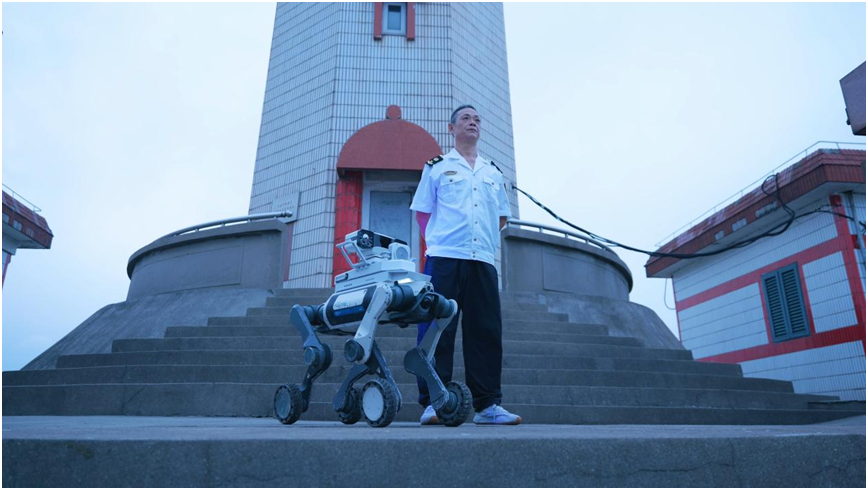
During the field test, the DEEP Robotics robot dog carried a 15 kg load along the access route, completing all 145 steps in a single ascent and gaining 23 meters in elevation. Its wheel-legged design combines efficient rolling on flatter surfaces with the ability to step over stairs and loose stones.
"This is the first time I've seen a robot dog. I didn't expect it to be so agile-it climbs stairs faster than we do," said Xu Miaoqi, a lighthouse keeper with 42 years of experience maintaining aids to navigation.
The trial demonstrated how a quadruped robot can help move essential supplies across terrain that makes routine deliveries physically demanding for island staff.

Robotic inspection supports equipment monitoring
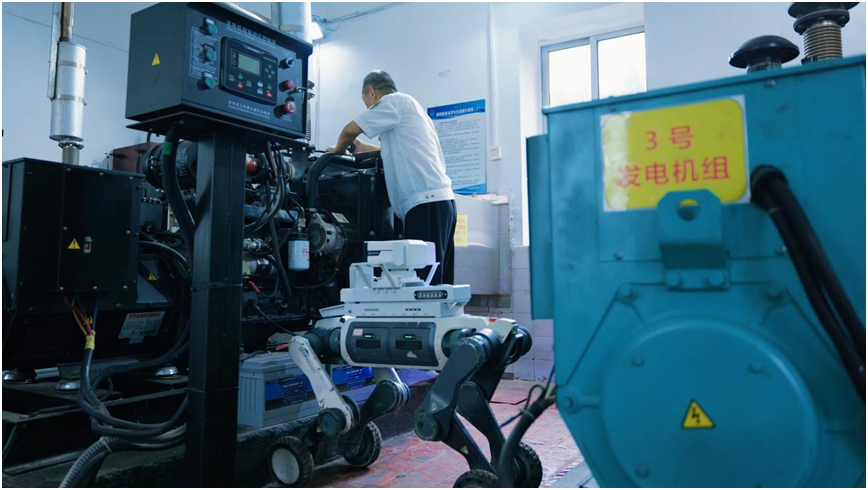
The lighthouse relies primarily on diesel generators, with backup batteries supplying power at night. Routine checks require keepers to examine operating parameters, listen for unusual sounds and inspect equipment for signs of oil leakage, often in a hot, noisy generator room.
For these tasks, the inspection robot uses high-definition cameras to capture instrument displays, read operating data and check switch positions. Thermal imaging helps identify abnormal temperature patterns that may indicate equipment problems. Acoustic imaging can provide additional support for detecting unusual equipment sounds.
During the tests, images and inspection data were transmitted over the network to a digital management platform. From the duty room, personnel could view details including generator oil-pressure gauges and pipe connections. The platform automatically generated inspection reports after each task, recording the source, location and handling status of alerts.
This workflow creates a traceable record of equipment condition and supports earlier investigation of potential faults. By handling routine data collection, the robot can help keepers concentrate on interpreting findings and deciding when maintenance or intervention is needed.
Night patrol support on remote island paths
Inspection duties continue after dark, when steep paths and loose stones are harder to navigate by flashlight. During nighttime patrols, the LYNX M20 used its onboard lighting to illuminate the route and accompany the keeper around the island.
Alongside daytime autonomous equipment inspection, nighttime patrol support offers another way for the robot to assist staff working in an isolated environment. The field tests examined these capabilities under the conditions the keepers encounter in their daily routines.
Embodied AI tested in everyday field operations
The Qiliyu trials brought several operational challenges together: carrying loads on steep terrain, monitoring machinery, moving in low light and operating amid salt and humidity. They provided a practical setting for evaluating how embodied AI can support remote infrastructure maintenance.
DEEP Robotics is developing these applications to ease repetitive and physically demanding work while keeping experienced personnel responsible for maintenance decisions and safety assessments. The company plans to extend the use of its robots to more frontline settings where mobility, inspection capabilities and physical assistance can make daily work more manageable.
Media Contact
Company: DEEP Robotics
Contact: Vivian Chen
Email: chenlingjia@deeprobotics.cn
Website: https://www.deeprobotics.cn/en
SOURCE: DEEP Robotics
View the original press release on ACCESS Newswire