Gaming and hospitality company Boyd Gaming (NYSE: BYD) fell short of the market’s revenue expectations in Q3 2026, with sales falling 1.4% year on year to $990.5 million. Its non-GAAP profit of $1.67 per share was 2.8% above analysts’ consensus estimates.
Is now the time to buy Boyd Gaming? Find out by accessing our full research report, it’s free.
Boyd Gaming (BYD) Q3 2026 highlights:
- Revenue: $990.5 million vs analyst estimates of $1.00 billion (1.4% year-on-year decline, 1.1% miss)
- Adjusted EPS: $1.67 vs analyst estimates of $1.62 (2.8% beat)
- Adjusted EBITDA: $290.6 million vs analyst estimates of $287 million (29.3% margin, 1.3% beat)
- Operating Margin: 19.7%, up from 13.9% in the same quarter last year
- Market Capitalization: $5.13 billion
Keith Smith, President and Chief Executive Officer of Boyd Gaming, said, "Our third-quarter performance continued to highlight the benefits of our diversified business model, the ongoing strength of our core customer and the appeal of our property investments nationwide. During the quarter, our results reflected continued growth in our Midwest & South segment, increased play from southern Nevada residents, and strong gains in both our Online and Managed operations. And while quarterly results were impacted by increased softness in destination business to Las Vegas, primarily affecting our Orleans property, we are encouraged by the continued strength of the remainder of our Las Vegas Locals portfolio and the performance of our Midwest & South segment. Finally, we maintained our balanced approach to capital allocation during the third quarter, investing in growth across our portfolio while returning nearly $180 million to our shareholders through share repurchases and dividends. With our robust free cash flow, strong balance sheet and efficient operating model, our Company is well-positioned to continue creating long-term value for our shareholders."
Company overview
Run by the Boyd family, Boyd Gaming (NYSE: BYD) is a diversified operator of gaming entertainment properties across the United States, offering casino games, hotel accommodations, and dining.
Revenue growth
A company’s long-term sales performance can indicate its overall quality. Any business can have short-term success, but a top-tier one grows for years. Unfortunately, Boyd Gaming’s 5.5% annualized revenue growth over the last five years was weak. This was below our standard for the consumer discretionary sector and is a poor baseline for our analysis.
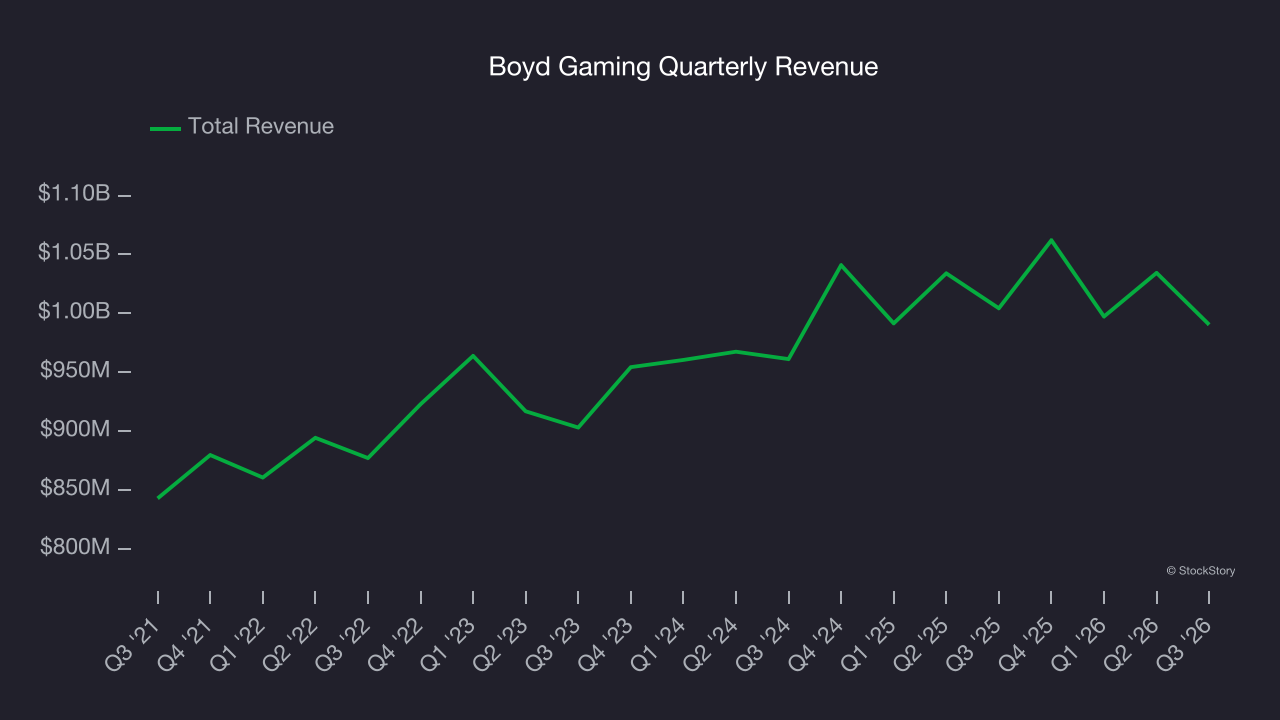
We at StockStory place the most emphasis on long-term growth, but within consumer discretionary, a stretched historical view may miss a company riding a successful new product or trend. Boyd Gaming’s recent performance shows its demand has slowed as its annualized revenue growth of 3.1% over the last two years was below its five-year trend. We’re wary when companies in the sector see decelerations in revenue growth, as it could signal changing consumer tastes aided by low switching costs. Note that COVID hurt Boyd Gaming’s business in 2020 and part of 2021, and it bounced back in a big way thereafter. 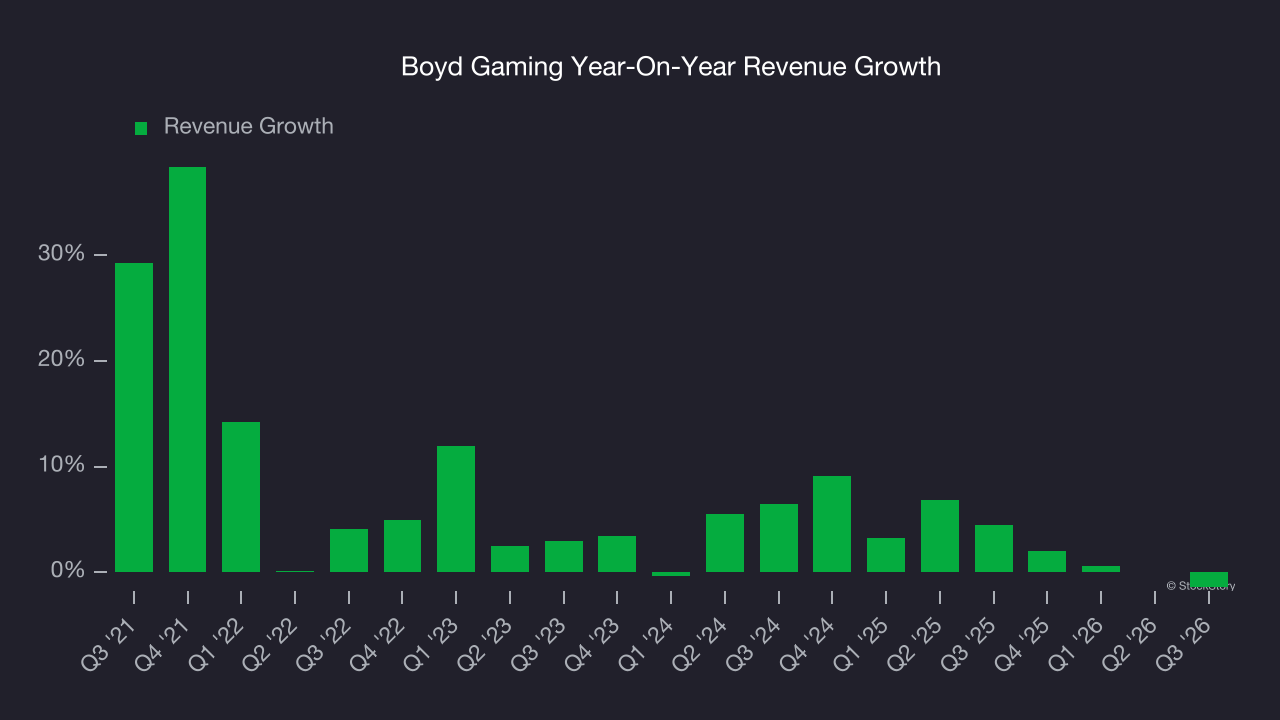
We can dig further into the company’s revenue dynamics by analyzing its most important segment, Gaming. Over the last two years, Boyd Gaming’s Gaming revenue (casino games) averaged 24% year-on-year growth. This segment has outperformed its total sales during the same period, lifting the company’s performance. 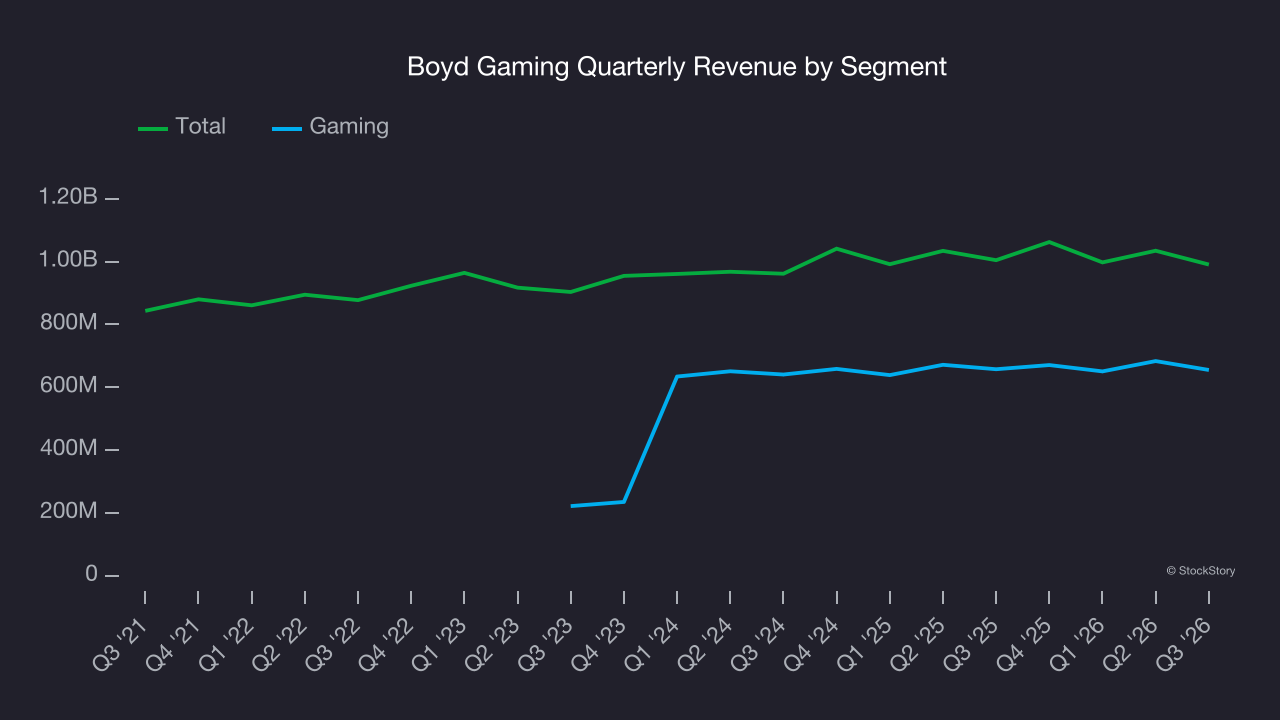
This quarter, Boyd Gaming missed Wall Street’s estimates and reported a rather uninspiring 1.4% year-on-year revenue decline, generating $990.5 million of revenue.
Looking ahead, sell-side analysts expect revenue to grow 1.6% over the next 12 months, a slight deceleration versus the last two years. This projection doesn’t excite us and suggests its products and services will face some demand challenges.
ONE MORE THING: The $21 AI Application Stock Wall Street Forgot. While Wall Street obsesses over who’s building AI, one company is already using it to print money. And nobody’s paying attention.
AI chip stocks trade at ridiculous valuations. This company processes a trillion consumer signals monthly using AI and trades at a third of the price. The gap won’t last. The institutions will figure it out. You need to see this first. Read the FREE Report Before They Notice.
Operating margin
Boyd Gaming’s operating margin has shrunk over the last 12 months and averaged 19.2% over the last two years. The company’s profitability was mediocre for a consumer discretionary business and shows it couldn’t pass its higher operating expenses onto its customers.
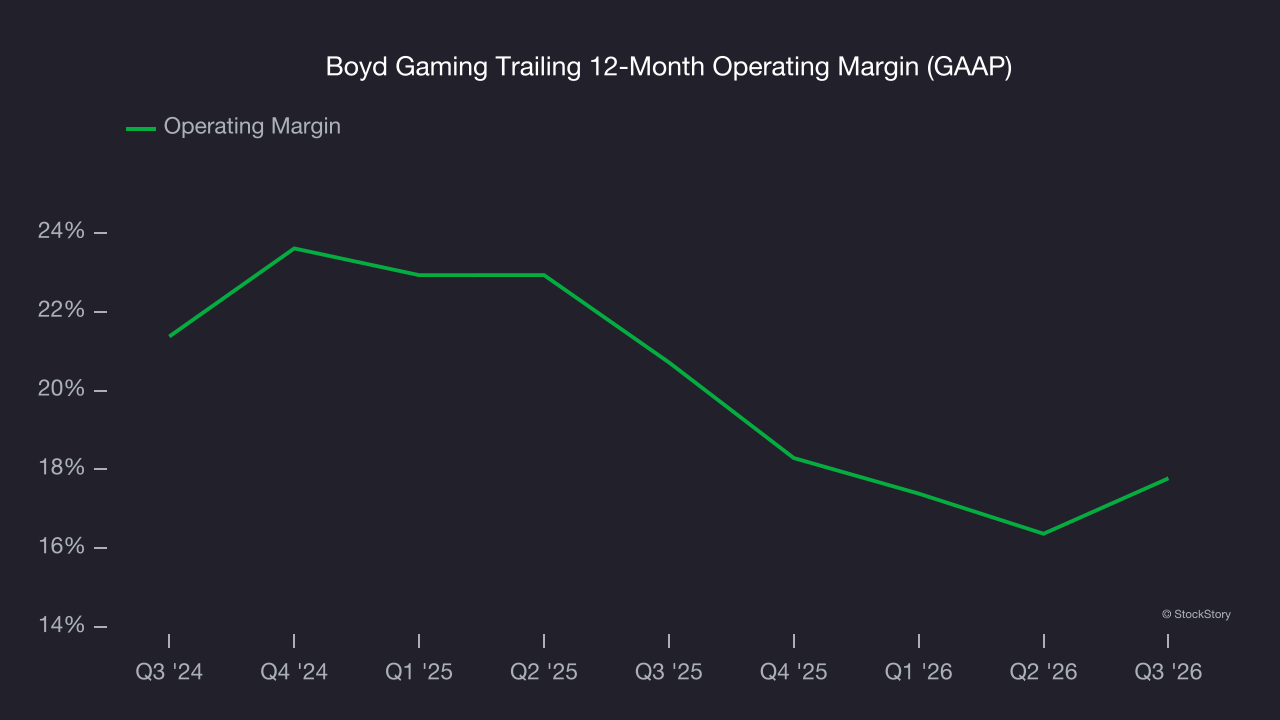
In Q3, Boyd Gaming generated an operating margin profit margin of 19.7%, up 5.8 percentage points year on year. This increase was a welcome development, especially since its revenue fell, showing it was more efficient because it scaled down its expenses.
Earnings per share
We track the long-term change in earnings per share (EPS) for the same reason as long-term revenue growth. Compared to revenue, however, EPS highlights whether a company’s growth is profitable.
Boyd Gaming’s EPS grew at 11.9% compounded annual growth rate over the last five years. This performance was better than its revenue growth but doesn’t tell us much about its business quality because its operating margin improvement was less than peers.
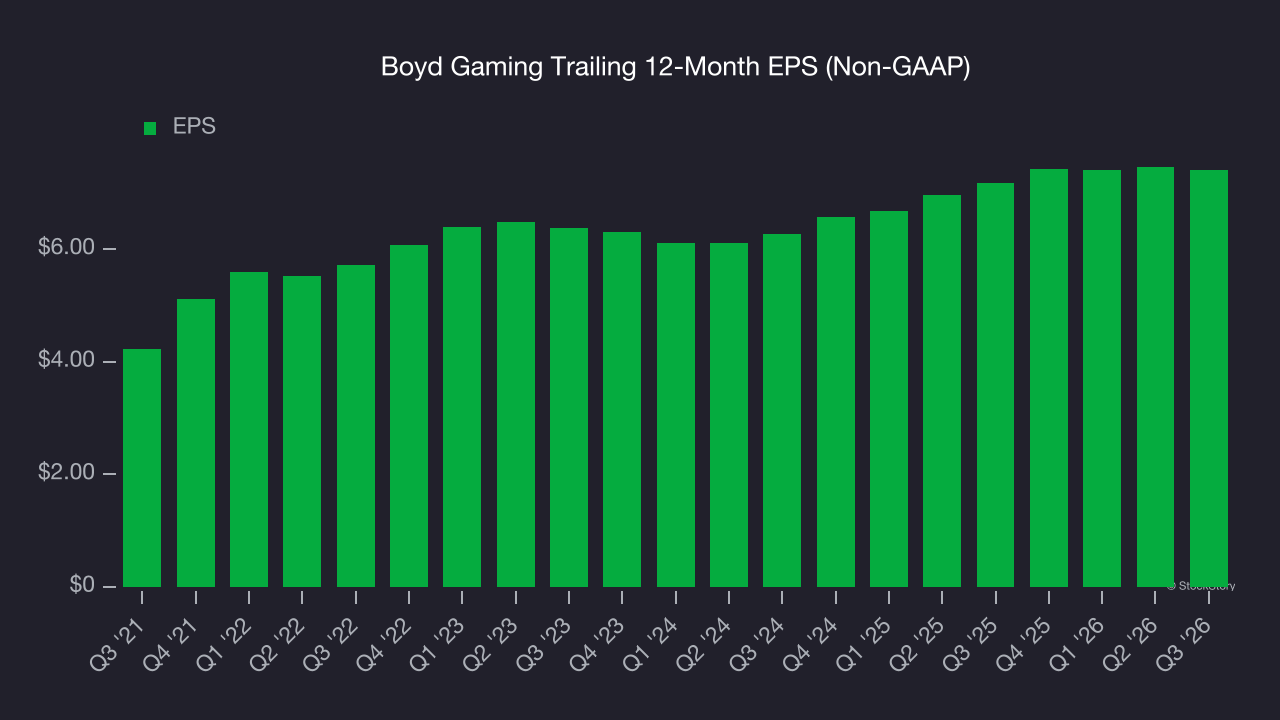
In Q3, Boyd Gaming reported adjusted EPS of $1.67, down from $1.72 in the same quarter last year. Despite falling year on year, this print beat analysts’ estimates by 3.1%. Over the next 12 months, Wall Street expects Boyd Gaming’s full-year EPS to shrink by 2.2% from $7.41 to $7.24.
Key takeaways from Boyd Gaming’s Q3 results
Adjusted EBITDA beat, but revenue missed. Overall, this quarter could have been better. The stock traded down 2.4% to $70.53 immediately after reporting.
Should you buy the stock or not? What happened in the latest quarter matters, but not as much as longer-term business quality and valuation, when deciding whether to invest in this stock. We cover that in our actionable full research report which you can read here (it’s free).