Clinical research company Fortrea Holdings (NASDAQ: FTRE) announced better-than-expected revenue in Q3 2026, but revenue fell by 1.4% year on year to $691.5 million. The company’s full-year revenue guidance of $2.68 billion at the midpoint came in 0.5% above analysts’ consensus estimates. Its non-GAAP profit of $0.28 per share was 28.9% above analysts’ consensus estimates.
For more on Fortrea, read our free full research report.
Fortrea (FTRE) Q3 2026 highlights:
- Revenue $691.5 million vs S&P analysts’ consensus estimates of $671 million (1.4% year-on-year decline, 3.1% beat)
- Adjusted EPS $0.28 vs S&P analysts’ consensus estimates of $0.22 (28.9% beat)
- Adjusted EBITDA $58 million vs analysts’ consensus estimates of $53.85 million (8.4% margin, 7.7% beat)
- Revenue guidance The company slightly lifted its revenue guidance for the full year to $2.68 billion at the midpoint from $2.66 billion
- EBITDA guidance $214 million at the midpoint for the full year, below analysts’ consensus estimates of $215.6 million
- Operating margin 2.2%, up from -1.2% in the same quarter last year
- Free cash flow margin 7.6%, down from 11.3% in the same quarter last year
- Market capitalization $2.46 billion
“Fortrea delivered another quarter of progress on our return-to-growth strategy, reflecting stronger commercial execution, continued operational improvements and financial discipline,” said Anshul Thakral, CEO of Fortrea. “Our sustained bookings momentum is building a foundation for growth, while targeted investments in early clinical development and technology enhance our ability to deliver differentiated value to clients. I’m proud of how Fortrea’s teams around the world are embracing our future direction while delivering for clients today. Our continued execution against our priorities gives us confidence to raise the midpoints of full-year guidance while narrowing ranges. We remain focused on translating stronger demand into revenue growth, margin expansion and long-term shareholder value.”
Revenue growth
Examining a company’s long-term performance can provide clues about its quality. Any business can have short-term success, but a top-tier one grows for years. Over the last five years, Fortrea’s demand was weak and its revenue declined by 2.6% per year. That outcome suggests poor business quality.
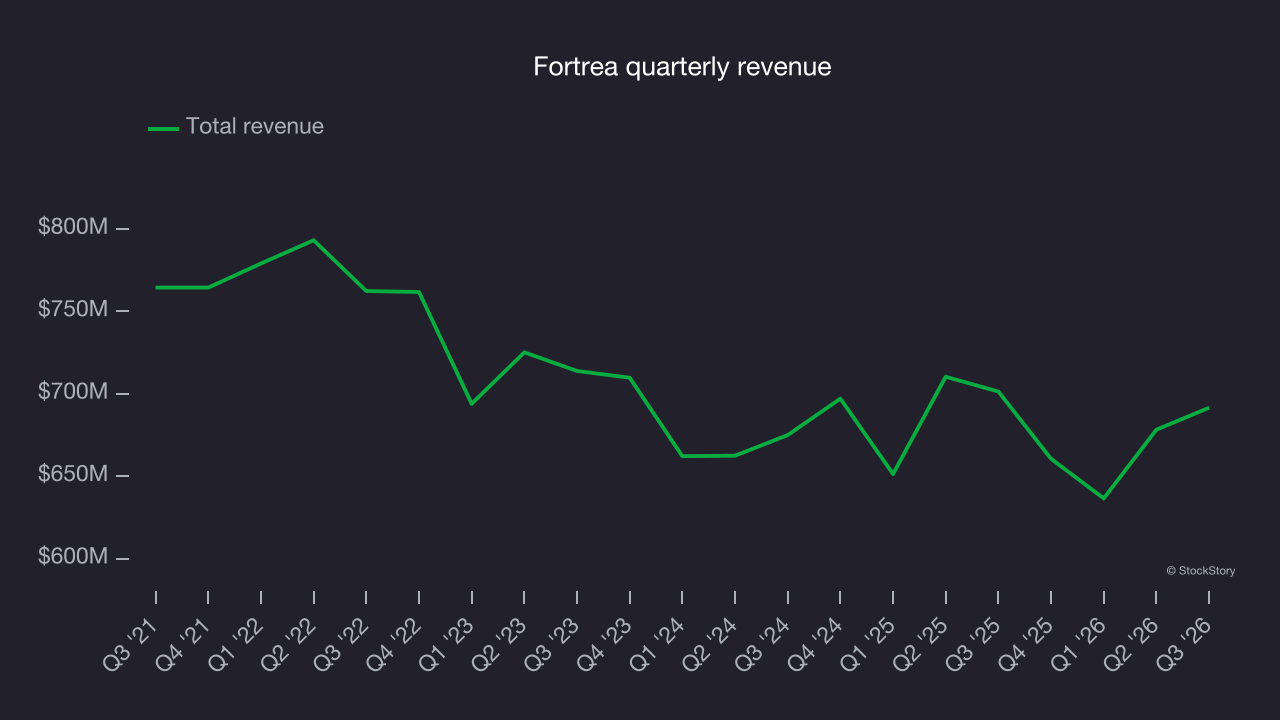
Long-term growth matters most, but within healthcare, a half-decade historical view may miss recent innovations or disruptive industry trends. Fortrea’s revenue over the last two years was flat, suggesting its demand was weak but stabilized after its initial drop. 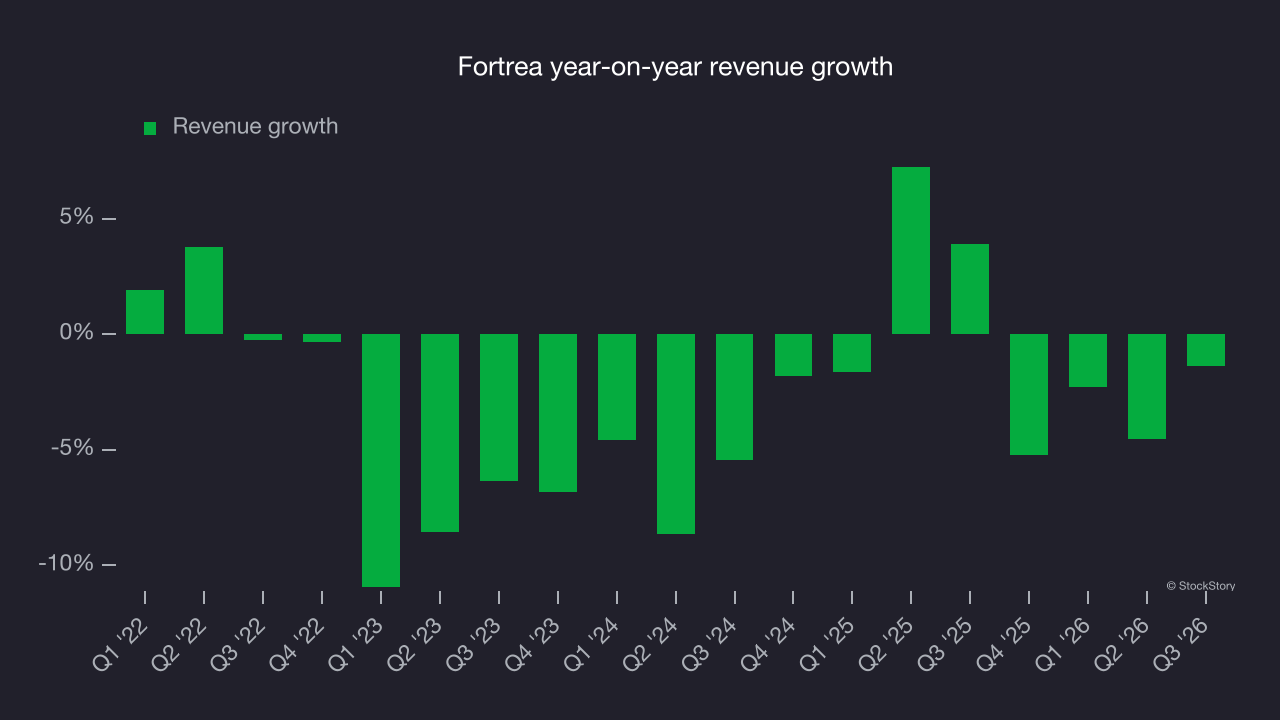
This quarter, Fortrea’s revenue fell by 1.4% year on year to $691.5 million but beat Wall Street’s consensus estimates by 3.1%.
Looking ahead, sell-side analysts expect revenue to grow 2.5% over the next 12 months, according to S&P. Although this projection implies its newer products and services will spur better top-line performance, it is still below average for the sector.
Adjusted operating margin
Fortrea was profitable over the last five years but held back by its large cost base. Its average adjusted operating margin of 7.7% was weak for a healthcare business.
Fortrea’s adjusted operating margin decreased by 5.5 percentage points over the last five years. This poor performance shows that costs were rising and it couldn’t pass them on to its customers.
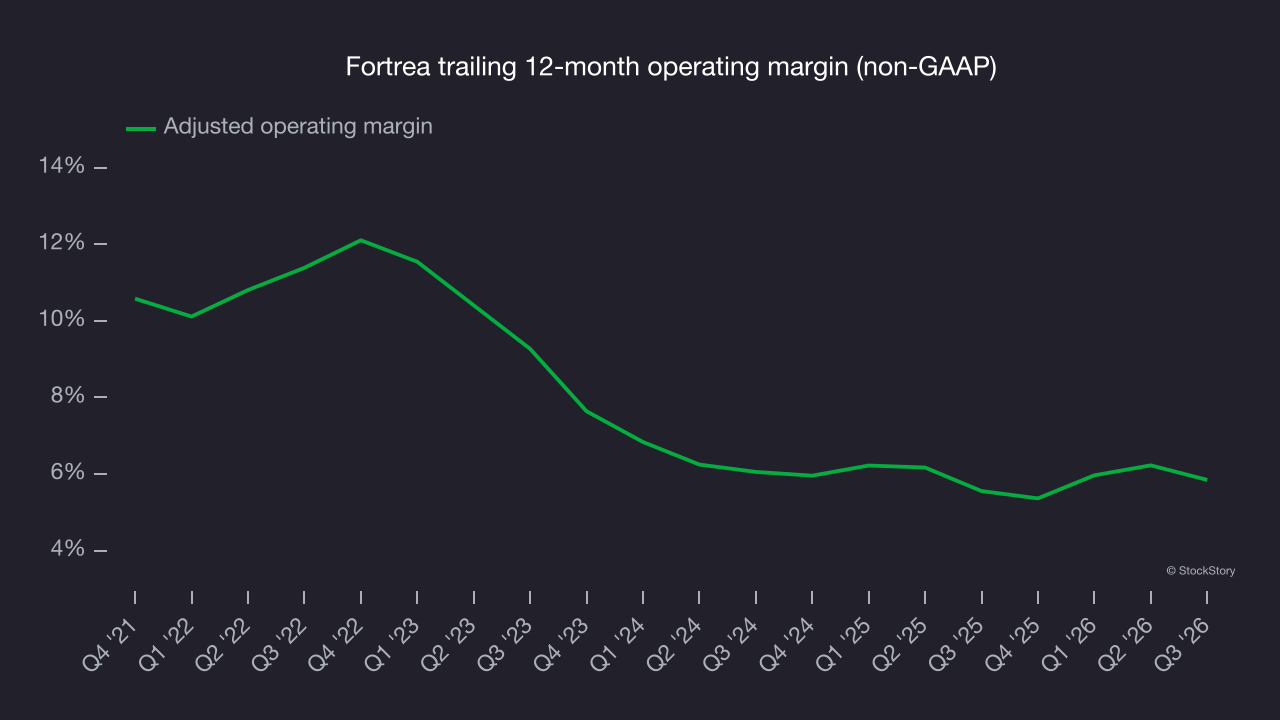
In Q3, Fortrea generated an adjusted operating margin of 3.9%, down 1.5 percentage points year on year. This small reduction indicates the company’s overall cost structure has been relatively stable.
Cash flow
Earnings are valuable for assessing company performance, but cash flow matters because accounting profits can’t pay the bills.
Fortrea has shown mediocre cash profitability relative to peers over the last five years, giving the company fewer opportunities to return capital to shareholders. Its free cash flow margin averaged 3.9%, below the level expected for a healthcare business.
A positive sign is that Fortrea’s margin expanded by 5 percentage points during that time. The improvement shows it is heading in the right direction, with rising free cash flow profitability alongside falling operating profitability indicating a less capital-intensive business.
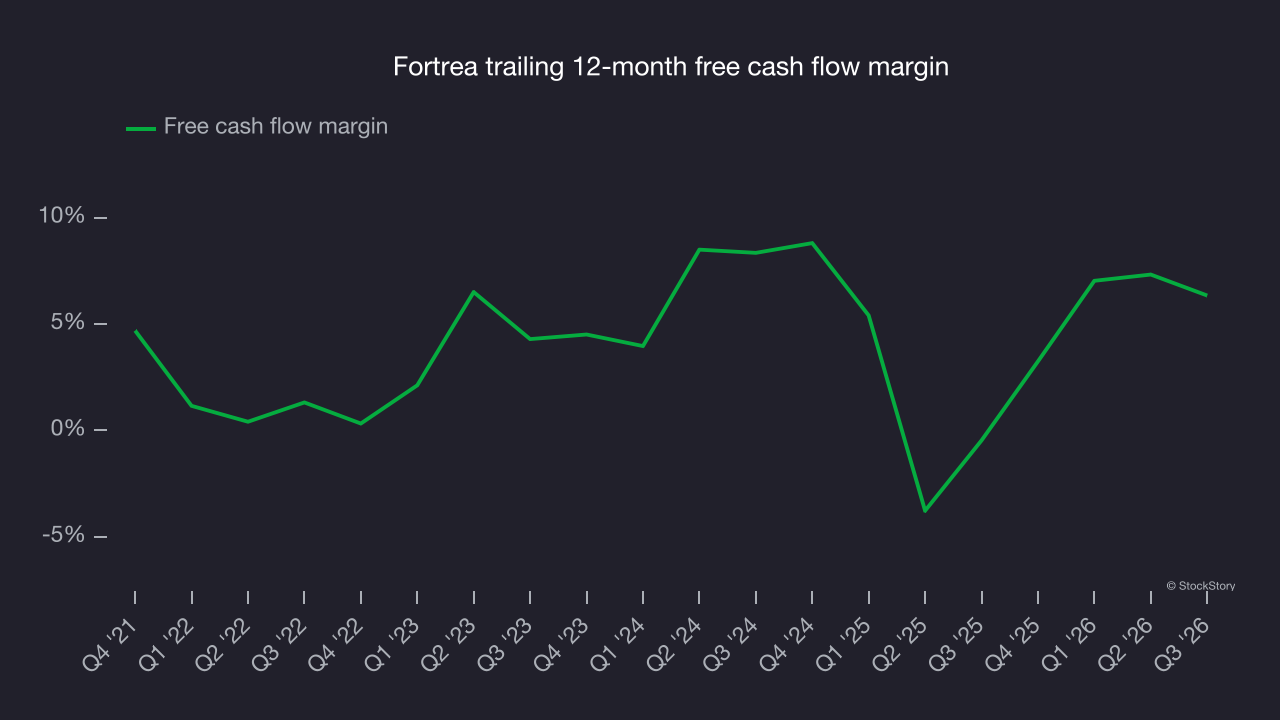
Fortrea’s free cash flow was $52.5 million in Q3, equivalent to a 7.6% margin. The company’s cash profitability regressed as it was 3.7 percentage points lower than in the same quarter last year, but it’s still above its five-year average. This quarter’s decline warrants limited weight because investment needs can be seasonal, causing short-term swings. Long-term trends carry greater meaning.
Key takeaways from Fortrea’s Q3 results
Fortrea delivered a solid Q3, with EPS and revenue both topping analysts’ consensus estimates. Those beats were the quarter’s key positives. Shares remained flat at $25.95 immediately after the results.
Fortrea had an encouraging quarter, but one earnings result doesn’t necessarily make the stock a buy. The latest quarter matters, but longer-term fundamentals and valuation matter more when deciding whether to invest. For more on Fortrea, read the full research report here (it’s free).