I concluded a January 30, 2026, Barchart article on the lumber futures market with the following:
Lumber could rally substantially over the coming weeks and months. Technical resistance is at $618.50, the recent high, $635, the high from October 2025, and just below $700 per 1,000 board feet, the highs from August and March 2025. If lumber prices rise above the $700 technical resistance level, an explosive move could develop, lifting shares of the WOOD and CUT ETFs and WY shares.
Don’t Miss a Day: From crude oil to coffee, sign up free for Barchart’s best-in-class commodity analysis.
Nearby March physical lumber futures were trading at $598.50 on January 29, with lumber for May 2026 delivery at the $629 per 1,000 board feet level. The WOOD ETF was $79.24, the CUT ETF was $30.07, and WY shares were trading at $25.86. In late February, lumber futures prices and WY and WOOD shares were slightly lower, while the CUT ETF was slightly higher.
Lumber moves into seasonal strength
After the snow melts and temperatures rise in spring, the construction season will get into full swing.
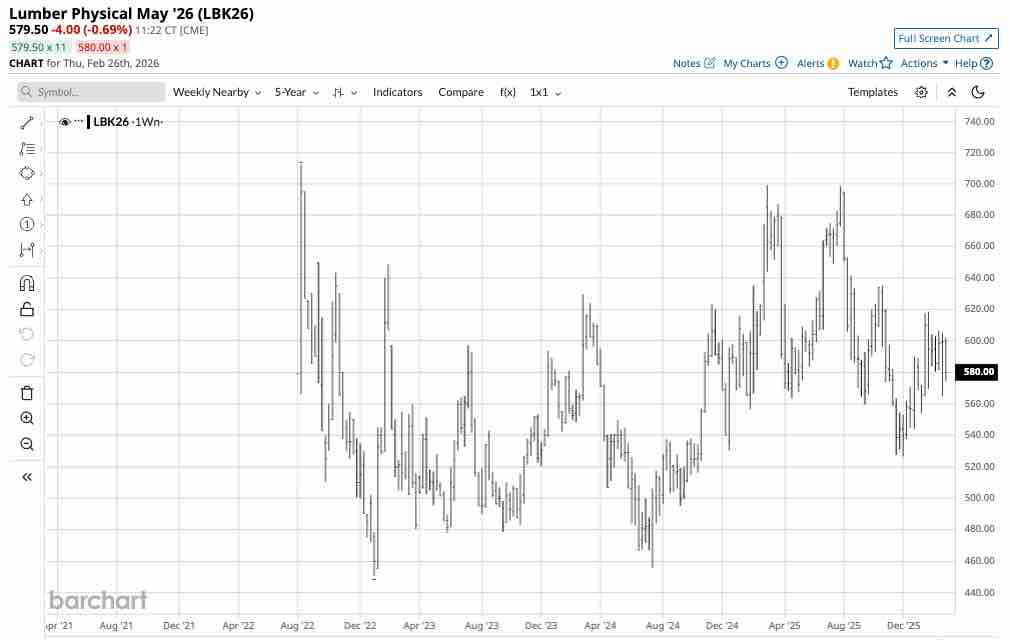
The weekly continuous contract CME physical lumber futures chart shows that the price range since August 2022 has been between $450.50 and $712.00 per 1,000 board feet. May physical lumber futures at $579.50 per 1,000 board feet in late February were just below the trading range’s midpoint as spring approaches.
Bonds and lumber- Mortgage rates are critical
Lumber is a critical ingredient in new home construction, so interest rates influence the path of least resistance for wood prices.
The iShares 20+ Year Treasury Bond ETF (TLT) tracks the price of long-term U.S. government bonds that determine 30-year fixed-rate mortgage rates.
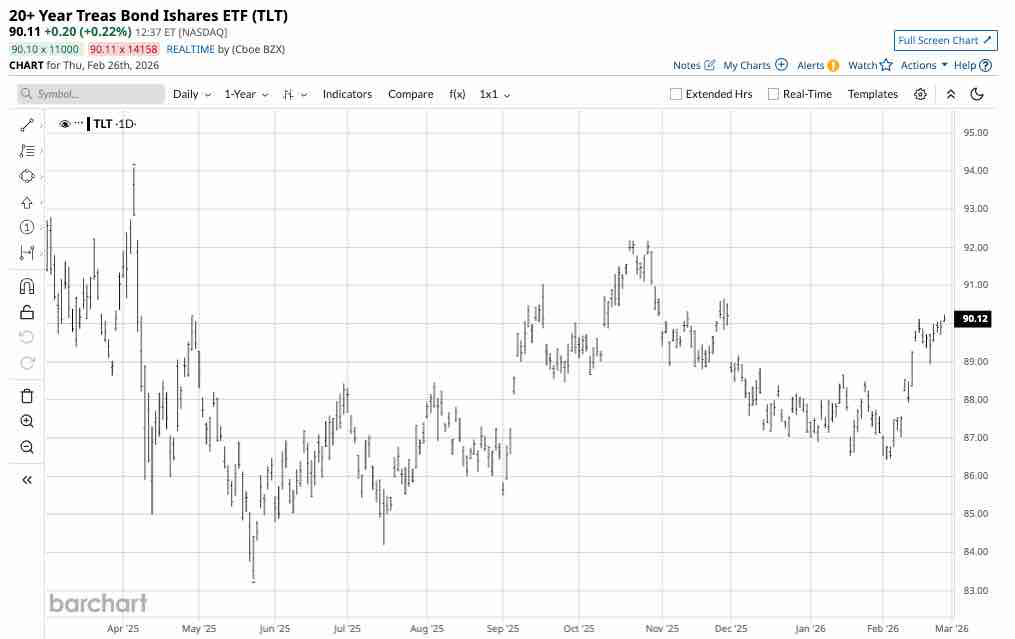
While interest rates remain elevated compared to the levels since 2020-2022, when 30-year fixed-rate mortgages fell below 3%, the daily one-year chart shows that TLT and government bonds have made higher lows since May 2022. The bullish bias in TLT suggests mortgage rates are trending slightly lower, which could increase new-home demand and construction and be bullish for lumber prices over the coming months.
Changes at the Fed favor lumber futures
President Trump nominated Kevin Warsh to replace Jerome Powell as the next Chairman of the U.S. Federal Reserve. The President and his administration have not been shy in their criticism of the Fed, saying it has taken too long to reduce the short-term Fed Funds Rate. Therefore, the new Chairman, with the administration’s support, will likely favor reducing the rate from the current 3.625% over the coming months. Two factors favor lower rates. Inflation is currently below 3%, and the most recent Supreme Court ruling on tariffs could push inflation indicators even lower.
While falling short-term rates do not guarantee lower long-term interest rates, the trends in TLT and the U.S. government bond markets have been marginally bullish, suggesting that lower long-term rates could be on the horizon. While the Fed’s primary monetary policy tool is the Fed Funds Rate, market forces determine long-term rates.
If the long-term rate follows short-term rates in 2026, demand for new 30-year mortgages and new homebuilding could increase, driving higher lumber demand and higher wood prices.
Technical levels to watch in lumber futures
May physical lumber prices are trending bearish in late February 2026, which could be an opportunity if lower rates are on the horizon.
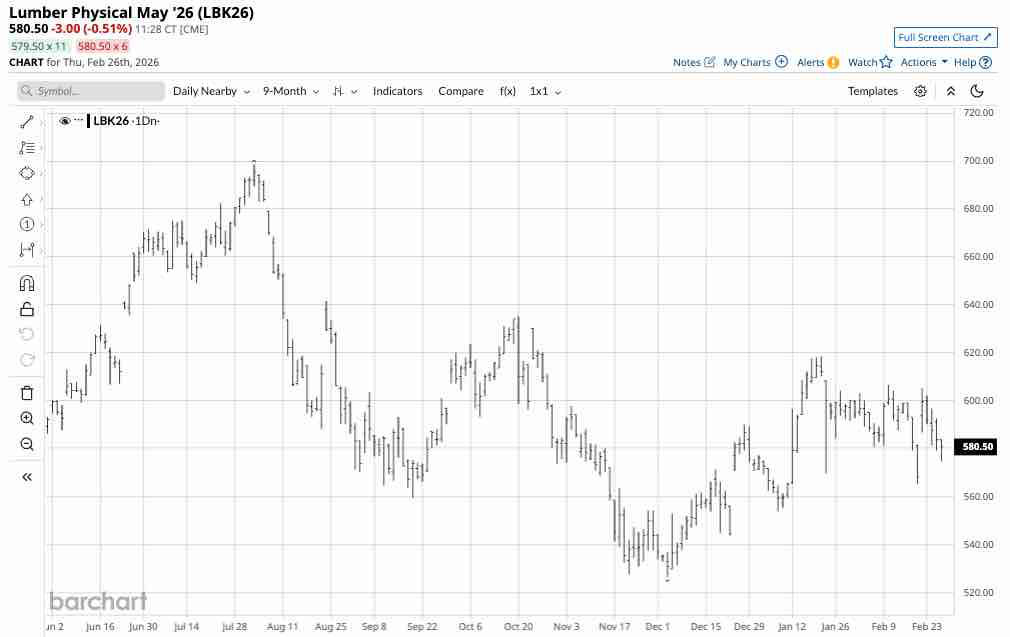
The daily continuous physical lumber futures contract chart highlights the bearish trend of lower highs. With May futures trading just over $580 per 1,000 board feet in late February, the first critical technical resistance is at the January 21, 2026, high of $618.50. Above there, the October 20, 2025, high of $635 and the August 1, 2025, high of $698.50 per 1,000 board feet are upside targets. Technical support is at the December 3, 2025, low of $526.50 per 1,000 board feet.
I am bullish on lumber prices and expect them to break above the first resistance at $618.50, driven by seasonality and the prospects of falling U.S. interest rates.
Technical levels to watch in WOOD, CUT, and WY
Lumber futures remain highly illiquid with under 9.500 contracts of open interest, the total number of open long and short positions. The daily trading volume remains low, averaging under 1,500 contracts.
The WOOD and CUT ETFs and WY shares are lumber proxies that offer liquidity.
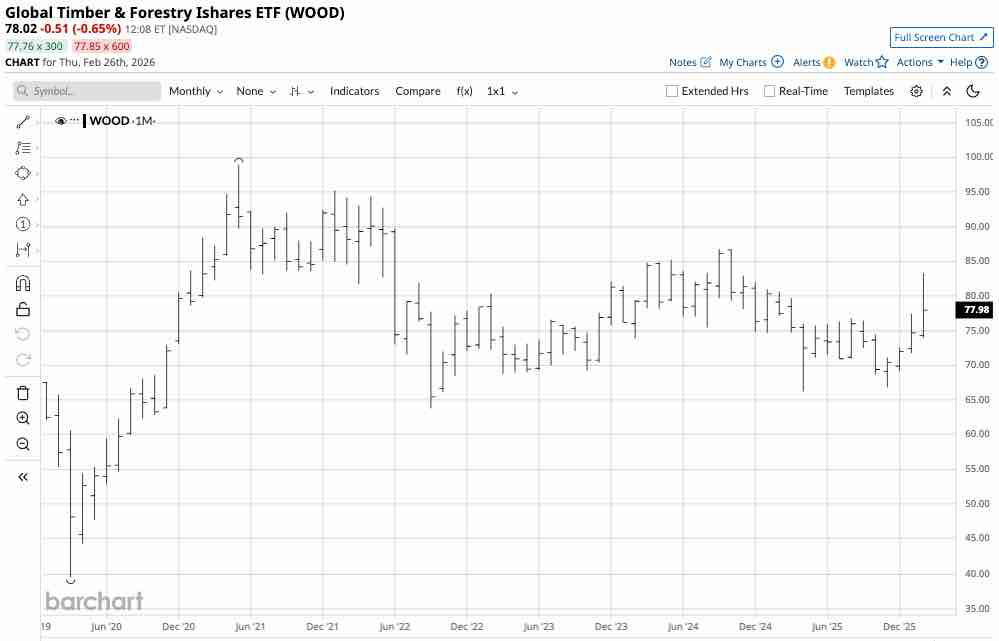
The monthly chart of the iShares Global Timber & Forestry ETF (WOOD) shows that at $78.02 per share, technical resistance is at the September 2024 high of $86.79 per share. Support is at the April 2025 low of $66.25 per share.
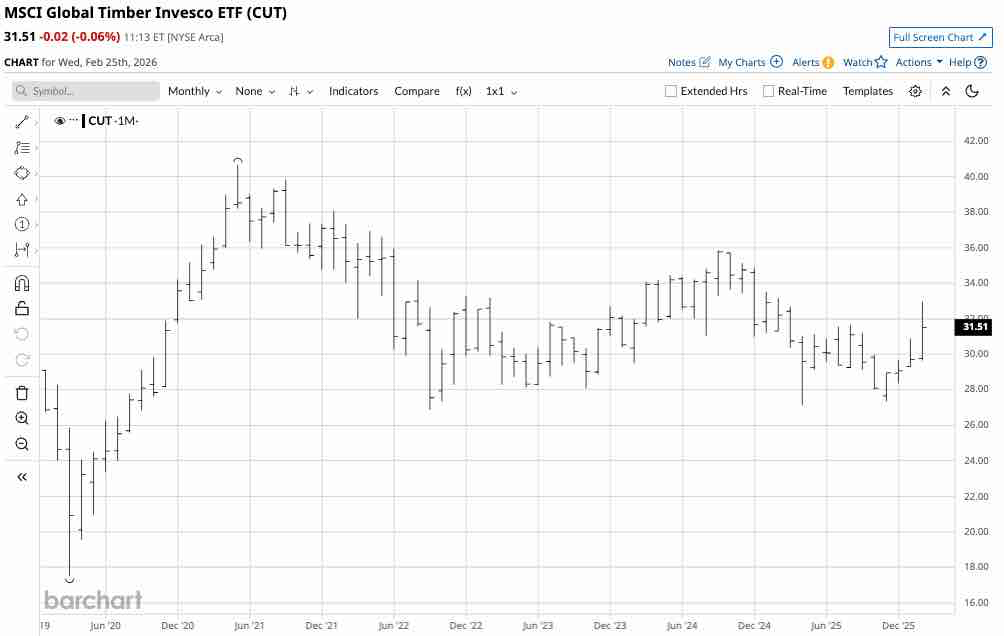
The monthly chart of the Invesco MSCI Global Timber ETF (CUT) shows that at $31.51 per share, technical resistance is at the September 2024 high of $35.86 per share. Support is at the April 2025 low of $27.12 per share.
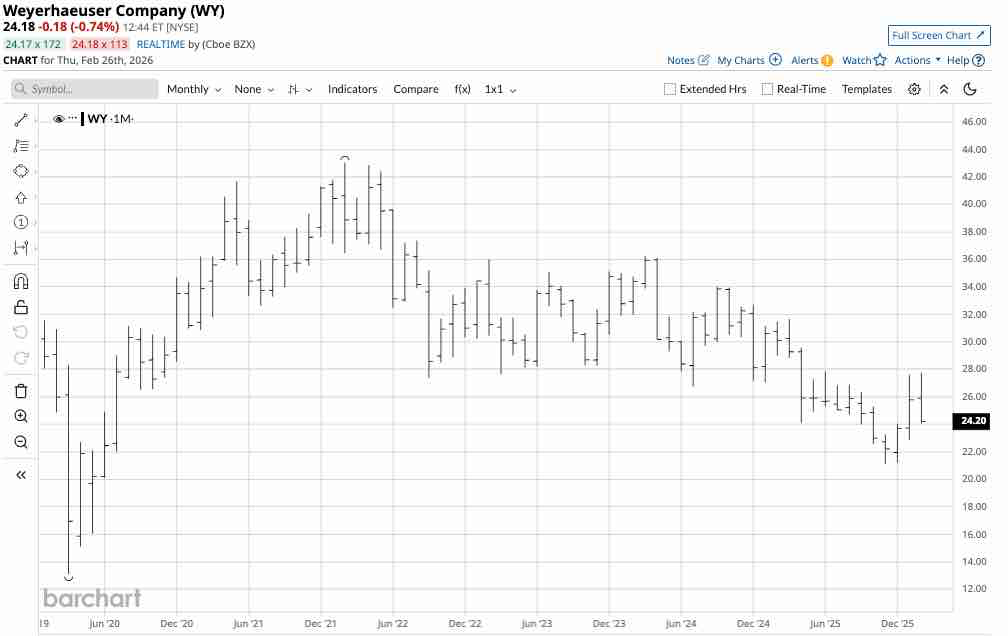
The monthly chart of Weyerhaeuser Company (WY), which operates as a REIT in the lumber sector, shows that at $24.18 per share, technical resistance is at the September 2024 high of $34.02 per share. Support is at the November 2025 low of $21.16 per share.
If lumber prices are heading higher over the coming months, the WOOD and CUT holdings, and WY shares will likely see revenues rise, pushing their share prices higher.
On the date of publication, Andrew Hecht did not have (either directly or indirectly) positions in any of the securities mentioned in this article. All information and data in this article is solely for informational purposes. For more information please view the Barchart Disclosure Policy here.
More news from Barchart