For much of the past decade, Ford Motor Company (F) positioned itself as a legacy automaker racing to reinvent its future through electric vehicles (EVs). But recent developments suggest a more pragmatic — and arguably more scalable — pivot is underway. Rather than doubling down exclusively on EV production, Ford is now repurposing those investments into a new frontier: grid-scale energy storage.
At the center of this shift is Ford Energy, a wholly owned division carved out of the company’s EV infrastructure. What initially looked like a defensive move following a reported $20 billion write-down in its EV segment is now emerging as a calculated reallocation of capital toward a structurally higher-demand market.
The EDF Deal: Validation at Scale
Ford Energy’s first major commercial validation comes via a landmark agreement with EDF and its North American renewables arm. Instead of a pilot program, Ford is targeting industrial scale: the five-year framework includes the delivery of up to 20 gigawatt-hours (GWh) of battery storage systems, with annual capacity reaching 4 GWh.
The deal signals two critical realities:
- First, utilities are aggressively scaling storage to stabilize intermittent renewable generation.
- Second, Ford has successfully repositioned itself as a credible supplier within that ecosystem.
Lisa Drake, president of Ford Energy, framed the agreement as validation of a market gap.
“This agreement with EDF Power Solutions validates the market’s need for a BESS supplier that combines industrial-scale manufacturing discipline with full lifecycle accountability,” Drake said in a company release. “We are not simply delivering hardware. We are delivering the kind of predictable quality and long-term operational confidence that grid operators and large-scale developers require. Ford Energy was purpose-built to serve customers who cannot afford uncertainty in their energy storage supply chain.”
That language is telling; it evokes Ford’s historical strengths, which are now finding new applications outside the confines of its iconic vehicles.
The Bigger Catalyst: AI and the Power Demand Shock
While renewable energy growth is a well-established investment trend, the acceleration is being driven by a less-discussed force: artificial intelligence (AI) infrastructure.
Hyperscale data centers run by cloud providers and AI firms are creating an unprecedented surge in electricity demand. These facilities require:
- Continuous, reliable power
- Load balancing across peak demand cycles
- Integration with renewable energy sources
This is where battery storage becomes indispensable.
Ford’s timing is not accidental. As AI adoption expands, so too does the need for grid flexibility, making energy storage one of the most attractive adjacent markets for industrial players.
CATL Partnership: A Strategic Edge in Supply Chains
A key pillar of Ford’s competitive positioning is its licensing agreement with CATL, the world’s leading battery producer.
Through this relationship, Ford gains:
- Access to lithium iron phosphate (LFP) battery technology
- A pathway to secure critical materials, including rare earth inputs
- Compliance with U.S. regulatory frameworks, including “Foreign Entity of Concern” rules
This last point is especially important. Energy storage customers, particularly utilities and data center operators, are incentivized through tax credits (up to 30%) that require compliant supply chains. Ford, via CATL, is now positioned as one of the few semi-vertically integrated domestic energy storage system (ESS) suppliers able to meet those standards.
Wall Street’s View: Underappreciated Upside
Analysts at Morgan Stanley have been quick to highlight the opportunity. In recent commentary, the firm described Ford Energy as an “underappreciated competitive advantage,” projecting:
- $500M–$600M in EBIT at ~20 GWh production capacity
- Near-term potential for additional contracts with hyperscalers and large commercial buyers
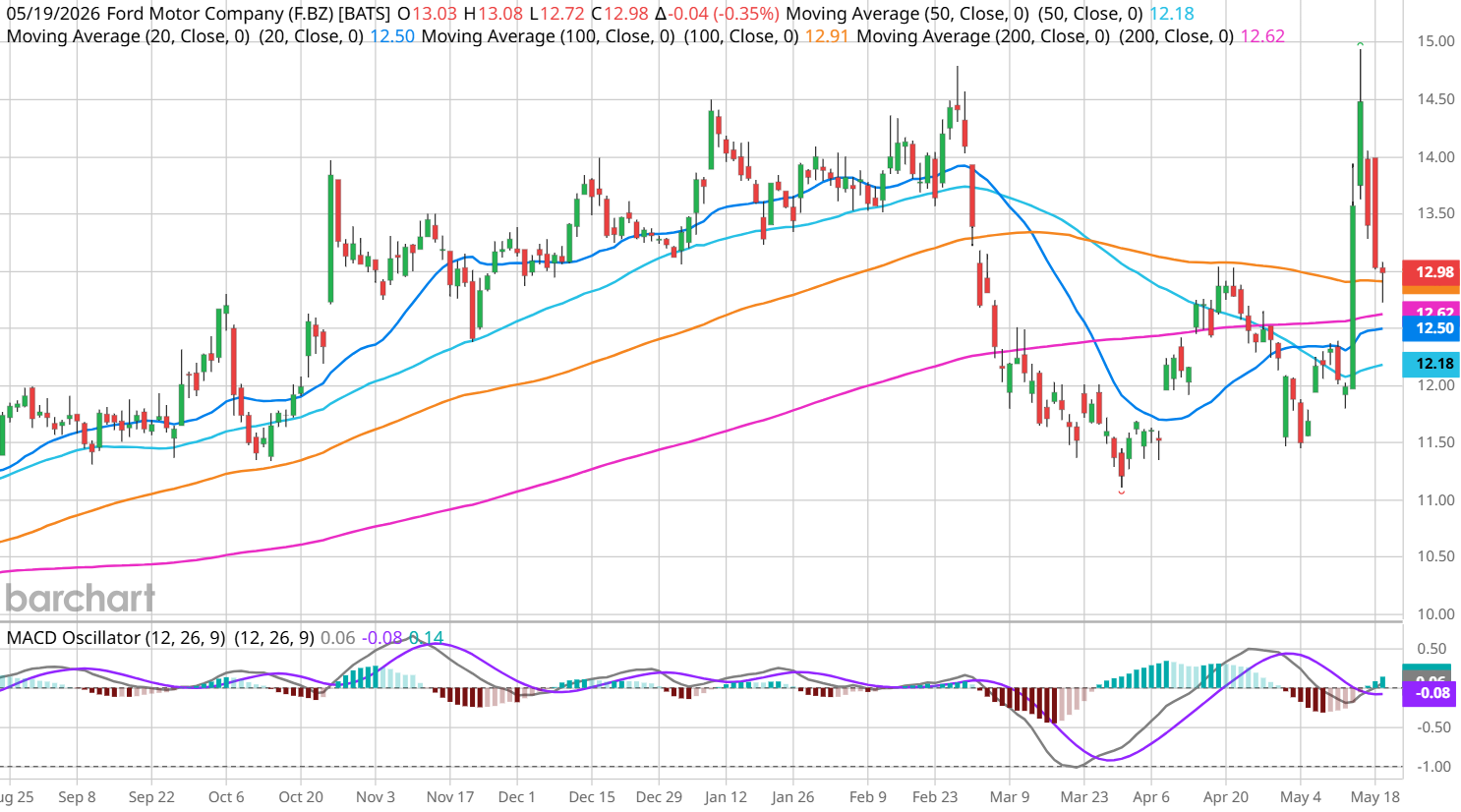
Notably, Ford stock responded positively to the Energy division's rollout, suggesting that the market is beginning to reward the shift from a capital-intensive EV strategy to a potentially higher-margin infrastructure play.
From Automaker to Energy Platform
Ford’s move reflects a broader evolution in industrial strategy:
- Phase 1: Build EV capability (batteries, supply chains, manufacturing)
- Phase 2: Recognize demand mismatch in EV adoption vs. infrastructure ROI
- Phase 3: Redeploy assets into energy storage, where demand is immediate and scaling
In effect, Ford is no longer just selling vehicles. It’s positioning itself as an energy systems provider.
The Bottom Line
The takeaway for investors is that Ford’s pivot is less about abandoning EVs and more about monetizing the most valuable component of that ecosystem: the battery.
Similar to how CAT has transitioned itself into an on-site power demand generator supplier, Ford has now positioned itself at the intersection of two of the decade’s most powerful trends: renewable electrification and AI-driven energy demand.
And by leveraging the confluence of structural demand drivers, surging power consumption, renewable intermittency, and grid modernization, Ford Energy may ultimately prove to be a more durable growth engine than its EV segment ever was.
– John Rowland, CMT, is Barchart’s Senior Market Analyst and host of Market on Close.
On the date of publication, Barchart Insights did not have (either directly or indirectly) positions in any of the securities mentioned in this article. All information and data in this article is solely for informational purposes. For more information please view the Barchart Disclosure Policy here.
More news from Barchart
- What is Backwardation in the Crude Oil Futures Market Telling Us?
- EagleRock Land Just Went Public at a $3 Billion Valuation. Take Your Time With EROK Stock Before Buying.
- Ford Didn’t Fail at EVs. Here’s Why Energy Storage Upside Might Be Closer Than It Appears.
- FuelCell Energy Leads Hydrogen Stocks Lower. Here's Why