Bigger bodies grow larger organs with more cells, increasing the odds for mutations and future malignancy
Scientists at City of Hope® and TGen (part of City of Hope) are the first to explain a major mechanism for why gaining excess weight increases your risk of cancer. City of Hope is one of the largest and most advanced cancer research and treatment organizations in the United States, with its National Medical Center ranked among the nation’s top cancer centers by U.S. News & World Report.
This press release features multimedia. View the full release here: https://www.businesswire.com/news/home/20260324179187/en/
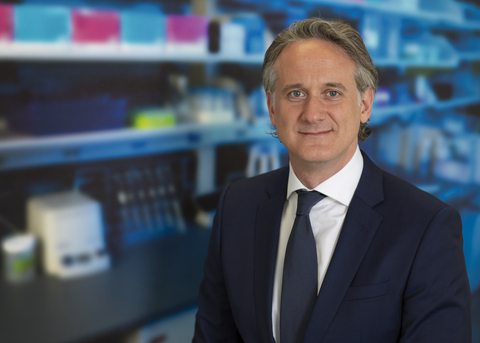
Cristian Tomasetti, Ph.D., director of City of Hope’s Center for Cancer Prevention, Early Detection and Monitoring and professor in the Early Detection and Prevention Division at TGen (Photo Credit: TGen)
The study, published today in Cancer Research, a journal of the American Association for Cancer Research, reveals a major driving force behind how obesity increases cancer risk across multiple organs. The findings emphasize the importance of maintaining a healthy weight from early childhood and propose a potentially more accurate way than body mass index (BMI) to predict the increase in cancer risk associated with obesity.
“People have long been told that obesity increases cancer risk, but they are rarely told why. Our study reveals that excess weight doesn’t just affect metabolism or hormones — it can physically enlarge organs, creating more opportunities for cancer to take hold. Understanding that process matters because it helps explain how everyday health choices can shape cancer risk years for even decades down the line,” said senior author Cristian Tomasetti, Ph.D., director of City of Hope’s Center for Cancer Prevention, Early Detection and Monitoring and professor in the Early Detection and Prevention Division at TGen.
In other words, as a person gains weight, their organs also grow in size by accumulating more cells to meet the higher energy needs of a bigger body. Having more cells boosts the odds of more DNA errors as cells divide, increasing the likelihood of cancer. To test this hypothesis, Tomasetti and his collaborators conducted a two-pronged study.
First, the team evaluated 747 adults whose weight in relationship to their height spanned the complete BMI spectrum, from underweight (18.5 BMI) all the way to severely obese (40-plus BMI). Using CT scans, the researchers measured the size of each adult’s liver, kidneys and pancreas.
This study is the first to analyze the size of multiple organs in a large cohort of individuals across the full BMI spectrum.
The scientists discovered that the organs grew larger as body weight increased. For every 5-point increase in BMI, the liver grew by 12%, kidneys by 9% and the pancreas by 7%.
Next, the research team counted the cells in samples of kidney tissue taken from autopsies and reanalyzed biopsy data from living patients. The lab showed that more than 60% of the kidneys’ growth resulted from an increase in the number of cells in the organ, a process called hyperplasia. The rest was due to individual cells growing bigger, or hypertrophy.
The City of Hope and TGen finding corrects earlier theories that larger organ size in obese individuals resulted primarily from fatter cells. Rather, obesity mainly increases the number of cells at risk for copying errors, uncontrollable growth and potential malignancy.
This increase in organ size has harmful consequences. “Think of playing the lottery: The more tickets you buy, the greater your chances of winning,” Dr. Tomasetti said. “Similarly, the more cells in an organ, the more mutations and the greater the risk of one cell going awry during division and becoming cancerous.”
Overall, the study showed a strong link between organ size enlargement and cancer risk across all three organs, confirming the mathematical predictions. The finding provides evidence for this as a major mechanism of tumorigenesis induced by obesity, in addition to factors like inflammation and hormonal imbalances.
This newly discovered effect of obesity can be large — with organs even doubling in size.
“When an organ doubles in size, it is expected to roughly double its risk of developing cancer,” said first author Sophie Pénisson, Ph.D., associate professor at TGen. She continues, “BMI is a poor proxy for telling us what the size of an organ is, as BMI doesn’t distinguish between fat and lean tissue. Our work suggests that, at least for some organs, their dimensions may predict cancer risk better than BMI.”
Noting the relationship between diet and cancer, the authors emphasized the importance of maintaining a healthy weight from a young age.
“Organs take time to grow, and it can take decades for cells to turn malignant,” said Dr. Tomasetti. “Childhood obesity gives organ cells a longer runway to accumulate mutations and evolve into something worse.”
Future studies will explore whether losing weight can reduce organ size and cancer risk, and the potential effect of GLP-1 drugs on lowering cancer risk through weight loss.
“This exciting research deepens our understanding of how obesity may lead to cancer and highlights the role of organ growth in this process, which is also relevant for many individuals with diabetes. It will be important to see if the new anti-obesity drugs can revert this process for cancer prevention,” said Debbie C. Thurmond, Ph.D., director of the Arthur Riggs Diabetes & Metabolism Research Institute and Chan Soon-Shiong Shapiro Distinguished Chair in Diabetes at City of Hope.
The study, “Hyperplasia Functions as a Link Between Obesity and Cancer,” was supported by the John Templeton Foundation (Grant ID 63060), the Lustgarten Foundation for Pancreatic Cancer Research (Grant 90081420), the Maryland Cigarette Restitution Fund (Grant FHB33CRF/MOOP8401367) and the National Institutes of Health (Grant P30–CA006973).
Conflict of interest notice: Under a license agreement between Exact Sciences and the Johns Hopkins University, Dr. Tomasetti and the University are entitled to royalty distributions. Dr. Tomasetti is a paid consultant to Bayer AG, a member of the PrognomiQ Inc. scientific advisory board and the founder of C2T Biosciences.
About City of Hope
City of Hope's mission is to make hope a reality for all touched by cancer and diabetes. Founded in 1913, City of Hope has grown into one of the largest and most advanced cancer research and treatment organizations in the United States, and one of the leading research centers for diabetes and other life-threatening illnesses. City of Hope research has been the basis for numerous breakthrough cancer medicines, as well as human synthetic insulin and monoclonal antibodies. With an independent, National Cancer Institute-designated comprehensive cancer center that is ranked among the nation’s top cancer centers by U.S. News & World Report at its core, City of Hope’s uniquely integrated model spans cancer care, research and development, academics and training, and a broad philanthropy program that powers its work. City of Hope’s growing national system includes its Los Angeles campus, a network of clinical care locations across Southern California, a new cancer center in Orange County, California, and cancer treatment centers and outpatient facilities in the Atlanta, Chicago and Phoenix areas. City of Hope’s affiliated group of organizations includes Translational Genomics Research Institute and AccessHopeTM. For more information about City of Hope, follow us on Facebook, X, YouTube, Instagram and LinkedIn.
About TGen, part of City of Hope
Translational Genomics Research Institute (TGen) is a Phoenix, Arizona-based nonprofit organization dedicated to conducting groundbreaking research with life-changing results. TGen is part of City of Hope, a world-renowned independent research and treatment center for cancer, diabetes and other life-threatening diseases. This precision medicine affiliation enables both institutes to complement each other in research and patient care, with City of Hope providing a significant clinical setting to advance scientific discoveries made by TGen. TGen is focused on helping patients with neurological disorders, cancer, diabetes, and infectious diseases through cutting-edge translational research (the process of rapidly moving research toward patient benefit). TGen physicians and scientists work to unravel the genetic components of both common and complex rare diseases in adults and children. Working with collaborators in the scientific and medical communities worldwide, TGen makes a substantial contribution to helping patients through efficiency and effectiveness of the translational process. Follow on Facebook, Instagram, LinkedIn and Bluesky.
View source version on businesswire.com: https://www.businesswire.com/news/home/20260324179187/en/
Contacts
Zen Logsdon
626-409-9367
zlogsdon@coh.org