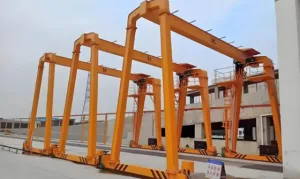
The purchase price on a hydraulic gantry crane quote is only part of what it actually costs to own. The full number includes acquisition, installation, ongoing maintenance, and downtime risk — and hydraulic gantry cranes generally come out ahead of fixed rail-mounted or electric-drive alternatives on that total, primarily because they eliminate the rails, foundations, and dedicated power infrastructure that heavier systems require. For capital equipment buyers in shipyards, precast concrete plants, heavy machining shops, and infrastructure contracting, that difference in fixed-infrastructure burden is usually the single largest variable in the total cost — larger than the quoted unit price itself.
Manufacturers such as Voitto Crane, which builds hydraulic gantry crane systems for industrial and infrastructure applications, are a useful benchmark for buyers comparing specifications and total-cost data across suppliers before modeling a purchase decision.
Beyond the Purchase Price: Total Cost of Ownership
A hydraulic gantry crane’s total cost of ownership (TCO) breaks down into four buckets: acquisition cost, installation and site prep, operating cost (power, maintenance, labor), and downtime risk. Acquisition cost is the easiest line item to compare across vendors — and the least representative of long-term value.
For a facility without existing crane infrastructure, avoiding rail and foundation work can materially reduce capital outlay in year one, freeing budget for other production investments.
Operating Economics: Where the Numbers Actually Move
The financial case for hydraulic gantry cranes strengthens once you model operating flexibility. Because these units are mobile and don’t require permanent rail or foundation work, they can be redeployed across job sites or reconfigured within a facility without a second capital project. For contractors and fabricators whose workload shifts between locations, this portability converts what would otherwise be a sunk, single-site asset into a mobile one — improving utilization rates and shortening payback periods.
Maintenance economics also favor simplicity. Hydraulic systems generally have fewer high-precision electronic components than electric-drive alternatives, which can translate into lower parts costs and reduced reliance on specialized technicians for routine servicing — a meaningful consideration for buyers in regions where skilled crane-service labor is scarce or expensive.
Downtime Risk and Safety Liability
Unplanned downtime is often the largest hidden cost in heavy-lift operations. A crane failure that halts a production line or delays a construction milestone carries costs far beyond the repair bill — contractual penalties, idle labor, and schedule slippage all compound quickly. Buyers building a cost-benefit model should weight reliability and serviceability at least as heavily as purchase price, since a marginally cheaper machine that fails more often will erode its price advantage within a single incident.
Safety compliance factors into the same calculus. Load-rated, properly certified hydraulic gantry systems reduce exposure to workplace incidents and the associated regulatory and insurance costs — a financial variable that’s easy to overlook in a straight price comparison but shows up clearly in a facility’s loss-run history over time.
Building the Business Case
For finance and procurement teams building a formal business case, a useful framework is to model three scenarios — low utilization, expected utilization, and high utilization — against acquisition cost, annual maintenance, redeployment savings, and estimated downtime exposure. In most cases, the breakeven point for a hydraulic gantry crane versus a fixed rail-mounted system favors the hydraulic option specifically because of its lower fixed-infrastructure burden and redeployment flexibility, even when hourly operating costs are comparable.
Vendor selection matters as much as the equipment category. Buyers should request documented load-testing data, warranty terms, parts availability timelines, and reference sites with comparable duty cycles — all of which affect the real-world TCO far more than the quoted unit price.
The Bottom Line
A hydraulic gantry crane purchase should be underwritten the way any other capital asset is: on lifecycle cost, utilization flexibility, and downside risk — not just the number on the quote. For organizations weighing crane infrastructure investment against operational agility, the hydraulic gantry format frequently delivers the stronger financial profile, particularly where site flexibility and lower fixed-infrastructure costs are priorities.
This article is intended for general informational purposes and does not constitute financial or engineering advice. Buyers should conduct site-specific engineering and financial assessments before making equipment purchase decisions.