In a dramatic recalibration of American trade policy, the Trump administration has officially pivoted to Section 122 of the Trade Act of 1974 to sustain its sweeping tariff regime. This move follows a landmark February 20, 2026, Supreme Court ruling that stripped the executive branch of the power to use the International Emergency Economic Powers Act (IEEPA) for the imposition of broad-based import duties. With the administration’s primary legal pillar for "universal baseline tariffs" collapsed, the White House has invoked Section 122—a rarely used "balance-of-payments" authority—to implement a new 10-15% surcharge on all imported goods.
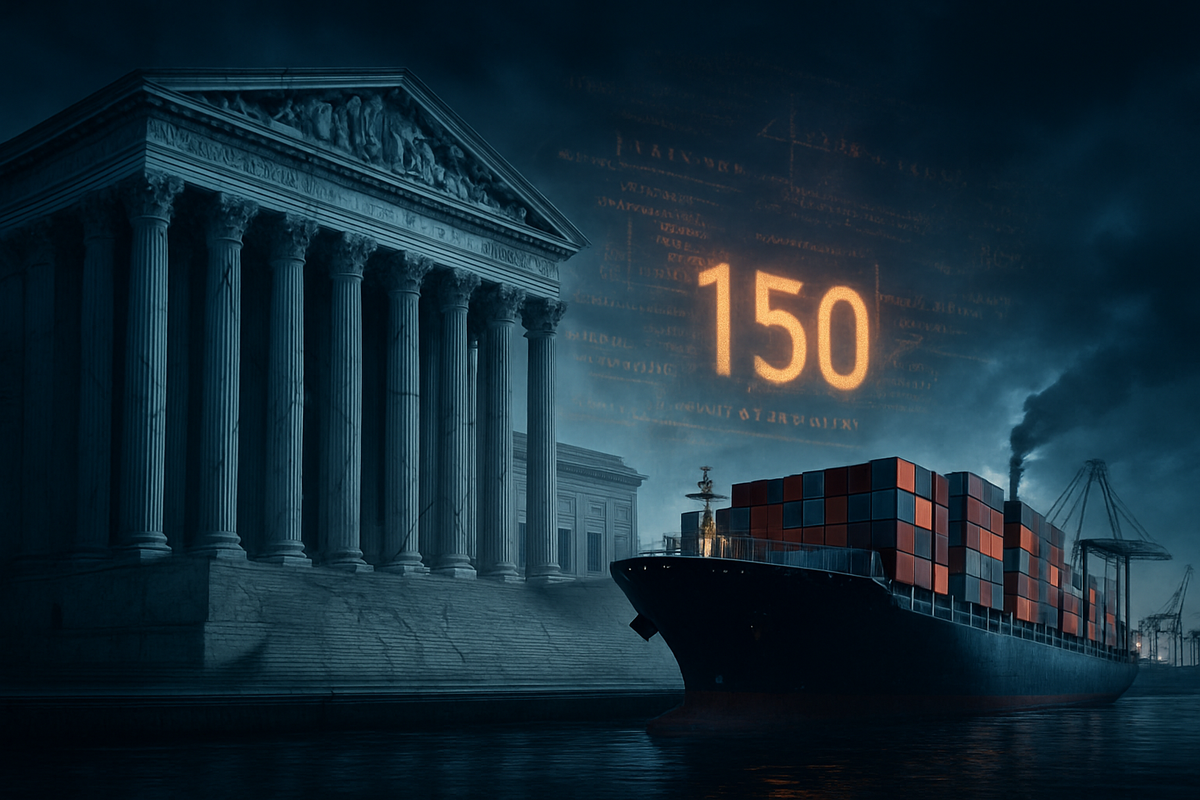
The shift has sent shockwaves through global supply chains and the halls of Congress. While the administration frames the pivot as a necessary "Plan B" to protect American industry from a mounting trade deficit, the move triggers a rigorous 150-day window for congressional review. For the first time in decades, the legislature holds a ticking clock over the President’s trade agenda, creating an environment of extreme volatility for multinational corporations and retail consumers alike.
A Legal Earthquake and the Balance-of-Payments "Bridge"
The current crisis traces its origins to the Supreme Court’s 6–3 decision in the consolidated cases of Learning Resources, Inc. v. Trump and Trump v. V.O.S. Selections, Inc. The Court, invoking the Major Questions Doctrine, ruled that IEEPA—while granting the President broad emergency powers—does not explicitly delegate the "taxing power" required to levy tariffs to the executive branch. Chief Justice John Roberts, writing for the majority, emphasized that the power to impose duties is a core legislative function under Article I, Section 8 of the Constitution. This ruling effectively invalidated nearly a year’s worth of "Liberation Day" and "Trafficking Tariffs" collected since early 2025, forcing the Treasury to initiate a massive $130 billion refund process.
Undeterred, the administration acted within hours of the ruling. On February 24, 2026, the White House invoked Section 122, citing a "large and serious" balance-of-payments (BOP) deficit. Unlike IEEPA, Section 122 was specifically designed to provide the President with a temporary import surcharge of up to 15% ad valorem for a maximum of 150 days to address systemic trade imbalances. The administration immediately set a 10% baseline tariff on all goods, with signals from the Oval Office that it may rise to the 15% statutory maximum before the summer.
This pivot serves as a tactical "bridge." The administration is using the 150-day window, which expires on July 24, 2026, to launch a battery of more traditional trade actions. This includes accelerated Section 301 investigations into "structural excess capacity" in Europe and Asia, and Section 232 "national security" probes into essential electronics and machinery. The goal is to establish a more permanent, legally defensible tariff structure before the Section 122 authority lapses or is challenged by a divided Congress.
Corporate Fallout: Winners, Losers, and the Cost of Uncertainty
The sudden transition to Section 122 has created a bifurcated landscape for public companies. Apple Inc. (NASDAQ: AAPL) has emerged as one of the most visible casualties of the tariff volatility. Having already reported an $800 million hit in the third quarter of 2025 due to previous duties, the company is now bracing for a projected $1.1 billion quarterly impact in 2026. Apple has accelerated its shift of iPhone assembly lines from China to India, though the universal nature of the new baseline tariff means even Indian-made components are no longer exempt from the 10% surcharge.
The automotive sector is similarly reeling from the disruption of highly integrated North American supply chains. General Motors Company (NYSE: GM) reported that the combination of previous IEEPA duties and the new Section 122 surcharges added $1.1 billion in costs in a single quarter. Industry analysts suggest GM faces a total annual headwind of $4 billion to $5 billion. Similarly, Toyota Motor Corporation (NYSE: TM) saw its quarterly profits drop significantly, leading to a 16% cut in its annual operating profit forecast. The "universal" aspect of the Section 122 tariff removes the preferential treatment many manufacturers enjoyed under USMCA, forcing a painful re-evaluation of cross-border logistics.
Retail giants are also sounding the alarm as they act as "importers of record" for millions of consumer products. Walmart Inc. (NYSE: WMT) and Amazon.com, Inc. (NASDAQ: AMZN) are facing massive indirect exposure. While these companies have the scale to negotiate with suppliers, the sheer breadth of a 10-15% tariff on all goods makes price hikes almost inevitable. For consumer staples leader Procter & Gamble Company (NYSE: PG), the tariffs have added an estimated $1 billion in costs for raw materials and packaging, leading to immediate price increases on household brands like Gillette and Charmin. Meanwhile, Deere & Company (NYSE: DE)—better known as John Deere—has seen its net income plunge by 26% as agricultural segments struggle with both rising input costs and retaliatory tariffs on American grain exports.
Historical Precedents and the Regulatory Ripple Effect
The administration's use of Section 122 is not without historical irony. The statute was created in the 1974 Trade Act specifically to provide a legal framework for the kind of action President Richard Nixon took in 1971, when he unilaterally imposed a 10% surcharge to address the gold crisis. By returning to this authority, the current administration is testing a tool that has sat largely dormant for half a century. However, legal experts warn that Section 122 carries much stricter procedural requirements than IEEPA. It generally mandates that trade-restricting measures be applied uniformly across all countries, which complicates the White House's desire to selectively exempt "friendly" nations or target rivals like China.
This event fits into a broader trend of "judicial skepticism" toward executive overreach. The Supreme Court's application of the Major Questions Doctrine to trade policy represents a significant shift in the regulatory landscape. For decades, the "national security" and "emergency" justifications were seen as a blank check for trade actions. Now, the judiciary is demanding clear, explicit authorization from Congress for any policy that has a major economic impact. This shift effectively ends the era of "trade policy by tweet" and forces a return to the grueling process of statutory compliance and legislative negotiation.
Furthermore, the ripple effects are being felt globally. Trading partners are already preparing challenges at the World Trade Organization (WTO), arguing that a trade deficit—the "balance-of-payments" justification used for Section 122—is a structural economic reality rather than a sudden emergency. If the WTO rules against the U.S., it could authorize a wave of legal retaliation that would dwarf the trade skirmishes of 2018-2019, potentially isolating the U.S. market from its closest allies in the G7.
The 150-Day Countdown: Strategic Pivots and Scenarios
Looking ahead, the next 150 days will be a crucible for American trade strategy. Companies cannot afford to wait for the July 24 deadline to see if Congress extends the tariffs. We are already seeing a "strategic scramble" as firms attempt to front-load imports to beat potential increases to the 15% maximum. This "inventory pull-forward" is likely to create a temporary spike in logistics costs and port congestion, followed by a potential "demand cliff" in the late summer.
The most likely scenario involves the administration using the Section 122 window to finalize its Section 301 and Section 232 investigations. By the time the 150-day window closes, the White House hopes to replace the "universal" 10% surcharge with a more targeted, but equally aggressive, set of duties focused on high-tech and industrial sectors. This would allow them to bypass the BOP requirements of Section 122 while still maintaining a high-tariff environment. However, if Congress—emboldened by the Supreme Court’s ruling—refuses to extend the Section 122 authority or passes legislation to further curb the President's trade powers, the administration could face a total collapse of its trade agenda by August 2026.
Conclusion: A New Era of Trade Volatility
The pivot to Section 122 marks a definitive end to the era of unchecked executive power in trade. The Supreme Court has drawn a line in the sand, returning the "power of the purse" to Congress and forcing the administration to navigate a complex web of 50-year-old statutes. For investors, the takeaway is clear: the risk profile for multinational corporations has shifted from "temporary disruption" to "structural instability." The reliance on Section 122 is a high-stakes gamble that relies on a specific economic justification—the balance-of-payments deficit—that remains legally and economically contentious.
As we move toward the July 2026 deadline, the market will be hyper-focused on three things: the progress of the administration's "replacement" investigations (Sections 301 and 232), the appetite of a divided Congress to exert its newly reaffirmed trade authority, and the quarterly earnings reports of retail and manufacturing giants who are currently eating the costs of this transition. For now, the "tax on everything" remains in place, but its foundation is more fragile than it has been in years.
This content is intended for informational purposes only and is not financial advice.