In a move that has sent shockwaves through both the technology sector and the labor market, Meta Platforms (NASDAQ: META) has officially entered into a gargantuan $27 billion agreement with the AI infrastructure specialist Nebius Group (NASDAQ: NBIS). Announced on March 16, 2026, the deal represents one of the largest single infrastructure commitments in the history of the internet, securing Meta’s access to the high-performance computing power necessary to fuel its next generation of artificial intelligence models. This massive capital commitment comes at a time of significant internal upheaval, as reports circulate of a potential 20% workforce reduction at the social media giant.
The immediate implications of this dual-pronged strategy—aggressive infrastructure spending paired with radical head-count reduction—suggest a fundamental shift in Meta's corporate DNA. By prioritizing "silicon over seats," CEO Mark Zuckerberg appears to be doubling down on the "Year of Efficiency" mantra, evolving it into a "Decade of Autonomy." The markets have responded with a mix of awe and caution, as the sheer scale of the $27 billion contract highlights the astronomical costs associated with the race for Artificial General Intelligence (AGI).
A New Era of AI Factories: The Meta-Nebius Timeline
The $27 billion agreement is structured as a five-year strategic partnership that builds upon a smaller $3 billion pilot program initiated in late 2025. According to official filings, the deal is split into two primary components: $12 billion in dedicated AI compute capacity and a $15 billion "backstop" provision. Under the latter, Meta acts as an anchor customer, guaranteeing the purchase of any excess capacity in Nebius’s upcoming data center clusters. This provides Nebius with the financial certainty required to break ground on massive new "AI factories" across Europe and North America, specifically designed to house the next-generation Vera Rubin platform from Nvidia (NASDAQ: NVDA).
The timeline leading to this moment has been marked by a feverish buildup of hardware assets. Throughout early 2026, Meta had been aggressively scouting for alternatives to the traditional "Big Three" cloud providers—Amazon (NASDAQ: AMZN), Microsoft (NASDAQ: MSFT), and Alphabet (NASDAQ: GOOGL)—seeking more specialized, high-density environments for its proprietary "Avocado" AI model. Nebius, having successfully rebranded and pivoted from its former roots as Yandex’s international arm, emerged as the winner due to its "GPU-as-a-Service" (GPUaaS) model, which offers performance optimizations that general-purpose clouds struggle to match.
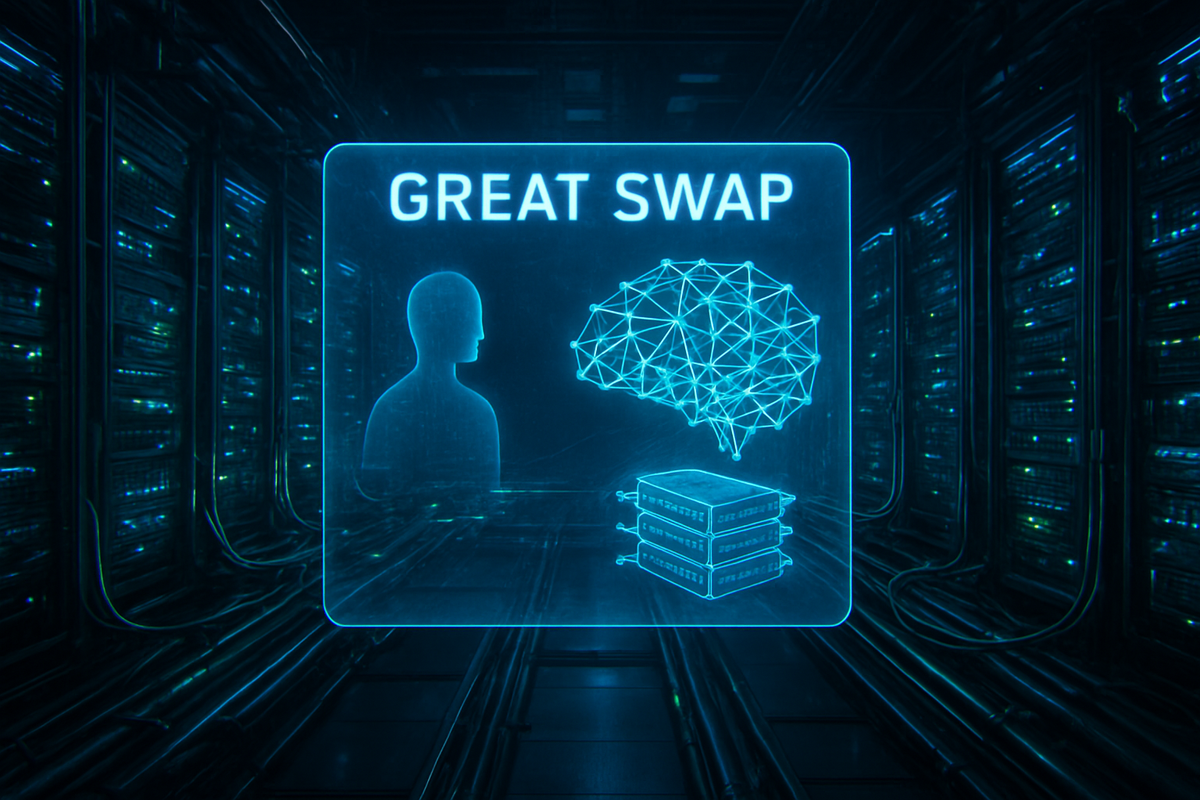
The announcement was immediately followed by a 3% surge in Meta's stock price, as investors cheered the company's clear path toward AI dominance. However, the mood was tempered by concurrent reports from Reuters indicating that Meta is preparing to lay off between 15,000 and 16,000 employees. Internally dubbed "The Great Swap," this rumored restructuring is reportedly designed to automate middle-management and administrative roles using the very AI tools the company is spending billions to build. Meta spokesperson Andy Stone has categorized these reports as "speculative," yet internal sources suggest that the layoffs could begin as early as next month.
Winners, Losers, and the "Neocloud" Ascent
The primary winner in this transaction is undoubtedly Nebius Group. The deal effectively guarantees the company’s revenue for the next half-decade and cements its position as the premier "neocloud" provider. By securing a $27 billion commitment from Meta—shortly after Nvidia disclosed its own $2 billion strategic investment in the company—Nebius has transitioned from an underdog to a systemic player in the AI ecosystem. While its stock experienced an 11% correction on March 17 due to a $3.75 billion convertible bond offering to fund the expansion, the long-term outlook for the firm remains bullish.
Nvidia also emerges as a clear victor, as the Meta-Nebius deal ensures a massive, pre-paid pipeline for its Vera Rubin chips. This "triangular" relationship between the chip designer, the infrastructure provider, and the model builder creates a formidable moat that competitors will find difficult to bridge. Conversely, traditional cloud giants like Amazon Web Services and Google Cloud may find themselves at a disadvantage in the specialized LLM training market. As "frontier" AI models require increasingly bespoke hardware configurations, the generic virtualization layers of legacy clouds are being bypassed by firms seeking the raw power of bare-metal AI clusters.
The clear "losers" in this paradigm shift are the Meta employees currently caught in the crosshairs of the reported layoffs. The strategy of "automating the automators" marks a grim milestone for the tech workforce, where high-salaried human capital is being liquidated to fund the depreciation of high-cost hardware. This transition signals that even the most prestigious roles in Silicon Valley are no longer immune to the displacement effects of the AI revolution they helped create.
The Macro Significance: Trading Labor for Compute
This event fits into a broader industry trend where compute capacity has become the new "oil" of the global economy. Meta’s projected 2026 capital expenditure (CapEx) budget of $115 billion to $135 billion is unprecedented, exceeding the total market capitalization of many S&P 500 companies. This spending spree highlights a historical precedent similar to the early 2000s fiber-optic buildout, but with a critical difference: the current infrastructure is designed to replace labor, not just connect it.
From a regulatory standpoint, the Meta-Nebius deal is likely to draw scrutiny. The concentration of AI power within a handful of companies and their "preferred" infrastructure partners raises questions about market competition and the potential for an "AI oligopoly." Furthermore, the sheer energy requirements of the multi-gigawatt clusters planned by Nebius will undoubtedly trigger policy debates regarding grid stability and environmental impact. We are witnessing a shift where tech policy is no longer just about data privacy, but about national energy security and labor market resilience.
The ripple effects will likely force competitors like Apple (NASDAQ: AAPL) and social media rivals like TikTok's ByteDance to reconsider their own infrastructure strategies. If Meta successfully utilizes Nebius's specialized clusters to achieve a breakthrough in AGI or highly personalized generative media, any firm relying on "off-the-shelf" cloud solutions could find themselves years behind in model performance and cost efficiency.
The Road Ahead: Scenarios and Strategic Pivots
In the short term, the market will be hyper-focused on Meta’s upcoming quarterly earnings and any official confirmation of the workforce reductions. If the layoffs are as deep as reported, the focus will shift to "execution risk"—can Meta remain operational and innovative with a significantly leaner staff? The integration of the "Avocado" model into Meta's family of apps will be the ultimate litmus test for whether this $27 billion gamble was worth the cost.
Long-term, we may see Meta move toward becoming a more vertically integrated AI powerhouse, perhaps even designing more of its own silicon to reduce its reliance on external vendors. For Nebius, the challenge will be managing the rapid physical expansion of its data centers. Building out tens of billions of dollars in infrastructure in a few short years is a logistical Herculean task that carries significant interest rate and supply chain risks. Any delay in the delivery of Nvidia’s Vera Rubin chips could leave Nebius with empty warehouses and massive debt service requirements.
We are also entering a phase where "AI-driven cost savings" will become a standard metric for Wall Street. Analysts will no longer just look at revenue growth, but at the "compute-to-employee" ratio. Companies that can maintain high output with diminishing headcounts will likely see valuation premiums, while those that remain labor-intensive may be punished by investors who view human personnel as a liability rather than an asset.
Investor Takeaway: Watching the "Great Swap"
The Meta-Nebius agreement is a defining moment for the AI era, representing a total commitment to the idea that computational scale is the primary driver of value in the 21st century. By earmarking $27 billion for infrastructure while simultaneously eyeing a 20% reduction in its workforce, Meta is providing a blueprint for the "AI-first" corporation. This strategy offers the potential for massive margin expansion in the future, but it comes at the cost of extreme capital intensity and immediate social friction.
Moving forward, the market will likely reward companies that can secure their supply chains for compute power. The "neocloud" model pioneered by Nebius is here to stay, and investors should expect similar high-value deals to be announced across the industry as other tech giants scramble to secure their own "AI factories." However, the volatility seen in Nebius’s stock following its bond offering serves as a reminder that this growth is not free; it requires massive amounts of capital that can dilute shareholders in the short term.
For the coming months, investors should watch for the official layoff announcements from Meta and the progress of Nebius's facility construction. These will be the primary indicators of whether the "Great Swap" is functioning as intended. As of March 18, 2026, the message from Menlo Park is clear: the future of Meta is being built on silicon, not just on the people who code for it.
This content is intended for informational purposes only and is not financial advice.