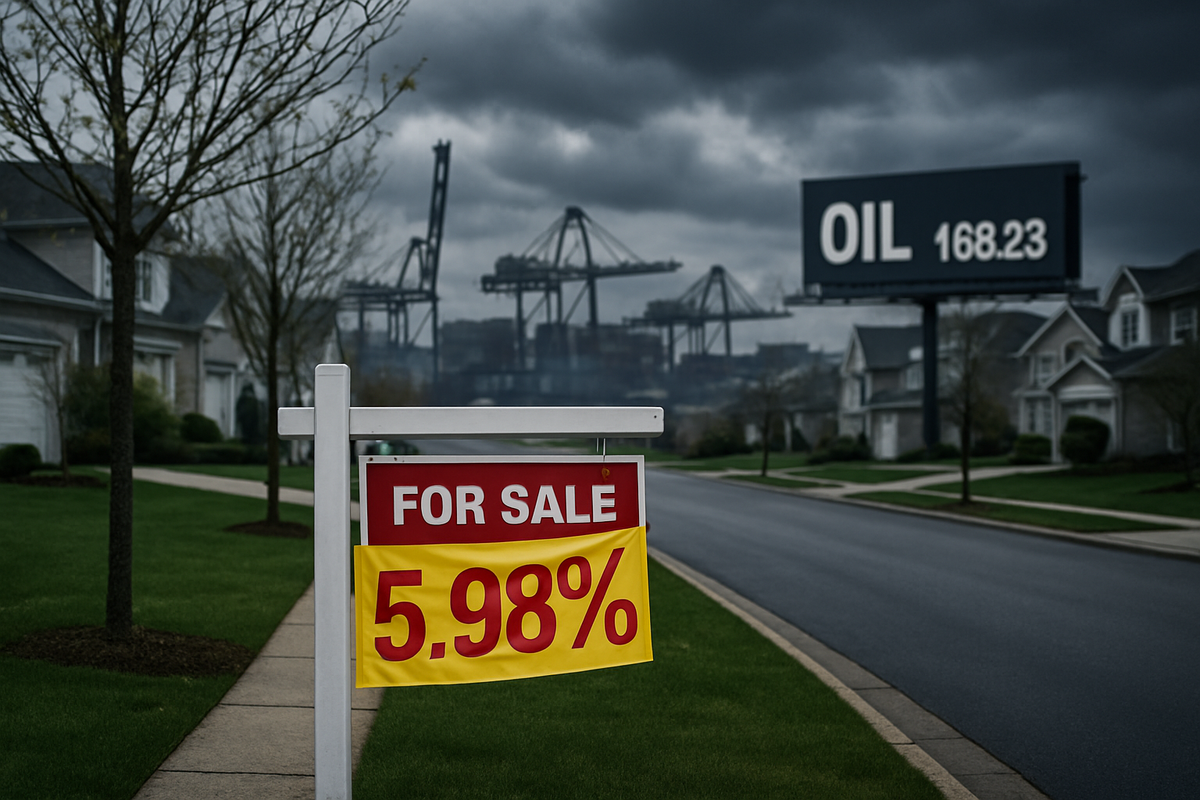
The psychological barrier of 6% has finally been breached, albeit briefly. In the last week of February 2026, the 30-year fixed mortgage rate touched a surprising 5.98%, marking the first time the benchmark rate has slipped into the "fives" since the autumn of 2022. For a brief moment, the American housing market—frozen for years by a "lock-in effect" and high borrowing costs—seemed poised for a dramatic spring awakening. This dip offered a glimmer of hope to millions of sidelined buyers who have spent the last three years watching from the bleachers as affordability metrics hit generational lows.
However, the celebration may be short-lived. This milestone comes at a time of profound "economic gloom," characterized by escalating geopolitical tensions in the Middle East and a domestic economy grappling with the fallout of massive new trade tariffs. While the 5.98% figure was hailed as a potential catalyst for a robust 2026 spring homebuying season, a sudden reversal in Treasury yields and a spike in global energy prices in early March have already begun to push rates back toward 6.2%. The question now facing the market is whether that momentary glimpse of sub-6% rates was enough to spark a sustainable trend, or if it was merely a "bull trap" in an increasingly volatile macroeconomic landscape.
The 5.98% Thaw and the Sudden Geopolitical Freeze
The descent to 5.98% was the culmination of a months-long trend of cooling inflation data that initially led the Federal Reserve to adopt a more dovish tone in late 2025. By February 26, 2026, Freddie Mac reported that the average 30-year fixed rate had officially hit the 5.98% mark. This movement triggered an immediate 1.8% rise in pending home sales and a notable 7.3% year-over-year increase in housing inventory, as homeowners who had been "locked in" to pandemic-era rates of 3% finally saw a narrow enough gap to justify selling and upgrading. For the first time in years, real estate offices saw a genuine surge in foot traffic, with many analysts predicting that the 2026 spring season would be the busiest since the pre-pandemic era.
The optimism was dealt a heavy blow on February 28, 2026, with the sudden escalation of military conflict between Israel and Iran. The geopolitical shock sent Brent crude oil prices soaring past $100 a barrel and triggered a "flight to safety" in global bond markets, which paradoxically caused U.S. Treasury yields to spike as investors braced for a new wave of energy-led inflation. By the mid-March reporting period, mortgage rates had bounced back to a range of 6.11% to 6.22%. This reversal has created a "sentiment chasm" in the market; while the early-March data shows a spike in activity, more recent weekly reports suggest that buyers are once again hitting the pause button, wary of entering a market that feels increasingly unstable.
Winners and Losers in the High-Volume Survival Era
The shifting rate environment is creating a stark divide among the industry’s major players. Publicly traded homebuilders are currently leading the charge, but at a significant cost to their margins. D.R. Horton (NYSE: DHI) has emerged as a resilient leader, recently beating its Q1 2026 earnings estimates with an EPS of $2.03. By focusing on entry-level, smaller-scale homes and leveraging its massive balance sheet to offer "mortgage rate buydowns," D.R. Horton has managed to maintain sales volume even as the broader market wavers. Conversely, Lennar (NYSE: LEN) saw its stock plummet nearly 47% from its 52-week highs after missing earnings on March 12. Lennar’s margins have been squeezed from 9.1% to a tight 5.1% as the company aggressively subsidizes buyer rates to keep its construction pipeline moving—a strategy that investors are beginning to view as unsustainable if rates stay above 6%.
On the lending and brokerage side, Rocket Companies (NYSE: RKT) has significantly expanded its footprint to survive this era of volatility. Following its high-profile acquisitions of Redfin (formerly NASDAQ: RDFN) and the Mr. Cooper Group (formerly NASDAQ: COOP), Rocket has transformed into a diversified real estate ecosystem. Despite a 25% year-to-date decline in share price, analysts recently upgraded the stock, noting that its expanded servicing portfolio and digital-first platform position it to capture a massive "refinancing wave" the moment rates stabilize permanently below 6%. Meanwhile, Zillow Group (NASDAQ: Z) continues to struggle with the "wait-and-see" freeze, as its primary revenue driver—lead generation for agents—remains sensitive to the sudden fluctuations in consumer confidence seen in early March.
Tariffs, War, and the Structural Shift in Housing
The significance of the current rate dip cannot be viewed in isolation from the broader structural shifts hitting the U.S. economy in 2026. The implementation of 25% tariffs on imports from major partners like Canada, Mexico, and China has introduced a "shelf shock" that is driving up the cost of construction materials—from lumber to copper wiring. This means that even if mortgage rates fall, the "floor" for new home prices is rising. We are witnessing a historical precedent similar to the stagflationary environment of the late 1970s, where housing demand remained high due to demographic pressures (the aging Millennial and Gen Z cohorts), but supply was throttled by high input costs and restrictive monetary policy.
Furthermore, the Federal Reserve’s decision on March 18 to hold the federal funds rate steady at 3.50% to 3.75% signals a "defensive" posture. The Fed is caught between a weakening labor market—which saw 92,000 jobs lost in February—and the inflationary pressures of $100 oil and new trade tariffs. This suggests that the "easy money" era is not returning anytime soon. The "lock-in effect" that has defined the housing market for years is finally beginning to thaw, but it is being replaced by a "volatility freeze," where both buyers and sellers are paralyzed not by high rates alone, but by the sheer unpredictability of the weekly economic calendar.
The Road Ahead: A Tense Spring Season
In the short term, the success of the 2026 spring homebuying season hinges on the duration of the current energy crisis. If oil prices stabilize and the Middle East conflict remains contained, mortgage rates could drift back toward the 5.98% level by late April. Industry experts had previously identified the week of April 12–18 as the "ideal window" to list a home, citing peak seasonal demand. However, if the "higher-for-longer" narrative is reinforced by another month of tariff-driven inflation, we may see a strategic pivot from builders. Expect to see more "build-to-rent" projects and even smaller floor plans as companies attempt to reach the dwindling number of buyers who can still qualify for a mortgage.
Longer term, the market is entering a "high-volume survival" phase. The companies that will thrive are those that can provide integrated financial solutions—like Rocket's end-to-end platform or D.R. Horton's internal financing—to mitigate the impact of rate swings. Investors should prepare for a scenario where the "normal" mortgage rate of the future is 6%, rather than the 3% seen during the pandemic. The market opportunities that emerge will likely be in the "affordable luxury" and "entry-level" niches, as the middle of the market remains the most vulnerable to the current economic gloom.
Final Assessment: What Investors Should Watch
The 5.98% dip of February 2026 will likely be remembered as a "canary in the coal mine" for the housing market's potential recovery. It proved that there is massive pent-up demand ready to strike the moment affordability improves. However, the subsequent rebound in rates serves as a sobering reminder that the housing market is now a hostage to global geopolitics and trade policy. The 2026 spring season is not canceled, but it has certainly been complicated.
For investors, the key indicators to watch over the coming months are the Brent crude oil price and the monthly Consumer Sentiment Index, which recently hit a 12-year low of 55.5. A recovery in housing will require more than just a momentary dip in interest rates; it will require a restoration of consumer confidence that their personal finances can withstand the twin pressures of inflation and a softening job market. As we move into the heart of the spring season, the housing market remains the ultimate barometer for the health of the American economy—resilient, yet under immense and unprecedented strain.
This content is intended for informational purposes only and is not financial advice.