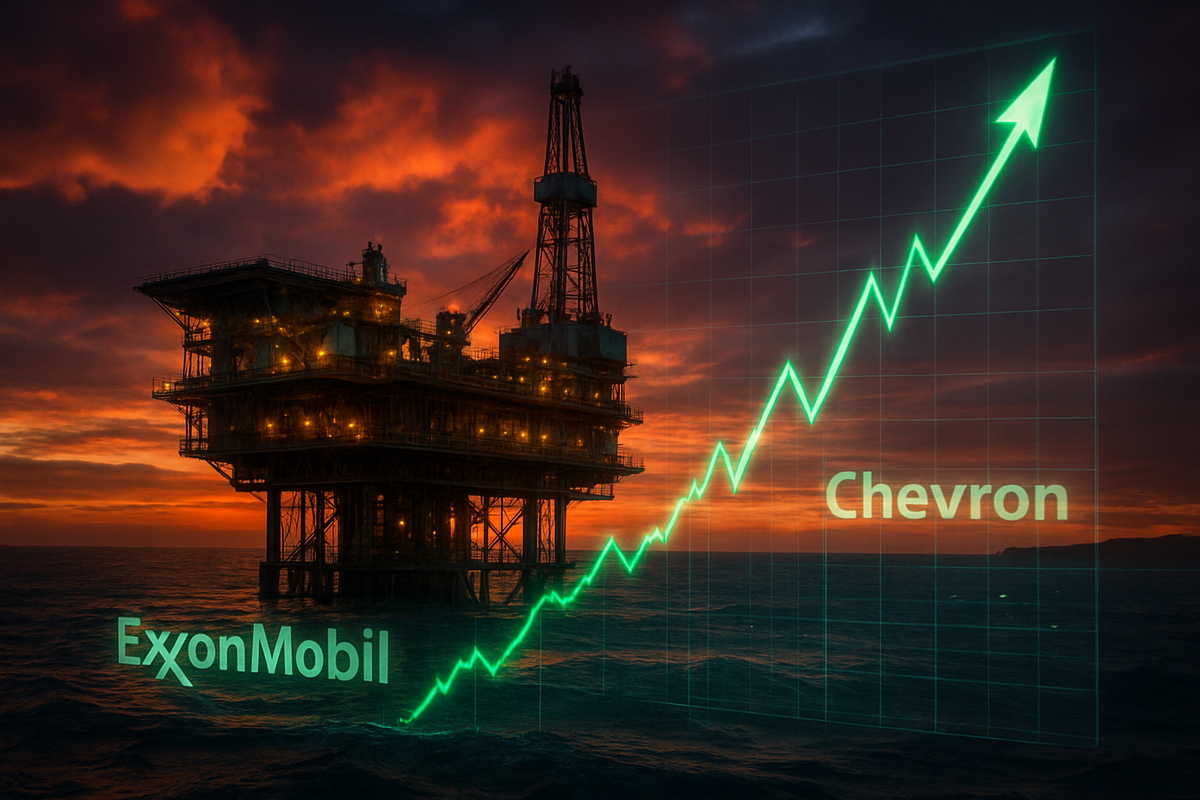
As of March 25, 2026, the energy sector has emerged as the undisputed leader of the financial markets, defying earlier predictions of a stagnant year. A dramatic confluence of geopolitical instability and a disciplined refusal by producers to flood the market has sent crude oil prices on a vertical trajectory, catching many institutional investors off guard and reshaping the narrative of the 2026 trading year.
What began as a projected year of oversupply has transformed into a period of extreme scarcity. Brent crude, which hovered near $60 per barrel in January, has skyrocketed nearly 70% to trade above $119 per barrel this month. This surge has filtered directly down to the consumer level, with U.S. retail gasoline prices climbing 25% since the start of the year. For investors, the result has been a concentrated rotation into energy equities, which are currently outperforming every other major sector in the S&P 500.
The Perfect Storm: A Timeline of the 2026 Energy Shock
The current market environment was triggered by a "geopolitical shock" that many analysts now view as the primary driver of the Q1 rally. In late February 2026, escalating tensions between the U.S., Israel, and Iran culminated in a military confrontation that effectively closed the Strait of Hormuz—a critical maritime artery responsible for the transit of roughly 20% of the world’s oil supply. This event instantly removed millions of barrels from the global daily flow, triggering a panic in the futures markets that has yet to fully subside.
This supply-side crisis was exacerbated by decisions made months earlier. Throughout late 2025, the OPEC+ alliance maintained a "strategic pause" on production increases, correctly predicting that global demand would remain resilient but underestimating the severity of potential supply disruptions. By the time the Strait of Hormuz was obstructed in early March 2026, the group had no immediate mechanism to inject new supply, leaving the market in a state of extreme backwardation.
Domestic response in the United States has been equally constrained. While high prices historically incentivized a "drill, baby, drill" mentality, the U.S. shale industry is currently operating under a new paradigm of capital discipline. Production for 2026 has plateaued at approximately 13.5 million barrels per day. The initial market reaction was one of disbelief, as traders expected a faster response from Texas and New Mexico, but logistical bottlenecks and a primary focus on shareholder returns have kept a lid on any meaningful production growth.
The Corporate Scorecard: Winners and Losers in a High-Cost World
The primary beneficiaries of this price surge have been the "Supermajors" and pure-play upstream producers. ExxonMobil (NYSE: XOM) and Chevron (NYSE: CVX) have seen their stock prices rally by approximately 30% since January. Chevron, in particular, has leveraged its 2024 acquisition of Hess to ramp up high-margin production in Guyana, positioning the company to generate an estimated $12.5 billion in additional free cash flow this year alone.
Refiners are also capturing massive gains despite the higher cost of their raw material. Valero Energy Corporation (NYSE: VLO) has benefited from "crack spreads"—the difference between the price of crude oil and the products refined from it—widening to record levels. With diesel prices rising 40% in just two months, Valero’s stock surged 26% in March as refining margins reached as high as $18.65 per barrel. Similarly, ConocoPhillips (NYSE: COP) has capitalized on its "upstream-heavy" portfolio, using the windfall to accelerate share buybacks and special dividends, further attracting yield-hungry investors.
Conversely, the "losers" of this event are concentrated in the transportation and industrial sectors. The aviation industry has been hit hardest, with jet fuel prices nearly doubling to over $175 per barrel. Major carriers like Delta Air Lines (NYSE: DAL) and United Airlines (NASDAQ: UAL) have been forced to implement aggressive fuel surcharges, threatening to dampen the busy spring travel season. Additionally, logistics giants and trucking firms are facing a margin squeeze as the cost of diesel erodes the profitability of long-haul shipping.
The Structural Shift: Why This Time is Different
The 2026 energy rally is not merely a repeat of past cycles; it represents a fundamental shift in industry dynamics. For over a decade, the "shale revolution" provided a buffer against global supply shocks, but that buffer has thinned. Many Tier-1 drilling locations in the Permian Basin have reached maturity, forcing operators to move to less productive Tier-2 and Tier-3 acreage. This "resource exhaustion" means that even at $120 oil, the marginal cost of adding a new barrel of production is significantly higher than it was five years ago.
Furthermore, the industry is grappling with the long-term consequences of underinvestment. Between 2020 and 2024, capital expenditure in traditional oil and gas exploration fell to historic lows as the global focus shifted toward the energy transition. This lack of "spare capacity" has left the world vulnerable to the exact type of geopolitical disruption seen this month. Unlike previous decades, there is no "swing producer" capable of immediately balancing the market.
Regulatory and policy implications are also looming. In Washington, the price spike has renewed debates over the Strategic Petroleum Reserve (SPR), which currently sits at levels that many consider insufficient for a prolonged crisis. There is also increased pressure on the administration to fast-track permits for pipeline infrastructure to bypass maritime chokepoints, though such projects would take years to bear fruit.
The Road Ahead: Potential Scenarios for Late 2026
In the short term, the market remains on high alert. If the closure of the Strait of Hormuz persists through the summer, some analysts at major investment banks are warning of "super-spike" scenarios where crude could touch $150 per barrel. Such a price level would likely trigger a global recession, eventually killing the very demand that is currently driving prices up.
Long-term, this crisis is expected to force a strategic pivot among global energy consumers. The volatility of 2026 is providing a renewed mandate for energy security, which may paradoxically accelerate the transition to renewables and nuclear power in a bid to decouple economies from the volatility of Middle Eastern and Russian oil. However, for the next 12 to 18 months, the world remains tethered to fossil fuels, ensuring that energy companies will continue to hold a "fortress" position in investment portfolios.
Strategic adaptations are already underway. Major oil consumers in Europe and Asia are looking to secure long-term supply contracts with U.S. and Canadian producers, even at premium prices, to avoid the spot-market volatility that has characterized March. For the U.S. shale players, the challenge will be balancing the pressure from the government to increase production with the demands of Wall Street to remain disciplined.
Closing Thoughts for the Savvy Investor
The energy sector's dominance in 2026 serves as a stark reminder that the "old economy" still possesses the power to dictate market direction. The key takeaways for investors are clear: supply constraints are structural, not just cyclical, and the lack of spare capacity has created a new floor for oil prices. While the sector offers significant upside in the current environment, the risks of "demand destruction" and geopolitical escalation cannot be ignored.
Moving forward, the market will be hyper-focused on two variables: the reopening of global shipping lanes and the earnings reports from the U.S. shale patch. Investors should watch for whether companies like ExxonMobil and Chevron choose to reinvest their massive profits into new drilling or if they will stick to the dividend-heavy strategies that have made them favorites of the 2026 market. For now, the energy sector remains the engine of the market rally, but it is an engine running on high-priced, high-octane uncertainty.
This content is intended for informational purposes only and is not financial advice.