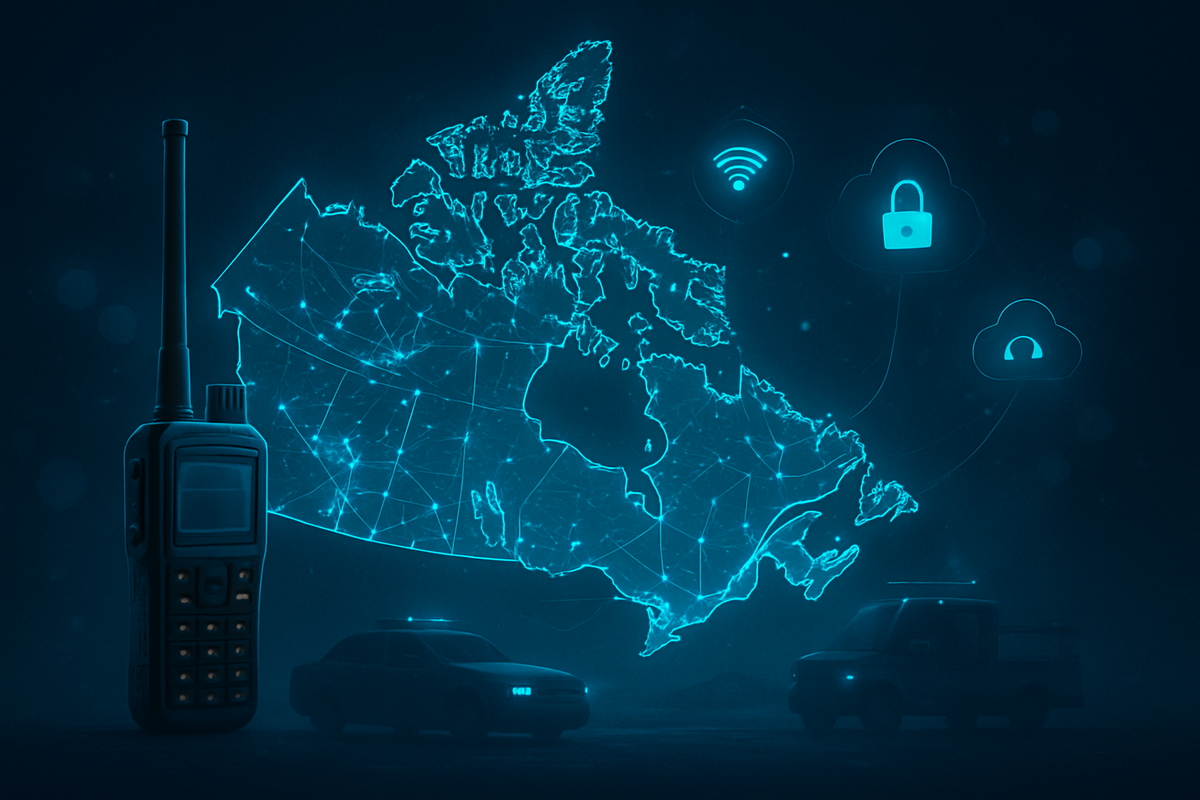
March 30, 2026 — In a move that cements its grip on the North American mission-critical communications market, Motorola Solutions (NYSE: MSI) has reached a definitive agreement to acquire the Land Mobile Radio (LMR) networks services business of Bell Mobility, a subsidiary of BCE Inc. (NYSE: BCE). The deal, valued at approximately CAD $675 million (USD $487 million), represents a strategic pivot for both telecommunications giants as they realign their portfolios for the next decade of public safety infrastructure.
For Motorola Solutions, the acquisition is less about adding new hardware and more about securing a long-term, high-margin recurring revenue stream. By taking direct control of the network infrastructure and service contracts that power police, fire, and emergency medical services (EMS) across Canada, the company is transitioning from a traditional equipment vendor to the primary service provider for the country’s most vital communication backbones.
A Strategic Consolidation of the Canadian "Backbone"
The official announcement, made on March 26, 2026, marks the culmination of a divestiture process that industry insiders have anticipated since mid-2024. At that time, Bell Canada’s parent company, BCE Inc., outlined a broad $7 billion asset-sale plan designed to reduce debt and sharpen its focus on core 5G and fiber-optic growth. While the LMR business remained a stable, cash-flow-positive asset, it was increasingly viewed as non-core to Bell’s broader consumer and enterprise wireless strategy.
Under the terms of the agreement, Motorola Solutions Canada Networks Inc. will acquire the infrastructure, spectrum management, and service delivery contracts for Bell’s LMR networks. Interestingly, the two companies will remain tethered; Bell Canada is set to continue as a key service delivery partner, ensuring that existing public safety customers experience no disruption during the transition. The deal is currently undergoing a rigorous review by the Competition Bureau of Canada and Innovation, Science and Economic Development Canada (ISED), with a targeted closing date in the fourth quarter of 2026.
Winners and Losers in the LMR Landscape
The primary winner in this transaction is undoubtedly Motorola Solutions (NYSE: MSI). Wall Street analysts from firms like JPMorgan and Barclays have been quick to praise the deal, noting that it reinforces MSI’s "moat" in the public safety sector. By owning the network itself, Motorola makes it significantly more difficult for competitors to displace their proprietary technologies. The Canadian LMR market is estimated to be worth over $1 billion annually, and this acquisition ensures Motorola captures a lion's share of that service-based income.
On the other side of the ledger, BCE Inc. (NYSE: BCE) emerges as a winner in terms of balance sheet health. The nearly half-billion-dollar infusion will assist the Canadian telecom leader in managing its debt load while continuing its aggressive 5G rollout. However, the sale does mean BCE is exiting a niche but highly resilient sector that typically performs well even during economic downturns.
For competitors like L3Harris Technologies (NYSE: LHX) and JVCKENWOOD (TYO: 6632), the acquisition presents a formidable challenge. In the past, these companies could compete for "device-only" contracts on Bell-managed networks. Now that the network owner is their direct competitor, these firms may face increased pressure to prove interoperability or lower prices to stay relevant in the Canadian market. Smaller specialized players like BK Technologies (NYSE: BKTI) may also find the Canadian landscape increasingly difficult to navigate as Motorola’s "end-to-end" solution becomes the national standard.
The Shift Toward "Public Safety as a Service"
This acquisition fits perfectly into a broader industry trend that analysts have dubbed "Public Safety as a Service" (PSaaS). In recent years, Motorola Solutions has aggressively expanded its software and services portfolio, acquiring companies like Noggin in 2024 to bolster its critical event management capabilities. The goal is clear: move away from one-time hardware sales of radios and toward a model where agencies pay monthly subscriptions for integrated hardware, software, and network access.
The ripple effects of this deal will likely be felt by regulatory bodies and partners alike. As Motorola consolidates its position, there is growing concern among some policy advocates regarding vendor lock-in. Historically, the LMR industry has been criticized for proprietary standards that prevent different brands of radios from working on the same network. By owning both the network and the leading device brand, Motorola will face renewed scrutiny to ensure that "open standard" protocols like P25 remain truly open to third-party devices.
Looking Ahead: Integration and Regulatory Hurdles
In the short term, investors will be watching the Canadian Competition Bureau closely. Given Motorola’s already dominant position in North America, regulators may impose conditions on the sale to ensure that other radio manufacturers are not unfairly boxed out of the Canadian market. Motorola’s management has expressed confidence that the deal will pass, citing the "resiliency and security" benefits of having a specialized public safety company manage these critical assets.
Long-term, the challenge for Motorola will be the eventual convergence of LMR and 5G. While LMR remains the gold standard for voice reliability in emergencies, data-heavy applications are moving toward LTE and 5G. Motorola’s strategic pivot suggests they intend to own the "legacy" LMR backbone while simultaneously building the bridge to next-generation hybrid networks. This acquisition gives them the perfect laboratory to refine that hybrid model.
Final Assessment: A Fortress for Recurring Revenue
The acquisition of Bell’s LMR business is a masterstroke in defensive and offensive corporate strategy. It defends Motorola’s existing territory while offensively capturing the service margins previously held by Bell. For investors, the takeaway is the continued strengthening of MSI’s "sticky" recurring revenue, which now makes up a record portion of the company's $15.7 billion backlog.
Moving forward, the market should watch for the official closing in Q4 2026 and any potential concessions required by Canadian regulators. If the integration proceeds as planned, Motorola Solutions will not just be a provider of tools for first responders—it will be the very airwaves they rely on.
This content is intended for informational purposes only and is not financial advice.