As of January 13, 2026, Walmart Inc. (NYSE: WMT) stands as a global behemoth that has successfully navigated the most turbulent era in retail history. No longer just a chain of rural "everything stores," the Walmart of 2026 is a sophisticated, tech-driven ecosystem blending physical proximity with digital dominance. With annual revenues crossing the $700 billion threshold and a stock price hovering near all-time highs, the company has transformed from a defensive staple into a high-growth platform. This transition is fueled by a pivot into high-margin revenue streams like digital advertising and automated logistics, making it a central focus for institutional and retail investors alike.
Historical Background
Walmart’s journey began in 1962 when Sam Walton opened the first Walmart store in Rogers, Arkansas. Walton’s philosophy was simple but revolutionary: offer the lowest prices possible and pass the savings on to the customer (Everyday Low Price, or EDLP). The company went public in 1970 and spent the next three decades expanding aggressively across the United States, eventually becoming the world's largest retailer.
The early 2000s saw Walmart’s global expansion into markets like the UK, China, and India. However, the most critical transformation occurred over the last decade under outgoing CEO Doug McMillon. Recognizing the existential threat posed by e-commerce, Walmart invested billions into digital infrastructure, acquired Jet.com in 2016, and restructured its massive physical footprint to serve as fulfillment hubs. By 2026, this "omnichannel" strategy has solidified Walmart’s position as the primary challenger to the digital-native dominance of Amazon.
Business Model
Walmart operates through three primary segments:
- Walmart U.S.: The largest segment, contributing roughly 68% of revenue. It includes retail stores, e-commerce, and the rapidly growing Walmart Connect advertising business.
- Walmart International: Operates in 19 countries, with a significant focus on high-growth markets like India (via Flipkart and PhonePe) and Mexico (Walmex).
- Sam’s Club: A membership-only warehouse club that competes directly with Costco, providing a steady stream of recurring subscription revenue.
Beyond traditional retail, the business model has evolved into a "Platform as a Service." Walmart now generates significant revenue by offering its logistics network to third-party sellers (Walmart Fulfillment Services) and selling targeted advertising data to brands looking to reach its 250 million weekly customers.
Stock Performance Overview
Walmart’s stock performance over the last decade reflects its successful modernization.
- 1-Year Performance: In the past 12 months, WMT has delivered a total return of approximately 30.1%, significantly outperforming the S&P 500 as investors cheered its margin expansion.
- 5-Year Performance: The stock has seen a roughly 154% total return, fueled by the pandemic-era digital acceleration and the subsequent stabilization of its e-commerce profitability.
- 10-Year Performance: Long-term shareholders have enjoyed a 567% return, a testament to the company’s ability to reinvent itself while maintaining its "Dividend King" status (52 consecutive years of dividend increases).
Financial Performance
Fiscal Year 2025 (ending Jan 31, 2025) was a landmark year, with revenue reaching $681 billion. As we approach the end of FY2026, the company is on track to exceed $710 billion in total revenue.
- Profitability: Operating margins have improved to 3.3%, up from sub-3% levels in previous years. This margin expansion is driven by the scaling of high-margin services like advertising and the automation of fulfillment centers.
- Earnings Per Share (EPS): Analysts expect an adjusted EPS for FY2026 between $2.58 and $2.63.
- Cash Flow & Debt: Walmart maintains a robust balance sheet with operating cash flow exceeding $30 billion, allowing for aggressive reinvestment in AI and robotics while continuing to buy back shares and pay dividends.
Leadership and Management
A major transition is currently underway. On February 1, 2026, John Furner will officially take over as President and CEO, succeeding Doug McMillon. Furner, the architect of Walmart U.S.’s recent success, is widely viewed as a "safe pair of hands" who understands the core retail business and the digital future.
- John David Rainey (CFO): The former PayPal executive continues to be praised for his focus on "re-platforming" Walmart into a digital entity with higher margins.
- Suresh Kumar (Global CTO): Continues to lead the push into generative AI and automated supply chain management.
The leadership transition has been handled with the methodical planning characteristic of Walmart’s board, ensuring strategic continuity.
Products, Services, and Innovations
Innovation at Walmart is currently focused on two fronts: Automation and Shoppable Media.
- Supply Chain Automation: By early 2026, approximately 65% of Walmart stores have been automated for fulfillment, reducing unit costs for home delivery by nearly 20%.
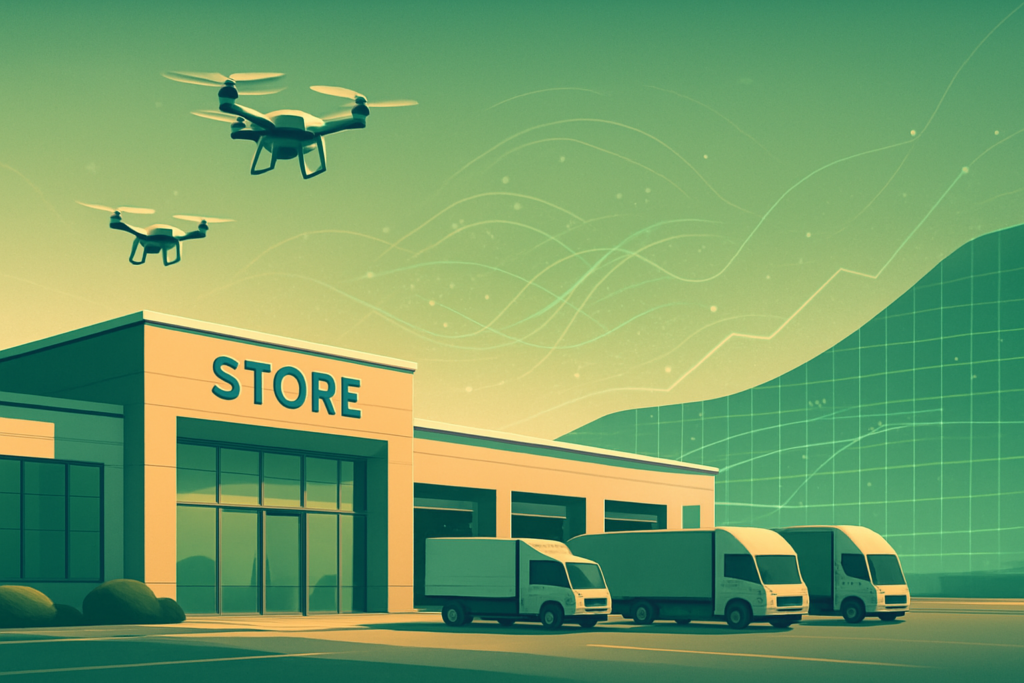
- Drone Delivery: Following an expanded partnership with Alphabet’s Wing, Walmart now offers drone delivery at 150 additional stores, bringing the service to nearly 40 million Americans.
- Vizio Integration: The 2024/2025 acquisition of Vizio has transformed Walmart’s advertising. By owning the operating system in millions of living rooms, Walmart now offers "shoppable TV" ads, allowing customers to buy products directly from their screen using a remote.
Competitive Landscape
Walmart remains the undisputed leader in the U.S. grocery market, commanding over 25% market share.
- Vs. Amazon (AMZN): While Amazon leads in total e-commerce, Walmart is catching up in the "last mile" by using its 4,600 stores as hubs, often providing faster local delivery for groceries and household essentials.
- Vs. Target (TGT): Walmart has successfully gained market share from Target in recent years by doubling down on value and price leadership during periods of high inflation.
- Vs. Costco (COST): Sam’s Club continues to narrow the gap with Costco by leveraging Walmart’s superior digital app and "Scan & Go" technology.
Industry and Market Trends
The retail sector in 2026 is defined by "proximity logistics" and the "death of the middle." Consumers are increasingly choosing between high-end luxury or extreme value. Walmart’s EDLP model positions it perfectly for the value-conscious consumer. Additionally, the shift toward "Retail Media" (retailers acting as ad agencies) has turned Walmart’s massive customer data into a goldmine, offsetting the thin margins of traditional retail.
Risks and Challenges
Despite its dominance, Walmart faces several headwinds:
- Tariffs and Trade Policy: With approximately 20% of its imports tied to China, any escalation in trade tensions or new tariffs in 2026 could force Walmart to either raise prices or squeeze its own margins.
- Labor Costs: Persistent labor shortages and the push for higher minimum wages (now $14-$19/hour at Walmart) remain a significant operational expense.
- Data Privacy: As Walmart expands its advertising and AI capabilities, it faces increased regulatory scrutiny over how it handles consumer shopping data and TV viewing habits (via Vizio).
Opportunities and Catalysts
- Walmart Connect: Global advertising revenue surged 53% in 2025. As this segment becomes a larger portion of the business, it will significantly boost the company’s consolidated valuation multiples.
- Marketplace Expansion: Walmart’s third-party marketplace is growing at double-digit rates, allowing the company to offer millions of items without the risk of holding inventory.
- Healthcare: Through its primary care clinics and pharmacy services, Walmart is quietly becoming a major player in affordable healthcare, a massive untapped market.
Investor Sentiment and Analyst Coverage
Sentiment among Wall Street analysts remains overwhelmingly positive, with a majority of firms maintaining "Buy" or "Overweight" ratings. Institutional investors, including major pension funds and asset managers like BlackRock and Vanguard, have increased their positions throughout 2025, citing the "Amazon-like" growth of Walmart’s high-margin services. Retail chatter remains focused on the stock’s resilience as a "recession-proof" play that now offers "tech-style" growth.
Regulatory, Policy, and Geopolitical Factors
Walmart is currently navigating a complex regulatory environment. In 2026, new standards for Walmart Fulfillment Services (WFS) require stricter oversight of third-party goods, increasing compliance costs. Geopolitically, the company is diversifying its supply chain away from China toward India and Southeast Asia to mitigate the risk of trade wars, a move that is costly in the short term but provides long-term stability.
Conclusion
Walmart (WMT) in 2026 is a far cry from the "discount store" of the 20th century. It has successfully weaponized its physical footprint to dominate the omnichannel retail landscape. While risks regarding global trade and labor costs persist, the company’s transition into high-margin advertising and automated logistics provides a powerful catalyst for future earnings growth. For investors, Walmart offers a unique blend of "Dividend King" stability and modern tech-driven upside. As John Furner takes the helm this February, the market will be watching to see if he can maintain the aggressive momentum of the McMillon era.
This content is intended for informational purposes only and is not financial advice.