Let’s dig into the relative performance of New Fortress Energy (NASDAQ: NFE) and its peers as we unravel the now-completed Q2 infrastructure earnings season.
Energy infrastructure companies build, own, and operate assets including pipelines, storage facilities, and processing plants that transport and handle oil, natural gas, and related products. These businesses often generate fee-based revenues providing cash flow stability. Tailwinds include growing production volumes requiring expanded takeaway capacity and export infrastructure demand. Long-term contracts with creditworthy counterparties reduce commodity price exposure. Headwinds include permitting and regulatory challenges delaying new projects, environmental opposition to pipeline construction, and potential long-term demand decline from energy transition. High capital intensity and interest rate sensitivity affecting financing costs present additional considerations.
The 9 infrastructure stocks we track reported a mixed Q2. As a group, revenues beat analysts’ consensus estimates by 6.5%.
While some infrastructure stocks have fared somewhat better than others, they have collectively declined. On average, share prices are down 3.2% since the latest earnings results.
Weakest Q2: New Fortress Energy (NASDAQ: NFE)
Building its first floating liquefaction unit off the coast of Mexico in 2024, New Fortress Energy (NASDAQ: NFE) supplies liquefied natural gas (LNG) to power plants and industrial customers in emerging markets.
New Fortress Energy reported revenues of $301.7 million, down 29.5% year on year. This print fell short of analysts’ expectations by 46%. Overall, it was a disappointing quarter for the company with a significant miss of analysts’ EBITDA and EPS estimates.
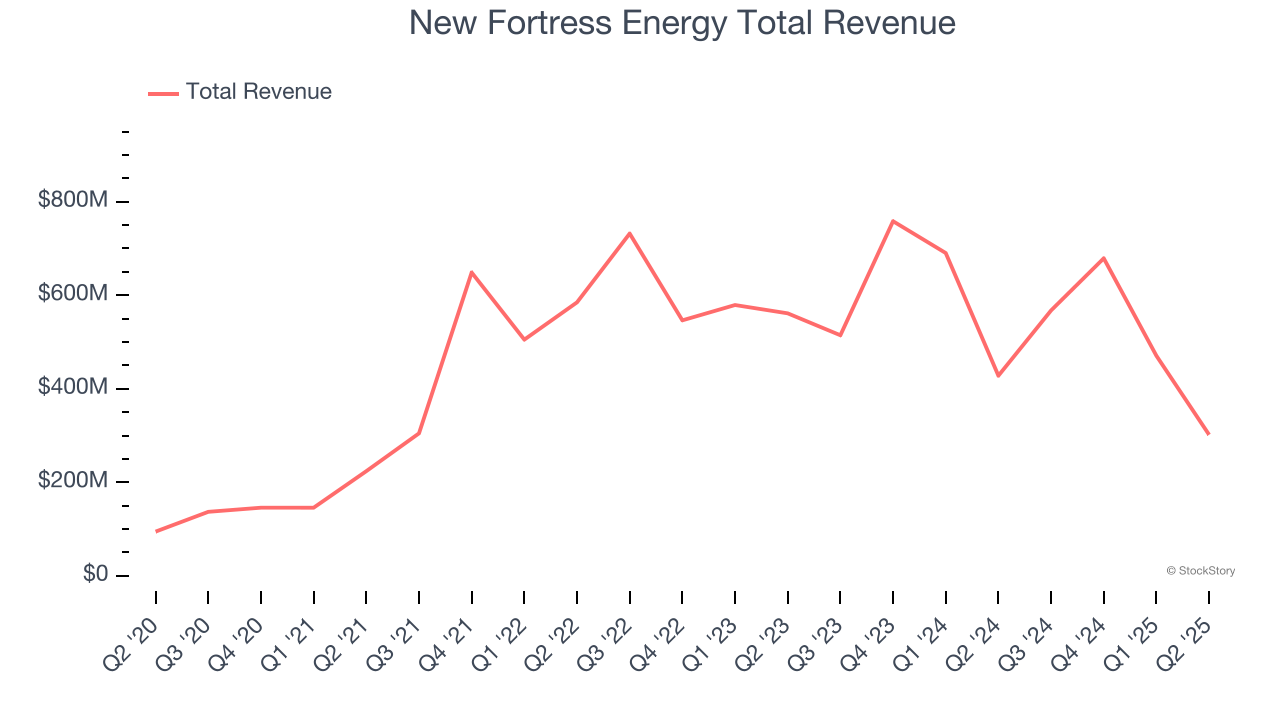
New Fortress Energy delivered the weakest performance against analyst estimates and slowest revenue growth of the whole group. Unsurprisingly, the stock is down 74% since reporting and currently trades at $0.64.
Is now the time to buy New Fortress Energy? Access our full analysis of the earnings results here, it’s free.
Best Q2: Tenaris (NYSE: TEN)
Operating industrial facilities across the Americas, Europe, Middle East, and Asia, Tenaris (NYSE: TEN) manufactures seamless and welded steel pipes used in oil and gas drilling and transportation.
Tenaris reported revenues of $222.1 million, up 18% year on year, outperforming analysts’ expectations by 28.4%. The business had an incredible quarter with a beat of analysts’ EPS and EBITDA estimates.
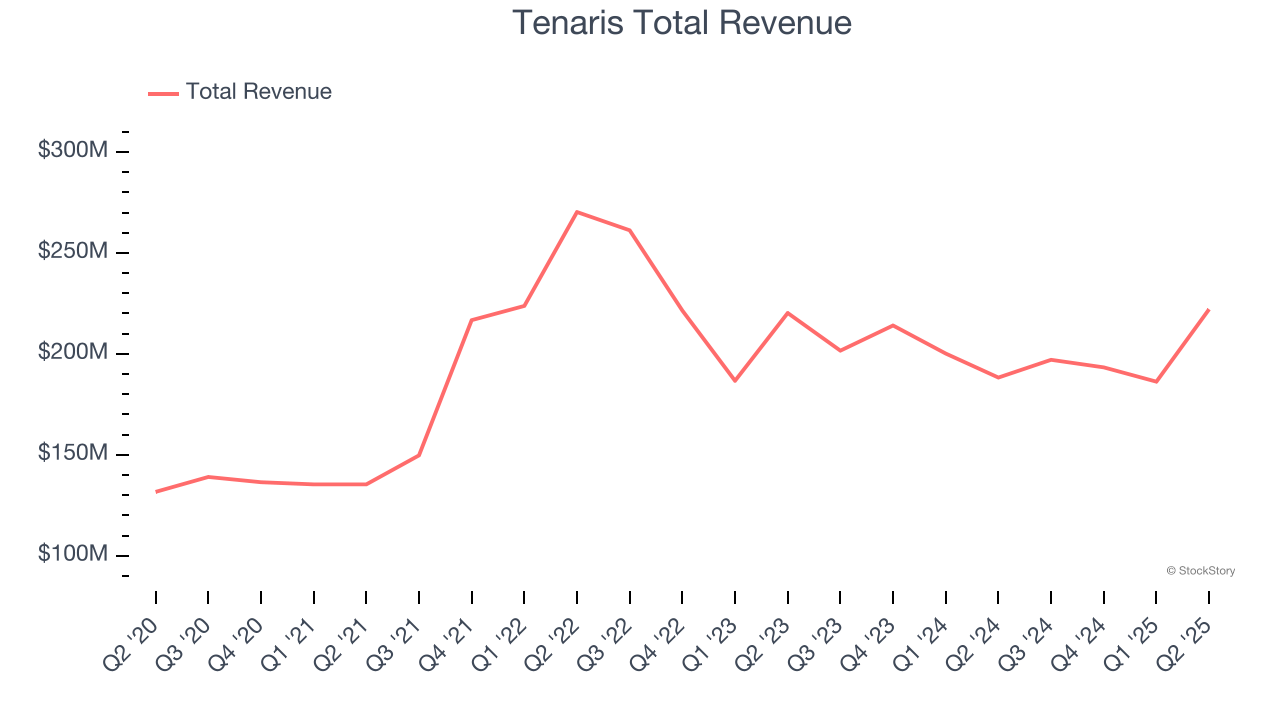
The market seems happy with the results as the stock is up 10.2% since reporting. It currently trades at $38.51.
Is now the time to buy Tenaris? Access our full analysis of the earnings results here, it’s free.
Calumet (NASDAQ: CLMT)
With roots dating back to 1919 and facilities strategically positioned from Louisiana to Montana, Calumet (NASDAQ: CLMT) refines crude oil into specialty products like lubricating oils, solvents, and waxes used in cosmetics, batteries, and industrial applications.
Calumet reported revenues of $1.04 billion, up 9.4% year on year, falling short of analysts’ expectations by 1.8%. It was a slower quarter as it posted a miss of analysts’ EBITDA estimates.
Interestingly, the stock is up 6.6% since the results and currently trades at $32.23.
Read our full analysis of Calumet’s results here.
Kodiak Gas Services (NYSE: KGS)
Dominating the Permian Basin with a fleet focused on large horsepower units exceeding 1,000 horsepower each, Kodiak Gas Services (NYSE: KGS) operates compression equipment that maintains natural gas pressure for production, gathering, and transportation.
Kodiak Gas Services reported revenues of $332.9 million, up 7.5% year on year. This result topped analysts’ expectations by 0.8%. However, it was a slower quarter as it recorded a significant miss of analysts’ EPS estimates.
The stock is up 22% since reporting and currently trades at $64.33.
Read our full, actionable report on Kodiak Gas Services here, it’s free.
DHT Holdings (NYSE: DHT)
With each vessel capable of carrying roughly 2 million barrels of oil—enough to fill about 125 Olympic swimming pools—DHT Holdings (NYSE: DHT) operates very large crude carriers that transport crude oil across international routes for energy companies and traders.
DHT Holdings reported revenues of $118.1 million, up 37.1% year on year. This print beat analysts’ expectations by 1.7%. It was a satisfactory quarter as it also recorded a decent beat of analysts’ EBITDA estimates.
The stock is up 23.8% since reporting and currently trades at $17.26.
Read our full, actionable report on DHT Holdings here, it’s free.
Market Update
Late in 2025 into early 2026, there was hand wringing around artificial intelligence. For software companies, the fear was that AI would erode pricing power and compress margins as new tools made it easier to replicate what once required expensive enterprise platforms. Crypto investors had their own version of the same anxiety: if AI agents could trade, allocate capital, and manage wallets autonomously, what exactly was the long-term value of today’s crypto infrastructure?
These concerns triggered a noticeable rotation away from these sectors and into safer havens. But markets rarely dwell on one narrative for long. Spring 2026 came, and the focus shifted abruptly from technological disruption to geopolitical risk. The US’ conflict with Iran became the dominant driver of market psychology, and when geopolitics takes center stage, the script changes quickly. Investors stop debating growth rates and start worrying about oil supply, inflation, and global stability.
Want to invest in winners with rock-solid fundamentals? Check out our Top 6 Stocks and add them to your watchlist. These companies are poised for growth regardless of the political or macroeconomic climate.
StockStory’s analyst team — all seasoned professional investors — uses quantitative analysis and automation to deliver market-beating insights faster and with higher quality.