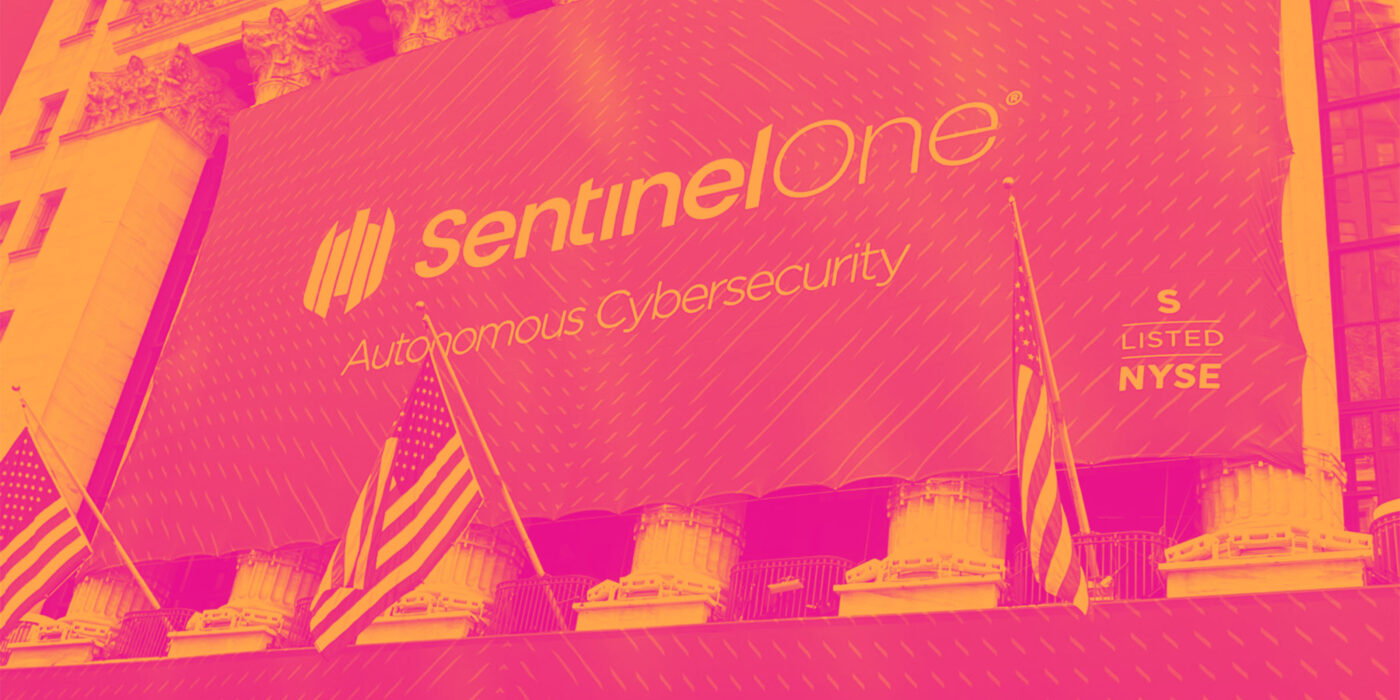
Over the past six months, SentinelOne’s stock price fell to $14.60. Shareholders have lost 13.5% of their capital, which is disappointing considering the S&P 500 has climbed by 4%. This might have investors contemplating their next move.
Following the pullback, is now an opportune time to buy S? Find out in our full research report, it’s free.
Why Does S Stock Spark Debate?
Built on the principle of "fighting machine with machine," SentinelOne (NYSE: S) provides an AI-powered cybersecurity platform that autonomously prevents, detects, and responds to threats across endpoints, cloud workloads, and identity systems.
Two Positive Attributes:
1. ARR Surges as Recurring Revenue Flows In
While reported revenue for a software company can include low-margin items like implementation fees, annual recurring revenue (ARR) is a sum of the next 12 months of contracted revenue purely from software subscriptions, or the high-margin, predictable revenue streams that make SaaS businesses so valuable.
SentinelOne’s ARR punched in at $1.12 billion in Q4, and over the last four quarters, its year-on-year growth averaged 23.2%. This performance was fantastic and shows that customers are willing to take multi-year bets on the company’s technology. Its growth also makes SentinelOne a more predictable business, a tailwind for its valuation as investors typically prefer businesses with recurring revenue. 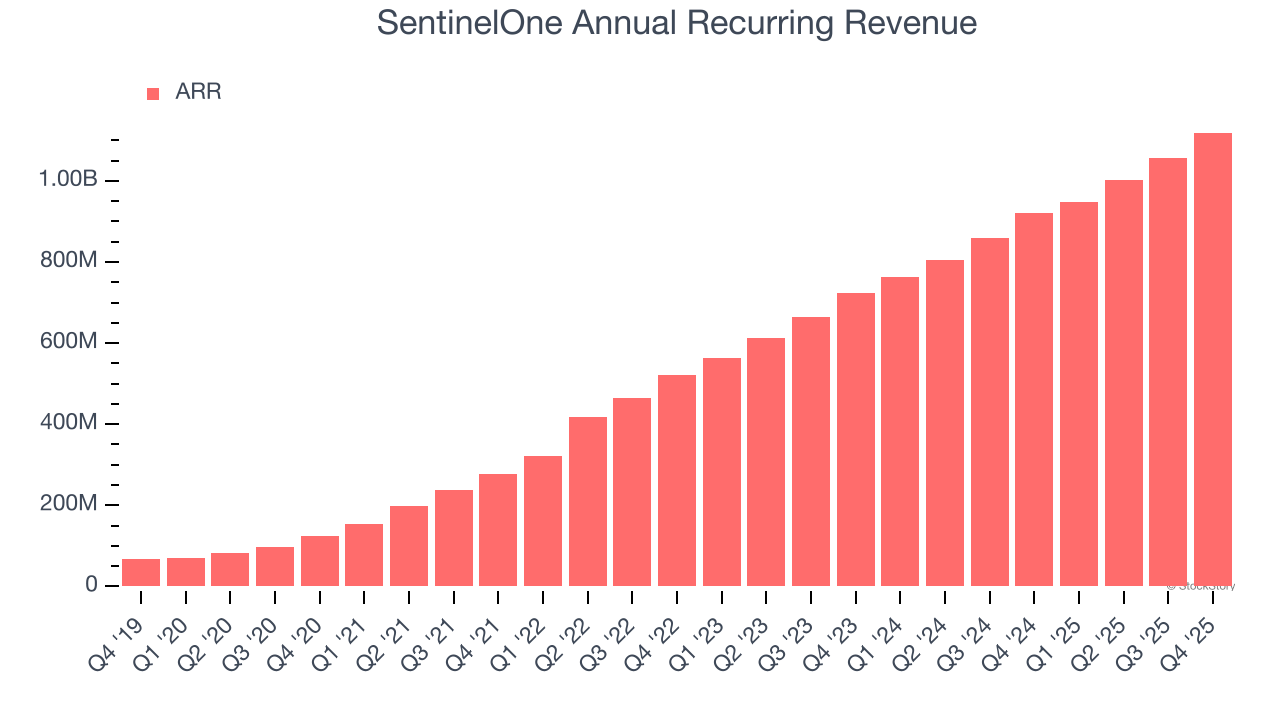
2. Projected Revenue Growth Is Remarkable
Forecasted revenues by Wall Street analysts signal a company’s potential. Predictions may not always be accurate, but accelerating growth typically boosts valuation multiples and stock prices while slowing growth does the opposite, though some deceleration is natural as businesses become larger.
Over the next 12 months, sell-side analysts expect SentinelOne’s revenue to rise by 20%. While this projection is below its 27% annualized growth rate for the past two years, it is commendable and suggests the market sees success for its products and services.
One Reason to be Careful:
Operating Losses Sound the Alarms
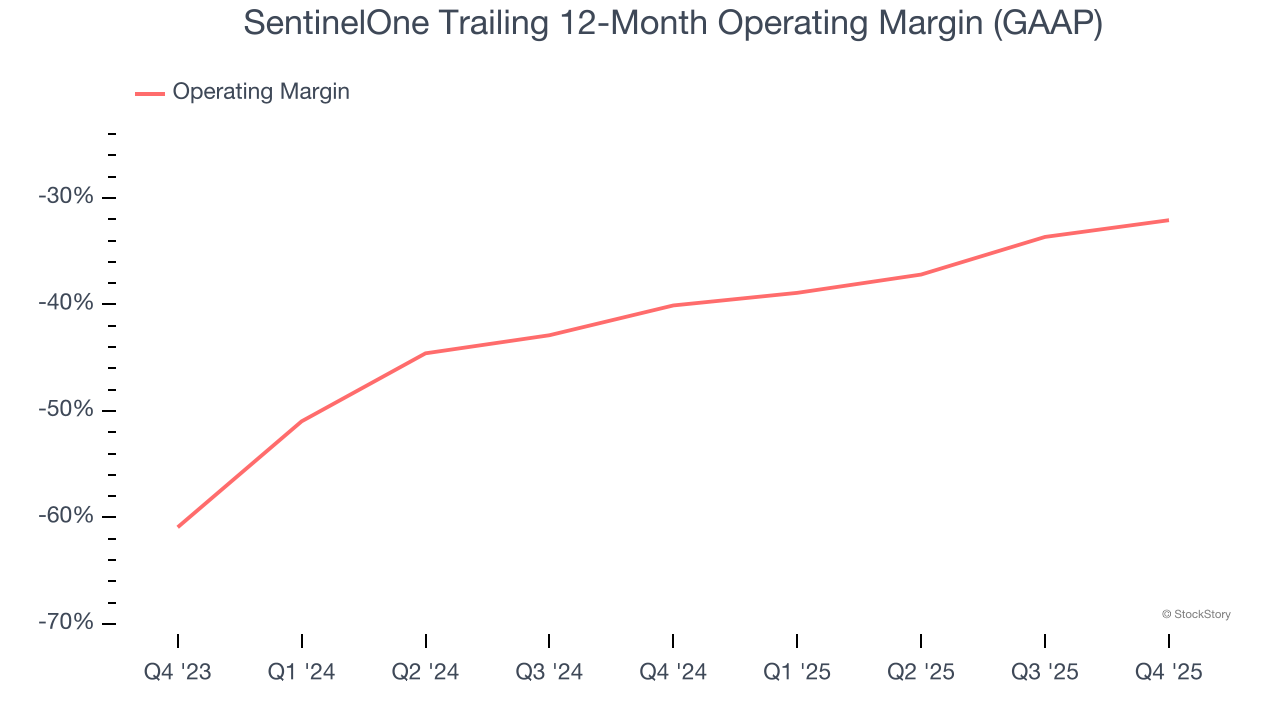
While many software businesses point investors to their adjusted profits, which exclude stock-based compensation (SBC), we prefer GAAP operating margin because SBC is a legitimate expense used to attract and retain talent. This metric shows how much revenue remains after accounting for all core expenses – everything from the cost of goods sold to sales and R&D.
SentinelOne’s expensive cost structure has contributed to an average operating margin of negative 32.1% over the last year. This happened because the company spent loads of money to capture market share. As seen in its fast revenue growth, the aggressive strategy has paid off so far, and Wall Street’s estimates suggest the party will continue. We tend to agree and believe the business has a good chance of reaching profitability upon scale.
Final Judgment
SentinelOne’s positive characteristics outweigh the negatives. After the recent drawdown, the stock trades at 4.1× forward price-to-sales (or $14.60 per share). Is now a good time to initiate a position? See for yourself in our in-depth research report, it’s free.
Stocks We Like Even More Than SentinelOne
ONE MORE THING: Top 5 Growth Stocks. The biggest stock winners almost always had one thing in common before they ran. Revenue growing like crazy. Meta. CrowdStrike. Broadcom. Our AI flagged all three. They returned 315%, 314%, and 455%, respectively.
Find out which 5 stocks it's flagging for this month — FREE. Get Our Top 5 Growth Stocks for Free HERE.
Stocks that have made our list include now familiar names such as Nvidia (+1,326% between June 2020 and June 2025) as well as under-the-radar businesses like the once-micro-cap company Kadant (+351% five-year return). Find your next big winner with StockStory today.