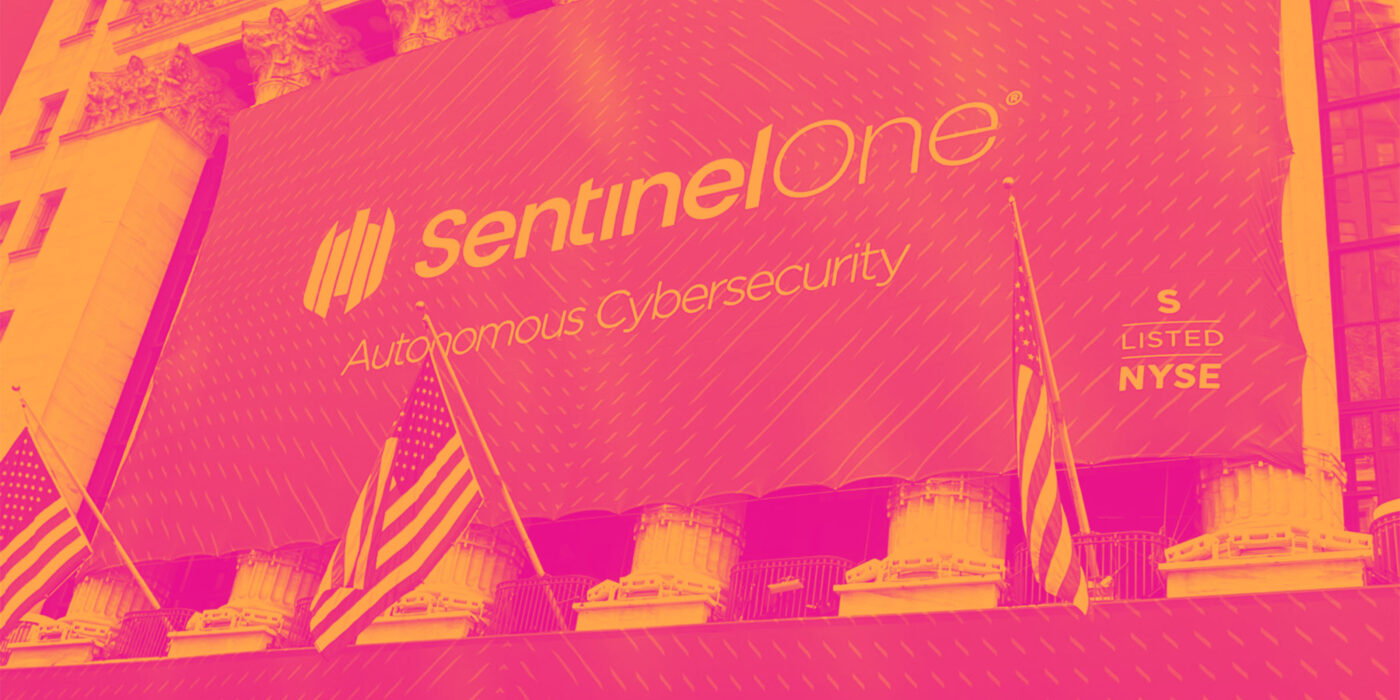
SentinelOne’s first quarter results were met with a sharp negative reaction from the market, reflecting concerns about future growth despite management highlighting the company’s platform momentum. CEO Tomer Weingarten pointed to robust demand for its AI-driven cybersecurity offerings and a record increase in annual recurring revenue, with notable traction in non-endpoint solutions. Management also discussed an accelerated shift in product mix, emphasizing expansion in areas such as AI security and cloud. The company’s decision to streamline its workforce by 8% was framed as a proactive move to boost operating leverage and prioritize core growth categories.
Is now the time to buy S? Find out in our full research report (it’s free for active Edge members).
SentinelOne (S) Q1 CY2026 Highlights:
- Revenue: $276.7 million vs analyst estimates of $277.2 million (20.8% year-on-year growth, in line)
- Adjusted EPS: $0.04 vs analyst estimates of $0.02 ($0.02 beat)
- Adjusted Operating Income: $10.55 million vs analyst estimates of $5.30 million (3.8% margin, 99.1% beat)
- The company reconfirmed its revenue guidance for the full year of $1.2 billion at the midpoint
- Management reiterated its full-year Adjusted EPS guidance of $0.35 at the midpoint
- Operating Margin: -28.8%, up from -38.2% in the same quarter last year
- Customers: 1,702 customers paying more than $100,000 annually
- Annual Recurring Revenue: $1.16 billion vs analyst estimates of $1.16 billion (22.7% year-on-year growth, in line)
- Billings: $229.8 million at quarter end, up 13.6% year on year
- Market Capitalization: $5.59 billion
While we enjoy listening to the management’s commentary, our favorite part of earnings calls is the analyst questions. Those are unscripted and can often highlight topics that management teams would rather avoid or topics where the answer is complicated. Here is what has caught our attention.
Our Top 5 Analyst Questions From SentinelOne’s Q1 Earnings Call
-
Meta Marshall (Morgan Stanley) asked about trends in core endpoint security demand and how SentinelOne balances initial platform sales versus upsell. CEO Tomer Weingarten described strong demand for both core endpoint and adjacent AI security, adding that cloud workload protection is also becoming increasingly relevant.
-
Brad Zelnick (Deutsche Bank) questioned the impact of Project Daybreak and rapid AI development on customer spending. Weingarten responded that AI-related urgency is growing, with enterprises eager for immediate returns from new security investments and that SentinelOne’s offerings are well positioned for this shift.
-
Brian Essex (JPMorgan) inquired about the workforce reduction’s effect on sales and future productivity. Weingarten stated the cuts targeted organizational streamlining without significantly affecting technology teams, while maintaining focus on core growth areas like AI and cloud.
-
Joseph Gallo (Jefferies) followed up on sales disruption risk and margin durability after the restructuring. Weingarten and Parekh both emphasized that no major disruption is expected, and the company can drive both growth and margin expansion through focused reinvestment.
-
John DiFucci (Guggenheim Securities) asked for clarity on strong ARR growth versus unchanged revenue guidance. Parekh explained that larger, back-end loaded deals influenced the timing of revenue recognition, but maintained confidence in positive ARR growth for the year.
Catalysts in Upcoming Quarters
In the quarters ahead, the StockStory team will be watching (1) the adoption rates and cross-sell momentum for SentinelOne’s AI security and cloud solutions, (2) the company’s ability to maintain margin expansion following workforce reductions and operational changes, and (3) the performance of strategic partnerships like Level Blue and Google Cloud in generating large enterprise deals. Progress in net retention rates and continued platform innovation will also be key indicators of execution.
SentinelOne currently trades at $15.92, down from $18.02 just before the earnings. Is there an opportunity in the stock?The answer lies in our full research report (it’s free).
The Best Stocks for High-Quality Investors
ALSO WORTH WATCHING: Top 5 Momentum Stocks. The best time to own a great stock is when the market is finally noticing it. These aren’t just high-quality businesses. Something is happening with them right now. Elite fundamentals meet near-term momentum — both boxes checked at the same time.
Find out which stocks our AI platform is flagging this week. See this week’s Strong Momentum stocks — FREE. Get Our Strong Momentum Stocks for Free HERE.
Stocks that have made our list include now familiar names such as Nvidia (+1,326% between June 2020 and June 2025) as well as under-the-radar businesses like the once-micro-cap company Kadant (+351% five-year return). Find your next big winner with StockStory today.