Let’s dig into the relative performance of VF Corp (NYSE: VFC) and its peers as we unravel the now-completed Q1 consumer discretionary - apparel and accessories earnings season.
The Consumer Discretionary sector, by definition, is made up of companies selling non-essential goods and services. When economic conditions deteriorate or tastes shift, consumers can easily cut back or eliminate these purchases. For long-term investors with five-year holding periods, this creates a structural challenge: the sector is inherently hit-driven, with low switching costs and fickle customers. As a result, only a handful of companies can reliably grow demand and compound earnings over long periods, which is why our bar is high and High Quality ratings are rare. Apparel and accessories companies design, brand, and distribute clothing, handbags, jewelry, and related lifestyle products, often spanning multiple price tiers. Tailwinds include premiumization trends (consumers trading up for perceived quality), international expansion into emerging markets, and growing digital commerce penetration. However, these businesses face headwinds from highly cyclical demand, intense promotional environments, and counterfeit competition undermining brand equity. Tariff volatility and sourcing concentration in a handful of countries add risk. Additionally, rapidly changing fashion cycles and the rise of ultra-fast-fashion digital competitors compress product life cycles and make demand forecasting exceptionally difficult.
The 15 consumer discretionary - apparel and accessories stocks we track reported a strong Q1. As a group, revenues beat analysts’ consensus estimates by 1.4% while next quarter’s revenue guidance was in line.
In light of this news, share prices of the companies have held steady as they are up 3.4% on average since the latest earnings results.
VF Corp (NYSE: VFC)
Owner of The North Face, Vans, and Supreme, VF Corp (NYSE: VFC) is a clothing conglomerate specializing in branded lifestyle apparel, footwear, and accessories.
VF Corp reported revenues of $2.17 billion, up 8.1% year on year. This print exceeded analysts’ expectations by 2%. Overall, it was an exceptional quarter for the company with a beat of analysts’ EPS estimates.
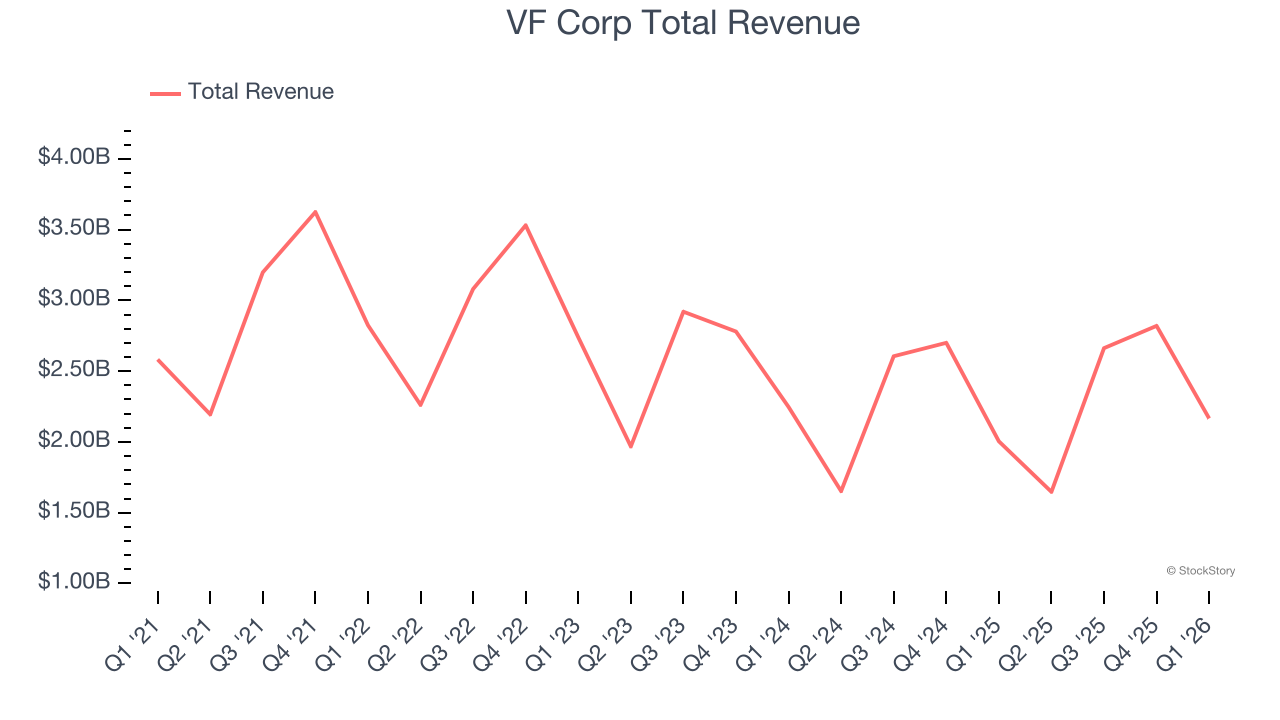
The market was likely pricing in the results, and the stock is flat since reporting. It currently trades at $16.87.
Is now the time to buy VF Corp? Access our full analysis of the earnings results here, it’s free.
Best Q1: Movado (NYSE: MOV)
With its watches displayed in 20 museums around the world, Movado (NYSE: MOV) is a watchmaking company with a portfolio of watch brands and accessories.
Movado reported revenues of $142.4 million, up 8.1% year on year, outperforming analysts’ expectations by 5.4%. The business had a stunning quarter with a beat of analysts’ EPS estimates.
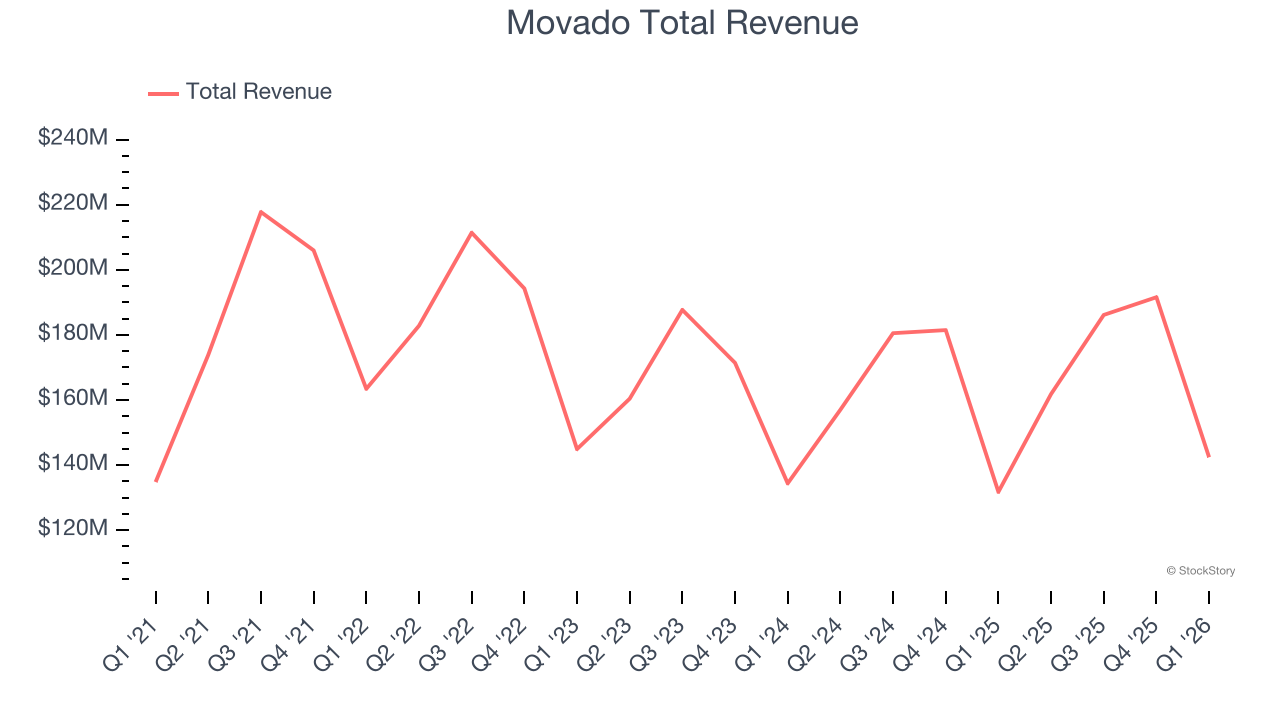
The market seems happy with the results as the stock is up 26.9% since reporting. It currently trades at $37.84.
Is now the time to buy Movado? Access our full analysis of the earnings results here, it’s free.
Weakest Q1: Under Armour (NYSE: UAA)
Founded in 1996 by a former University of Maryland football player, Under Armour (NYSE: UAA) is an apparel brand specializing in sportswear designed to improve athletic performance.
Under Armour reported revenues of $1.17 billion, flat year on year, in line with analysts’ expectations. It was a disappointing quarter as it posted full-year EPS guidance missing analysts’ expectations and a significant miss of analysts’ adjusted operating income estimates.
Interestingly, the stock is up 11.9% since the results and currently trades at $6.78.
Read our full analysis of Under Armour’s results here.
Tapestry (NYSE: TPR)
Originally founded as Coach, Tapestry (NYSE: TPR) is an American fashion conglomerate with a portfolio of luxury brands offering high-quality accessories and fashion products.
Tapestry reported revenues of $1.92 billion, up 21.2% year on year. This print beat analysts’ expectations by 7.6%. It was an exceptional quarter as it also recorded a beat of analysts’ EPS and EBITDA estimates.
Tapestry pulled off the biggest analyst estimate beat and highest full-year guidance raise of the whole group. The stock is down 8.7% since reporting and currently trades at $135.91.
Read our full, actionable report on Tapestry here, it’s free.
ThredUp (NASDAQ: TDUP)
Founded to revolutionize thrifting, ThredUp (NASDAQ: TDUP) is a leading online fashion resale marketplace offering a wide selection of gently-used clothing and accessories.
ThredUp reported revenues of $81.67 million, up 14.6% year on year. This number surpassed analysts’ expectations by 1.9%. Overall, it was a satisfactory quarter as it also put up a decent beat of analysts’ EBITDA estimates.
The stock is up 40.3% since reporting and currently trades at $6.13.
Read our full, actionable report on ThredUp here, it’s free.
Market Update
Over the past year, investors have been forced to repeatedly answer the same question: what is the market’s biggest risk? The answer has changed several times, and each shift has reshaped market leadership.
Late in 2025 and early 2026, artificial intelligence became the market’s primary uncertainty. Investors questioned whether AI would erode software pricing power and weaken competitive moats as AI made it easier to replicate once-differentiated products.
By the spring, technology took a back seat to geopolitics. The U.S. conflict with Iran briefly became the market’s dominant narrative, raising concerns about oil prices, inflation, and global growth. But as energy markets remained orderly and fears of a prolonged supply disruption faded, investors quickly turned their focus back to fundamentals.
Want to invest in winners with rock-solid fundamentals? Check out our Top 5 Growth Stocks and add them to your watchlist. These companies are poised for growth regardless of the political or macroeconomic climate.