American firearm manufacturing company Ruger (NYSE: RGR) reported revenue ahead of Wall Street’s expectations in Q2 CY2026, with sales up 19.3% year on year to $158.1 million. Its non-GAAP profit of $0.52 per share was 23.8% above analysts’ consensus estimates.
Is now the time to buy Ruger? Find out by accessing our full research report, it’s free.
Ruger (RGR) Q2 CY2026 Highlights:
- Revenue: $158.1 million vs analyst estimates of $128.5 million (19.3% year-on-year growth, 23% beat)
- Adjusted EPS: $0.52 vs analyst estimates of $0.42 (23.8% beat)
- Adjusted EBITDA: $16.58 million vs analyst estimates of $14.21 million (10.5% margin, 16.7% beat)
- Operating Margin: 4.8%, up from -15.6% in the same quarter last year
- Free Cash Flow Margin: 10.9%, up from 6.9% in the same quarter last year
- Market Capitalization: $611.3 million
Company Overview
Founded in 1949, Ruger (NYSE: RGR) is an American manufacturer of firearms for the commercial sporting market.
Revenue Growth
A company’s long-term sales performance can indicate its overall quality. Any business can put up a good quarter or two, but many enduring ones grow for years. Over the last five years, Ruger’s demand was weak and its revenue declined by 3.8% per year. This was below our standards and is a sign of poor business quality.
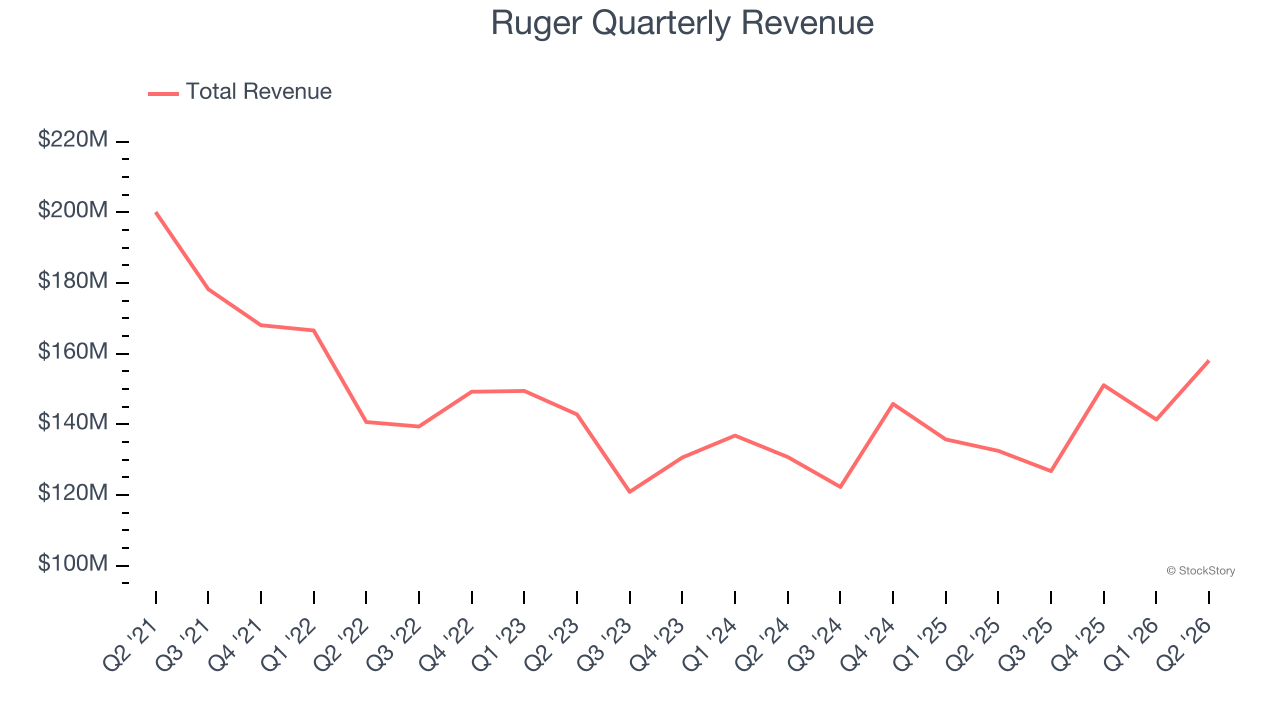
We at StockStory place the most emphasis on long-term growth, but within consumer discretionary, a stretched historical view may miss a company riding a successful new product or trend. Ruger’s annualized revenue growth of 5.5% over the last two years is above its five-year trend, which is encouraging. 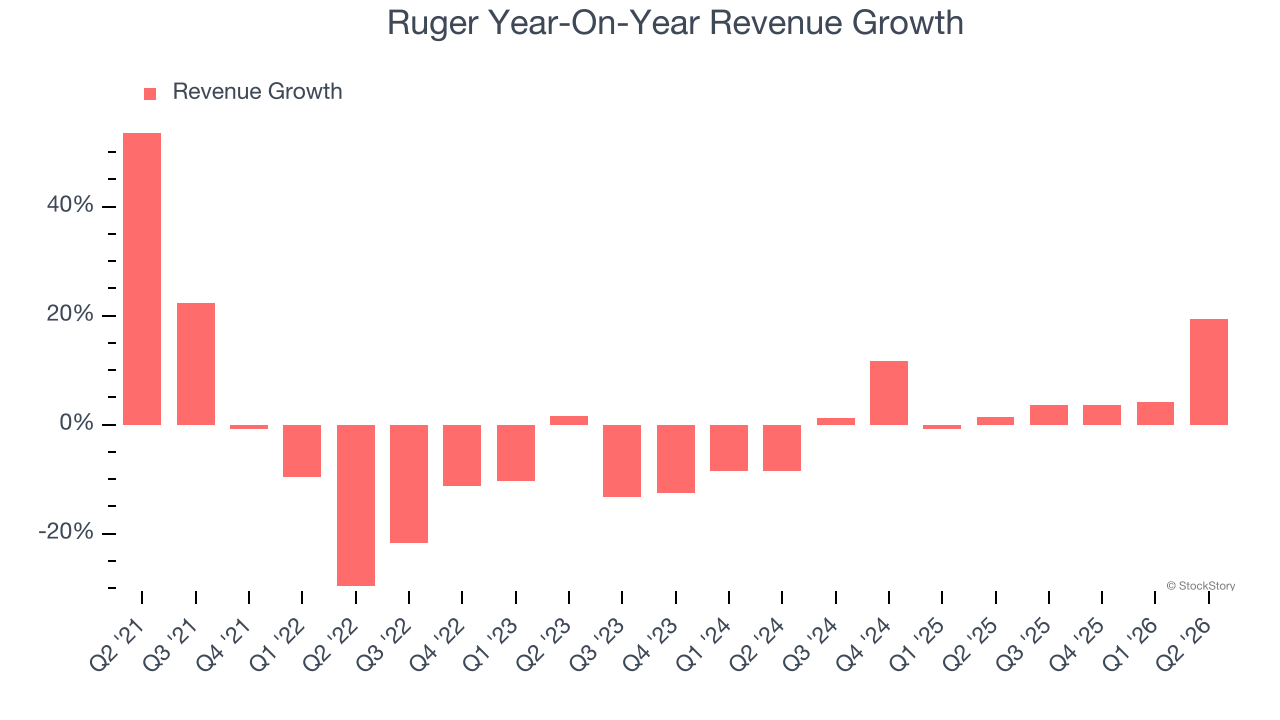
This quarter, Ruger reported year-on-year revenue growth of 19.3%, and its $158.1 million of revenue exceeded Wall Street’s estimates by 23%.
Looking ahead, sell-side analysts expect revenue to decline by 3.1% over the next 12 months, a deceleration versus the last two years. This projection doesn’t excite us and indicates its products and services will see some demand headwinds.
ONE MORE THING: The $21 AI Application Stock Wall Street Forgot. While Wall Street obsesses over who’s building AI, one company is already using it to print money. And nobody’s paying attention.
AI chip stocks trade at ridiculous valuations. This company processes a trillion consumer signals monthly using AI and trades at a third of the price. The gap won’t last. The institutions will figure it out. You need to see this first. Read the FREE Report Before They Notice.
Operating Margin
Ruger’s operating margin has been trending up over the last 12 months and averaged 1.4% over the last two years. The company’s higher efficiency is a breath of fresh air, but its suboptimal cost structure means it still sports inadequate profitability for a consumer discretionary business.
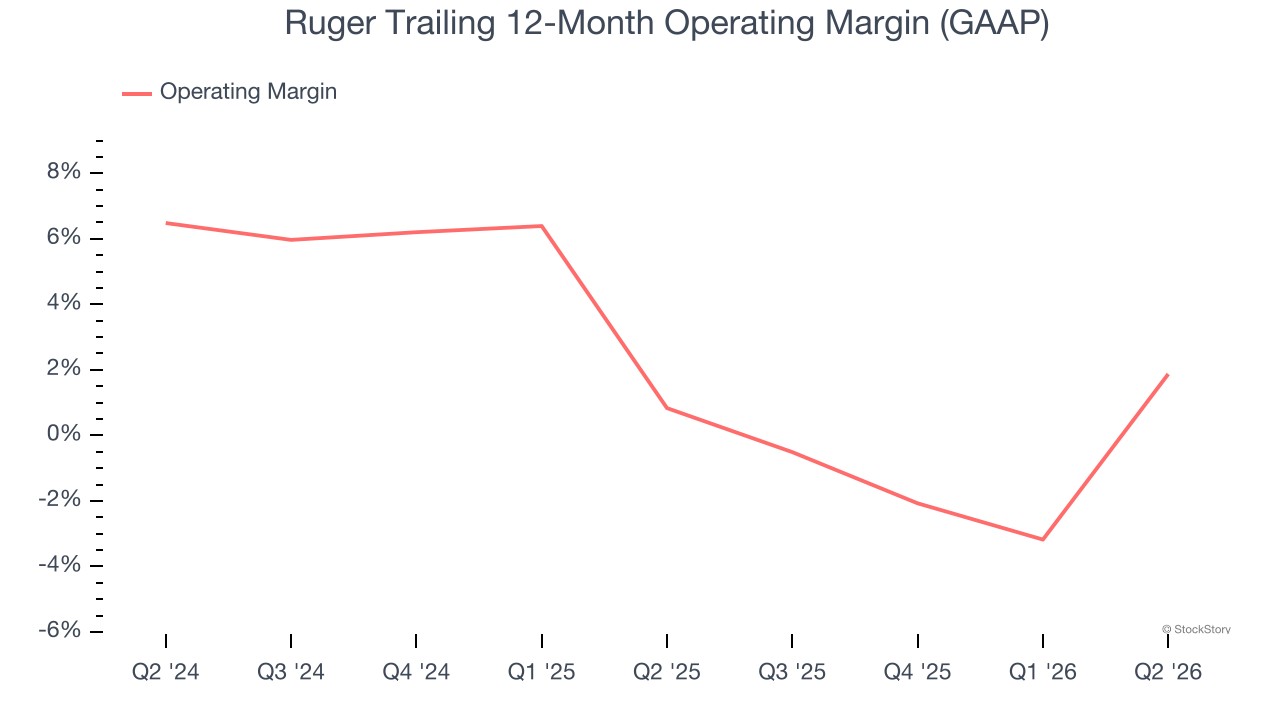
In Q2, Ruger generated an operating margin profit margin of 4.8%, up 20.5 percentage points year on year. This increase was a welcome development and shows it was more efficient.
Earnings Per Share
We track the long-term change in earnings per share (EPS) for the same reason as long-term revenue growth. Compared to revenue, however, EPS highlights whether a company’s growth is profitable.
Sadly for Ruger, its EPS declined by 31.7% annually over the last five years, more than its revenue. This tells us the company struggled because its fixed cost base made it difficult to adjust to shrinking demand.
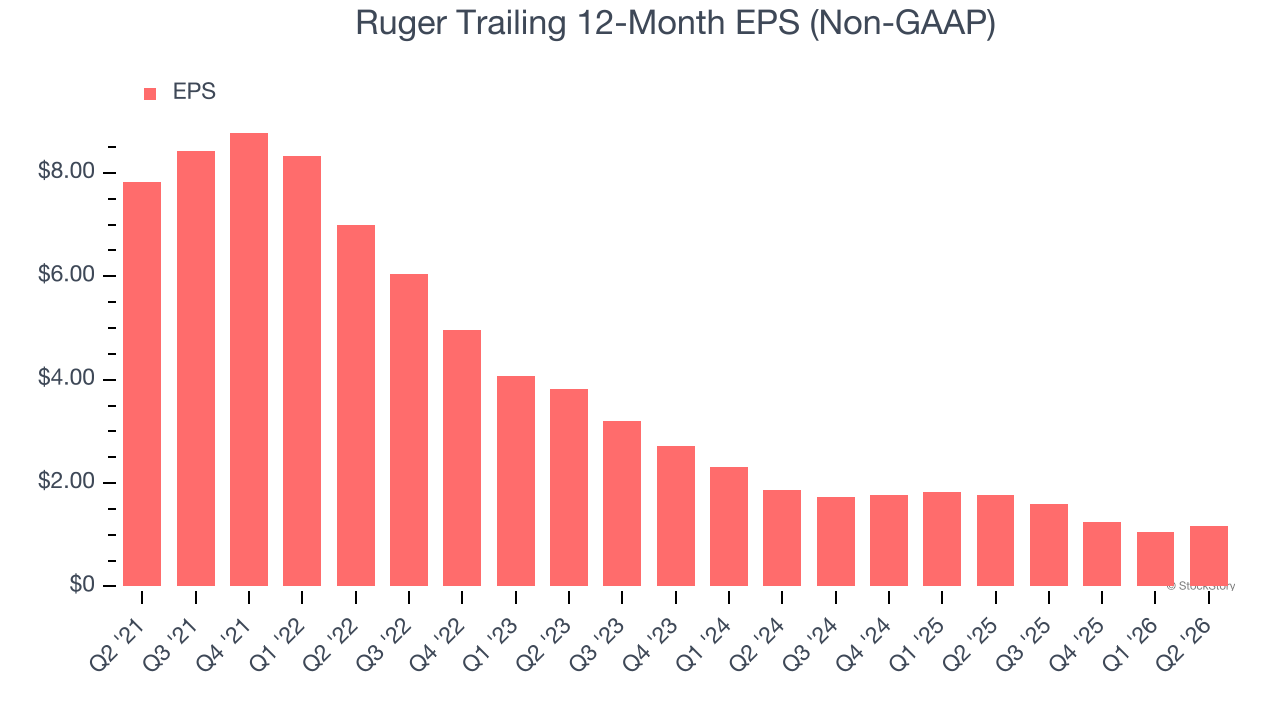
In Q2, Ruger reported adjusted EPS of $0.52, up from $0.41 in the same quarter last year. This print easily cleared analysts’ estimates, and shareholders should be content with the results. Over the next 12 months, Wall Street expects Ruger’s full-year EPS to grow 63.8% from $1.16 to $1.90.
Key Takeaways from Ruger’s Q2 Results
We were impressed by how significantly Ruger blew past analysts’ revenue expectations this quarter. We were also glad its EPS outperformed Wall Street’s estimates. Zooming out, we think this was a good print with some key areas of upside. The stock traded up 4% to $39.27 immediately following the results.
Indeed, Ruger had a rock-solid quarterly earnings result, but is this stock a good investment here? We think that the latest quarter is only one piece of the longer-term business quality puzzle. Quality, when combined with valuation, can help determine if the stock is a buy. We cover that in our actionable full research report which you can read here (it’s free).