Athletic apparel retailer Lululemon (NASDAQ: LULU) fell short of the market’s revenue expectations in Q2 CY2026, with sales falling 4.3% year on year to $2.42 billion. Next quarter’s revenue guidance of $2.31 billion underwhelmed, coming in 8.8% below analysts’ estimates. Its GAAP profit of $2.92 per share was 63.3% above analysts’ consensus estimates.
Is now the time to buy Lululemon? Find out by accessing our full research report, it’s free.
Lululemon (LULU) Q2 CY2026 Highlights:
- Revenue: $2.42 billion vs analyst estimates of $2.46 billion (4.3% year-on-year decline, 1.7% miss)
- EPS (GAAP): $2.92 vs analyst estimates of $1.79 (63.3% beat)
- The company dropped its revenue guidance for the full year to $10.43 billion at the midpoint from $11.08 billion, a 5.9% decrease
- EPS (GAAP) guidance for the full year is $9.61 at the midpoint, missing analyst estimates by 12.5%
- Operating Margin: 18.8%, down from 20.7% in the same quarter last year
- Locations: 825 at quarter end, up from 784 in the same quarter last year
- Same-Store Sales fell 9% year on year (1% in the same quarter last year)
- Market Capitalization: $13.63 billion
Company Overview
Originally serving yogis and hockey players, Lululemon (NASDAQ: LULU) is a designer, distributor, and retailer of athletic apparel for men and women.
Revenue Growth
Reviewing a company’s long-term sales performance reveals insights into its quality. Any business can experience short-term success, but top-performing ones enjoy sustained growth for years.
With $11.09 billion in revenue over the past 12 months, Lululemon is a mid-sized retailer, which sometimes brings disadvantages compared to larger competitors benefiting from better economies of scale.
As you can see below, Lululemon grew its sales at a mediocre 7.9% compounded annual growth rate over the last three years.
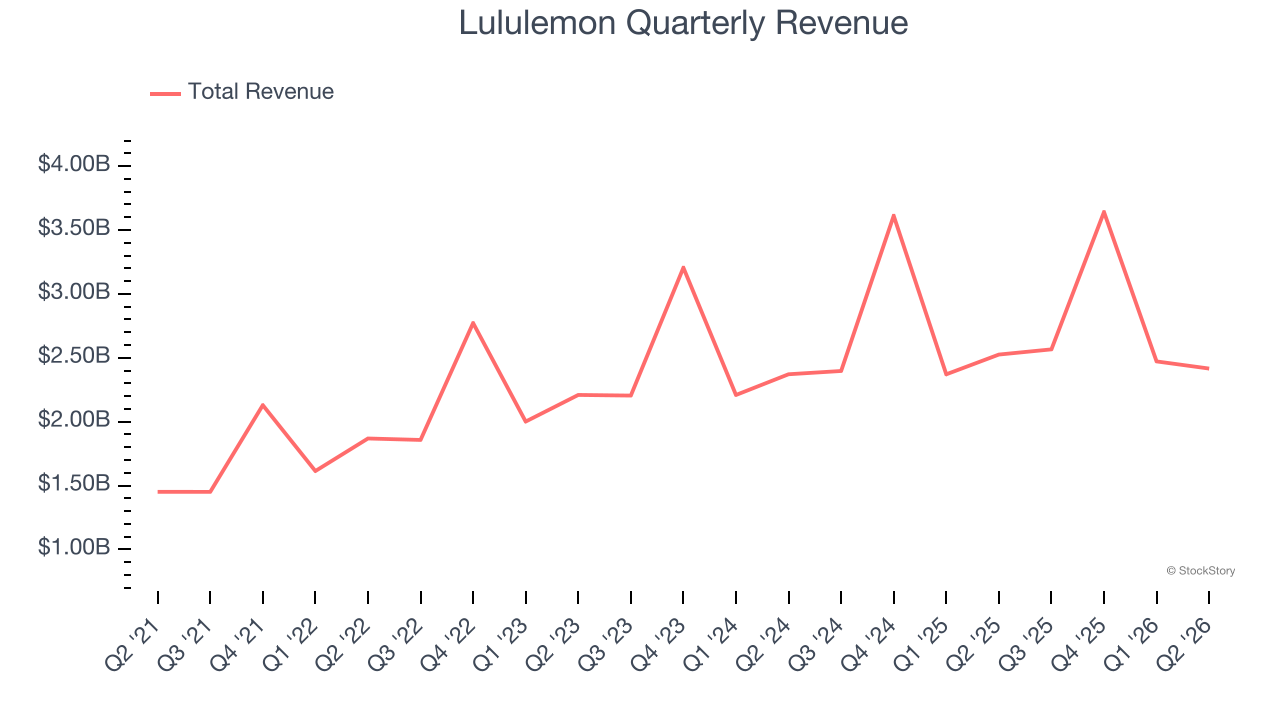
This quarter, Lululemon missed Wall Street’s estimates and reported a rather uninspiring 4.3% year-on-year revenue decline, generating $2.42 billion of revenue. Company management is currently guiding for a 10.2% year-on-year decline in sales next quarter.
Looking further ahead, sell-side analysts expect revenue to remain flat over the next 12 months, a deceleration versus the last three years. This projection doesn’t excite us and indicates its products will face some demand challenges. At least the company is tracking well in other measures of financial health.
ALSO WORTH WATCHING: Nvidia’s Quiet Partner. Nvidia’s chips cost a hundred grand. The connectors that make them work cost even more. One company makes them all.
Every AI server needs specialized infrastructure the chip companies don’t make. High-speed cables. Power connectors. Thermal sensors. This 90-year-old company built a monopoly on it. The AI boom just started. This stock is still flying under the radar. Claim The Stock Ticker Here for FREE.
Store Performance
Number of Stores
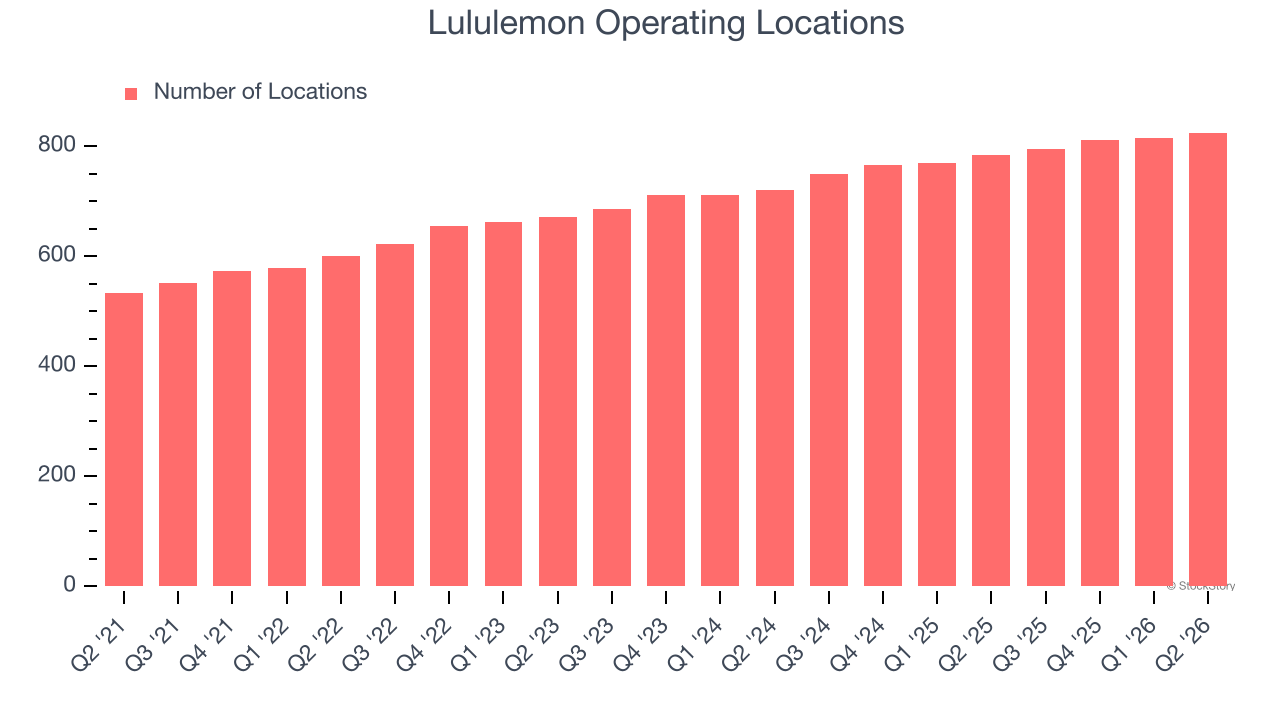
Lululemon sported 825 locations in the latest quarter. Over the last two years, it has opened new stores at a rapid clip by averaging 7.2% annual growth, among the fastest in the consumer retail sector. This gives it a chance to become a large, scaled business over time.
When a retailer opens new stores, it usually means it’s investing for growth because demand is greater than supply, especially in areas where consumers may not have a store within reasonable driving distance.
Same-Store Sales
A company’s store base only paints one part of the picture. When demand is high, it makes sense to open more. But when demand is low, it’s prudent to close some locations and use the money in other ways. Same-store sales is an industry measure of whether revenue is growing at those existing stores and is driven by customer visits (often called traffic) and the average spending per customer (ticket).
Lululemon’s demand within its existing locations has barely increased over the last two years as its same-store sales were flat. Lululemon should consider improving its foot traffic and efficiency before expanding its store base.
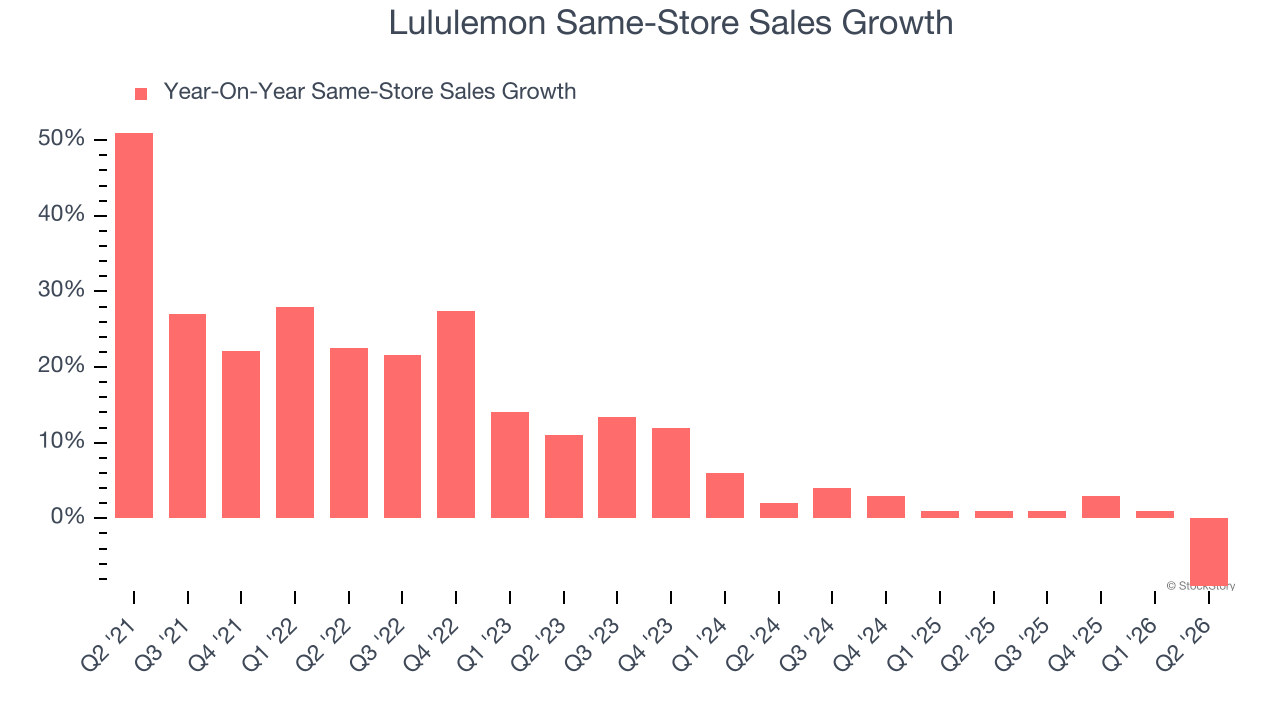
In the latest quarter, Lululemon’s same-store sales fell by 9% year on year. This decline was a reversal from its historical levels. A one-quarter hiccup shouldn’t deter you from investing in a business, and we’ll be monitoring the company to see how things progress.
Key Takeaways from Lululemon’s Q2 Results
It was good to see Lululemon beat analysts’ EPS expectations this quarter. We were also excited its gross margin outperformed Wall Street’s estimates. On the other hand, revenue missed on a large same-store sales decline. Also, the company's full-year revenue guidance missed and its full-year EPS guidance fell short of Wall Street’s estimates as well. Overall, this quarter was bad. The stock traded down 15.5% to $103.44 immediately following the results.
Lululemon’s earnings report left more to be desired. Let’s look forward to see if this quarter has created an opportunity to buy the stock. What happened in the latest quarter matters, but not as much as longer-term business quality and valuation, when deciding whether to invest in this stock. We cover that in our actionable full research report which you can read here (it’s free).