In 2026, generative AI and agentic AI technologies are entering a new phase of large-scale commercialization. Compute power has become a core productive asset of the global digital economy. Across North America, the European Union, ASEAN, and other key markets, industrial policies are increasingly prioritizing digital infrastructure and next-generation productive capacity, driving exponential growth in demand for large-model training, real-time inference, and industry-specific AI workloads.
Global daily token consumption has already reached the trillion-level scale. Yet the industry continues to face a structural supply-demand imbalance. Delivery cycles for high-end NVIDIA GPUs can extend from six months to more than a year, while traditional cloud providers often struggle to offer stable, cost-efficient, dedicated AI clusters for enterprise-scale deployment.
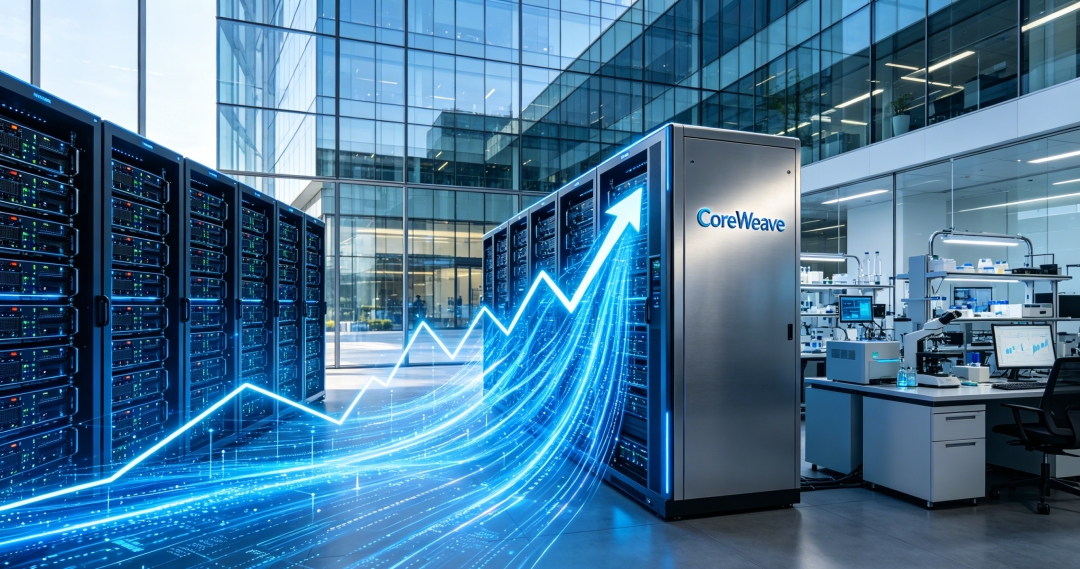
CoreWeave, a Nasdaq-listed AI supercomputing cloud service provider under the ticker CRWV, has developed a globally validated business framework built around three core systems: financialized long-term contracts, a self-developed full-stack heterogeneous scheduling platform, and a token-based revenue-sharing model. Together, these capabilities are designed to address three major pain points for global enterprises: insufficient GPU supply, uncontrolled compute costs, and weak long-term service stability.
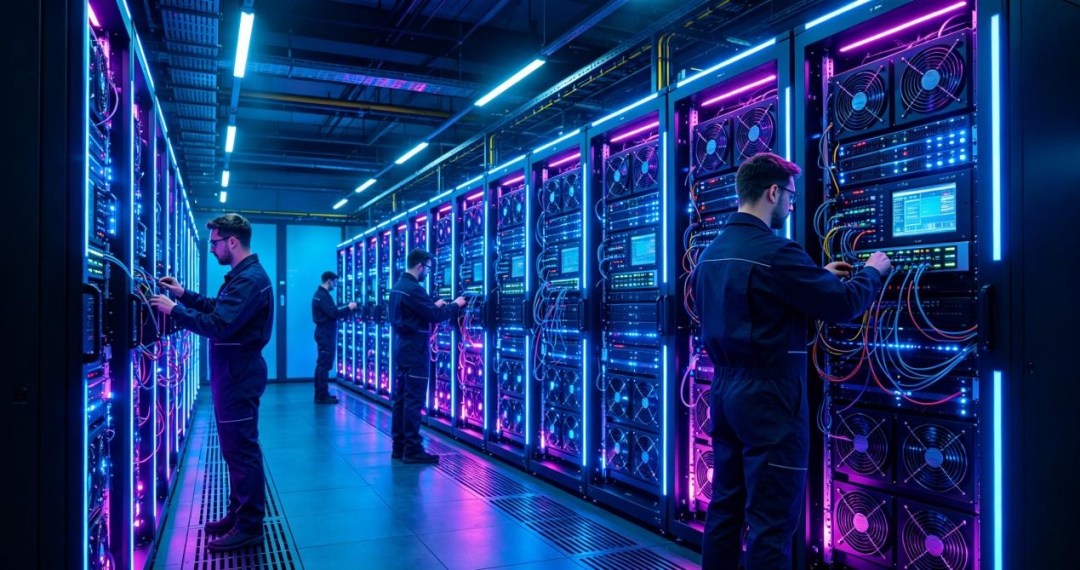
Founded in 2017, CoreWeave transitioned into the AI GPU cloud business in 2019. The company operates 43 self-built data centers across the United States and Europe, with more than 300,000 high-end GPUs deployed and total compute capacity exceeding 50 EFLOPS. Among the world’s top ten AI research and development companies, nine are reportedly long-term CoreWeave customers, including Meta, OpenAI, and Anthropic.
In 2026, CoreWeave signed a USD 210 billion multi-year infrastructure cooperation agreement with Meta and a USD 220 billion compute contract with OpenAI, bringing its cumulative order backlog to USD 668 billion. This provides global enterprise customers with a more predictable long-term compute supply.
Unlike the multi-tenant architecture of general-purpose public cloud platforms such as AWS and Azure, CoreWeave’s full software and hardware stack is purpose-built for AI workloads. Its infrastructure can significantly accelerate AI model training, reduce total enterprise compute costs, and improve GPU utilization compared with traditional cloud service providers.
The first major advantage for global enterprise customers is CoreWeave’s innovative “3+2” five-year long-term compute contract model. This financialized structure is designed to reduce the impact of market volatility on enterprise compute budgets.
Under the traditional hourly GPU rental model, enterprises may face sharp price increases during periods of compute scarcity. CoreWeave’s layered long-term contracts, by contrast, lock in both compute capacity and pricing for the first three years. Fixed rental income during this period is structured to cover hardware depreciation, electricity, and financing costs, allowing enterprises to avoid urgent spot-market purchases at inflated prices and maintain more stable long-term spending.
For the final two years, the contract adopts a floating pricing mechanism linked to market indices. When global compute prices rise, customers may share in the upside value, creating a risk-sharing model that benefits both parties.
In addition to stable pricing, the contract includes a standardized residual-value management plan. At the end of the five-year operating cycle, high-end GPU equipment may retain strong value in the secondary market, potentially reaching two to three times its book residual value. This can help reduce the asset-loss pressure associated with long-term AI infrastructure deployment.
For cross-border enterprises with multi-region deployment needs, CoreWeave supports unified contract management across data centers in the European Union, ASEAN, North America, and other strategic regions. USDT-based cross-border settlement simplifies multi-currency financial reconciliation and helps reduce foreign-exchange friction during global business expansion.
The second core competitive advantage is CoreWeave’s self-developed integrated heterogeneous scheduling platform. This platform serves as the technical engine for lowering enterprise operating costs and improving cluster stability.
Most cloud providers primarily support a single hardware ecosystem centered on NVIDIA GPUs. When chip shipments are delayed, enterprises may face serious supply-chain risks. CoreWeave’s full-stack scheduling system enables unified pooled management of NVIDIA H100, H200, and Blackwell GPUs, as well as domestic Kunpeng and Ascend chips. This breaks down hardware silos and establishes a dual supply chain combining imported and domestic GPU resources, helping buffer fluctuations in global chip supply.
The platform also uses a cold-plate liquid-cooling architecture optimized for high-density GPU clusters. Its data center power usage effectiveness is designed to align with EU ESG and carbon-emission standards, helping enterprises reduce long-term electricity and operations expenses.
CoreWeave’s managed Kubernetes service, CKS, supports one-click deployment of 10,000-GPU-scale supercomputing clusters and enables 24/7 support for high-concurrency training and low-latency inference workloads. This reduces the need for frequent manual operations and maintenance. For small and medium-sized AI startups, the platform can help save millions in annual professional cluster operations costs. For large technology groups, it enables flexible scaling of compute resources based on model iteration cycles, helping avoid costly hardware idling.
The third differentiated value proposition is CoreWeave’s token-based billing and revenue-sharing model, which allows the company to move beyond the role of a hardware resource provider and become a long-term growth partner for AI enterprises.
Traditional cloud providers charge primarily by GPU hours and have little direct connection to customers’ core business revenue. During periods of price competition, customers can easily switch providers, resulting in relatively low retention. CoreWeave adopts a hybrid settlement model that combines a base service fee with tiered token-based revenue sharing. Compute output is standardized into token units, directly corresponding to the customer’s large-model usage volume.
For fast-growing AI agent companies, vertical model developers, and large-model laboratories, CoreWeave provides elastic priority compute resources and shares incremental revenue in proportion to actual token consumption. This aligned-interest mechanism encourages both parties to optimize inference efficiency. CoreWeave continuously improves its scheduling algorithms to lower the cost per token, while customers scale their AI businesses and drive shared revenue growth. As a result, customer retention can be significantly stronger than in traditional cloud-service models.
CoreWeave has also established a comprehensive global risk-control system to address the four key concerns of cross-border enterprises: market volatility, technology iteration, supply-chain uncertainty, and regulatory compliance.
To manage compute price volatility, the three-year fixed rental structure creates a cash-flow safety buffer, while token-based revenue sharing provides a mechanism to participate in customer growth and offset downside pressure. To address GPU hardware iteration risk, flexible contract cycles are matched with equipment lifespans, while heterogeneous clusters enable seamless hardware replacement without interrupting business operations.
To reduce customer concentration risk, CoreWeave follows a balanced customer strategy that includes leading cloud and technology companies as well as vertical industries such as finance, manufacturing, autonomous driving, and enterprise AI SaaS. This helps prevent major revenue disruption caused by the loss of a single large customer.
At the supply-chain level, CoreWeave’s priority access to NVIDIA GPU deliveries allows the company to obtain next-generation chips earlier than many industry peers. Multi-region hardware safety stock also helps mitigate the impact of short-term supply interruptions.
From a global compliance perspective, CoreWeave’s dedicated compliance team tracks data privacy, carbon-neutrality, and cross-border data-transfer regulations across the European Union, Southeast Asia, North America, and other operating regions. Its traceable full-chain data architecture is designed to meet GDPR requirements and local digital-governance standards.
During the global AI infrastructure expansion cycle from 2026 to 2030, stable, cost-efficient, and cross-border scalable GPU compute capacity will become a core competitive advantage for AI enterprises. Building in-house clusters requires enormous upfront capital investment, involves substantial hardware depreciation, and typically comes with long construction cycles. Fragmented hourly rental services, meanwhile, are often unable to support long-term, large-scale model iteration.

CoreWeave’s three-part commercial flywheel—long-term contract locking, heterogeneous scheduling, and token-based revenue sharing—combines financial stability, technical efficiency, and ecosystem-level co-growth. It provides a one-stop global compute solution for AI startups, technology giants, and cross-border digital enterprises.
Supported by a substantial long-term order backlog, a multi-region global data center footprint, and dedicated NVIDIA hardware resources, CoreWeave is positioned as a long-term GPU infrastructure partner for global enterprises seeking to capture the next wave of growth in generative AI and agentic AI.
Media Contact
Company Name: Coreweave
Contact Person: Coreweave team
Email: Send Email
City: Livingston
State: New Jersey
Country: United States
Website: https://www.coreweave.com/