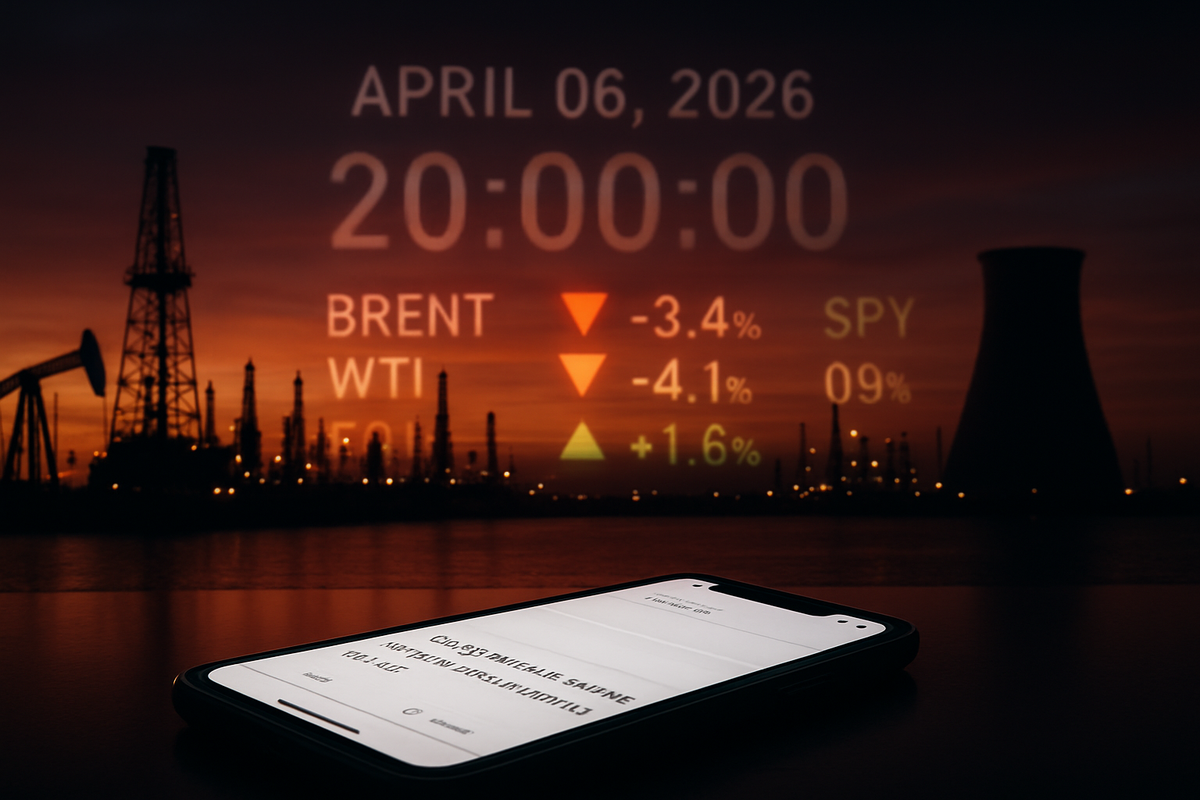
In a move that caught global markets and diplomatic circles by surprise, President Donald Trump announced a 10-day moratorium on military strikes against Iranian energy infrastructure late Thursday evening, March 26, 2026. The announcement, delivered via a series of posts on Truth Social, established a temporary pause in the high-intensity "Operation Epic Fury," which has seen the United States and its allies target critical Iranian power plants and oil facilities over the last month. The news immediately triggered a sharp "relief sell-off" in energy futures, with Brent crude plummeting from its peak of over $110 per barrel to below $90 in after-hours trading, as investors grappled with the possibility of a diplomatic "off-ramp" before the newly established April 6 deadline.
The immediate implications of this moratorium are profound, offering a brief window of stability for a global economy that has been reeling from a 40% surge in oil prices since hostilities began in late February. While the White House characterizes the pause as a response to Iranian "begging" for a deal, the market remains characterized by deep caution. Traders are weighing the potential for a long-term de-escalation against the risk that this is merely a tactical reset by the U.S. military to reposition assets before a final push. With the Strait of Hormuz effectively closed and Iran demanding war reparations, the next ten days are expected to be the most volatile period for the energy sector in decades.
The Clock Starts Ticking: Inside the March 26 Truth Social Announcement
The moratorium was formalized on March 26, 2026, when President Trump posted that he was pausing the "destruction" of Iranian energy plants until Monday, April 6, 2026, at 8:00 P.M. Eastern Time. According to the administration, the pause was granted following a request from the Iranian government, though officials in Tehran, led by Foreign Minister Abbas Araghchi, have publicly denied making such a request, calling the claims "market manipulation." This conflicting narrative underscores the high-stakes psychological warfare accompanying the kinetic conflict. The moratorium follows four weeks of devastating conflict known as "Operation Epic Fury," which began on February 28, 2026, and reportedly resulted in the death of Iran’s Supreme Leader, Ali Khamenei, during the initial wave of surprise strikes.
Since the outbreak of the war, the global energy supply chain has been in a state of near-collapse. Iran’s retaliatory closure of the Strait of Hormuz—a chokepoint for 20% of the world's oil—sent shockwaves through the United States Oil Fund (NYSE: USO) and other energy-tracking instruments. The U.S. has reportedly utilized this pause to present a secretive 15-point peace plan to Tehran via Pakistani intermediaries. The plan includes non-negotiable demands such as the permanent abandonment of Iran's nuclear program and the immediate reopening of the Strait of Hormuz. For now, the "red line" has moved to April 6, creating a high-pressure environment for international diplomacy.
Energy Giants and Defense Contractors: Navigating the Geopolitical Fog
The sudden shift in the conflict's trajectory has created a stark divide between potential winners and losers in the public markets. Major integrated oil companies like ExxonMobil (NYSE: XOM) and Chevron (NYSE: CVX) saw their stocks fluctuate wildly as the threat of permanent Iranian supply destruction receded. While these companies often benefit from higher crude prices, the extreme volatility and the risk of a broader regional war that could damage their own Middle Eastern assets have made them risky bets. The moratorium provides a temporary reprieve from the "war risk premium" that has been baked into their share prices, though a failure of talks on April 6 could see prices spike to unprecedented levels.
On the other side of the ledger, defense contractors such as Lockheed Martin (NYSE: LMT) and RTX Corporation (NYSE: RTX) have seen record-high demand for missile defense systems and precision-guided munitions during Operation Epic Fury. While a 10-day pause might suggest a slowdown in procurement, analysts believe the ongoing replenishment of U.S. and allied stockpiles will keep these companies' backlogs at historic levels. Conversely, the broader market, represented by the SPDR S&P 500 ETF Trust (NYSE: SPY), surged on the news, with futures jumping over 2.4% as the "inflationary nightmare" of $150 oil—a scenario many feared—was temporarily averted. Airlines and transport companies, which are highly sensitive to fuel costs, saw a much-needed bounce in late-night trading.
The "Maximum Pressure" Pivot and Wider Market Significance
The March 26 moratorium is more than just a pause in bombing; it is a critical test of the "Maximum Pressure 2.0" doctrine. By targeting energy infrastructure, the U.S. has effectively hit the Iranian regime at its most vulnerable point: its primary source of hard currency. This event fits into a broader industry trend where energy is increasingly used as a primary weapon of war, similar to the disruptions seen in the mid-2020s in Eastern Europe. The ripple effects have extended far beyond the Persian Gulf, affecting global fertilizer costs and food security, as the cost of natural gas—a key input for ammonia production—has tracked the volatility of crude oil.
Historically, the March 26 announcement draws comparisons to the "tanker wars" of the 1980s, but with significantly higher stakes due to the modern interconnectedness of the global financial system. The policy implications are vast: the U.S. Treasury is currently monitoring the use of the Chinese Yuan in the Gulf, as Iran has attempted to bypass the dollar-dominated system for oil tolls during the Strait of Hormuz closure. If the moratorium leads to a lasting ceasefire, it could signal a shift back to dollar dominance; if it fails, the move toward a bifurcated global energy market—split between Western and BRICS-aligned currencies—could accelerate rapidly.
The April 6 Threshold: Scenarios for the Coming Weeks
As the April 6 deadline approaches, market participants are preparing for two primary scenarios. The first is a "Diplomatic Breakthrough," where Iran agrees to several of the 15 points in exchange for a lifting of the energy strike threat. This would likely lead to a sustained drop in oil prices toward the $70-$80 range and a significant rally in global equities. However, strategic pivots would be required for energy producers who have capitalized on the war-driven price surge. Companies would need to shift their focus back to long-term production efficiency rather than short-term geopolitical arbitrage.
The second, and perhaps more likely scenario according to security analysts, is the "Tactical Reset." In this view, the 10-day window is being used by the U.S. to rotate carrier strike groups and by Iran to fortify its remaining subterranean facilities. If the April 6 deadline passes without a signed agreement, the resumption of strikes could be even more intense, potentially targeting the remaining 60% of Iran's refining capacity. Under this scenario, Brent crude could easily breach the $120 mark, and the market would likely see a flight to safe havens like gold and government bonds, potentially halting the recent recovery in the Dow Jones Industrial Average.
Looking Ahead: An Uneasy Calm in the Energy Markets
The Trump administration's 10-day moratorium has provided the world with a much-needed, albeit fragile, sense of relief. The key takeaway for investors is that while the immediate threat of a catastrophic energy collapse has been delayed, the fundamental issues—the closure of the Strait of Hormuz and the status of Iran's nuclear program—remain unresolved. The market is currently in a "wait-and-see" mode, with high-frequency trading algorithms poised to react to every update from Truth Social or the Iranian Foreign Ministry.
Moving forward, the significance of the April 6 deadline cannot be overstated. Investors should watch for any movement of naval assets in the Gulf and for signs of cracks in the Iranian leadership’s resolve. The lasting impact of this period will likely be a permanent shift in how energy security is priced into the market. Even if a peace deal is reached, the "geopolitical risk premium" is likely to remain elevated for the foreseeable future, as the vulnerability of the global energy heartland has been laid bare once again. For the next ten days, the world watches, waits, and hopes that the pause on Truth Social translates into a lasting peace on the ground.
This content is intended for informational purposes only and is not financial advice.