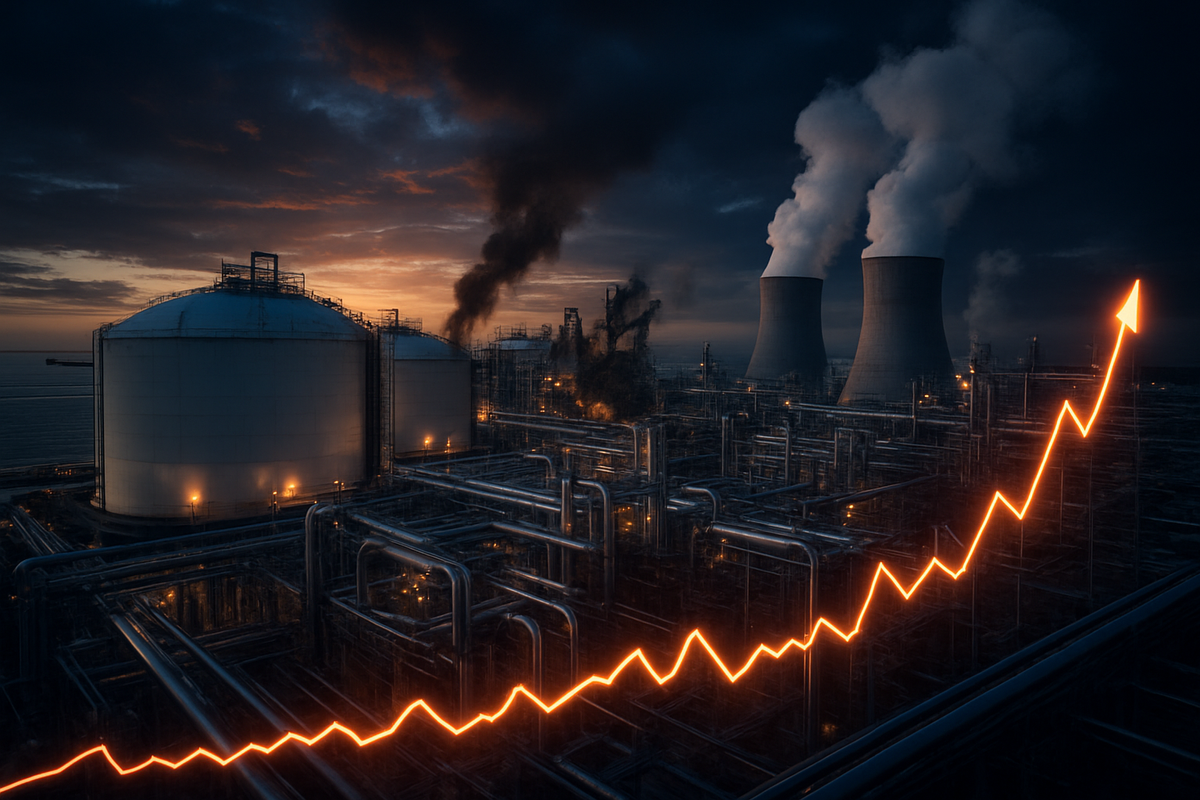
As of April 14, 2026, the global energy landscape is being reshaped by a paradox of unprecedented volatility and industrial devastation. While the escalating conflict between Iran, Israel, and the United States has sent Brent crude prices surging toward $120 per barrel, it has also paralyzed critical energy infrastructure in the Middle East. At the center of this storm stands Shell (NYSE: SHEL), which today reported a dramatic surge in its oil and renewable trading profits even as its flagship gas-to-liquids facility in Qatar remains offline following targeted missile strikes.
The immediate implications for the market are stark: a world already grappling with high inflation is now facing a structural deficit in liquefied natural gas (LNG) and a "geopolitical risk premium" that shows no signs of dissipating. While Shell’s sophisticated trading desks are successfully navigating the price swings, the physical destruction of the Ras Laffan Industrial City has removed nearly 19% of the world's LNG supply, forcing a radical recalibration of energy security strategies across Europe and Asia.
The Ras Laffan Siege: A Timeline of Disruption
The current crisis traces its roots back to mid-March 2026, when long-standing regional tensions boiled over into direct kinetic action. On March 18, a barrage of missiles targeted the Ras Laffan Industrial City in Qatar, a crown jewel of the global energy sector. Among the hardest-hit assets was Shell’s Pearl GTL (gas-to-liquids) facility, which suffered significant damage to its processing trains. The resulting fires and safety protocols forced an immediate and indefinite shutdown of the site.
In the weeks following the strike, QatarEnergy was forced to declare force majeure on several major contracts, effectively cutting off 80 million tonnes of annual LNG supply. For Shell, this necessitated a downward revision of its first-quarter gas production guidance to between 880,000 and 920,000 barrels of oil equivalent per day—a 5% drop from the previous quarter. However, the financial blow of this production loss has been largely masked by the company’s "Chemicals and Products" trading division, which capitalized on the wild price fluctuations that saw Brent crude jump from $61 in January to nearly $120 by late March.
Market reactions have been frantic. Initial panic selling of energy stocks gave way to a "flight to quality" as investors realized that the largest integrated oil majors could offset physical losses through their massive trading operations. By early April, despite a temporary two-week ceasefire, the failure of peace talks and the establishment of a U.S.-led naval blockade in the Strait of Hormuz have kept prices firmly above the $100 threshold, cementing this as the single largest supply disruption in modern history.
Winners and Losers in the Volatility Vacuum
The impact of this disruption has not been felt equally across the "Big Oil" landscape. Shell (NYSE: SHEL) and BP (NYSE: BP) have emerged as the primary beneficiaries of the volatility, thanks to their industry-leading trading and optimization desks. BP, under the leadership of its new CEO Meg O’Neill, reported "exceptional" oil trading results for the quarter, largely because its asset base has limited direct exposure to the specific impact zones in Qatar and Iran.
Conversely, ExxonMobil (NYSE: XOM) has faced a more grueling start to the year. Despite seeing a $2.9 billion boost in upstream earnings due to high prices, the company suffered a $5.3 billion hit related to accounting and hedging timing. Furthermore, ExxonMobil lost approximately 6% of its global production, with half of those losses tied directly to its LNG partnerships in Qatar. Chevron (NYSE: CVX) also struggled, reporting production declines of 6% and anticipating a $2.7 billion to $3.7 billion hit from derivatives marked to market as prices spiraled out of control.
TotalEnergies (NYSE: TTE) remains the most physically vulnerable of the supermajors. The company lost roughly 15% of its total output due to shutdowns in Qatar, Iraq, and offshore UAE. While an $8 increase in the price of Brent usually offsets production losses for TotalEnergies, the scale of the Qatari shutdown has tested this correlation to its limit. For these companies, the "win" is purely financial and temporary, while the "loss" involves the physical destruction of multi-billion dollar assets that could take three to five years to repair.
A New Era of Commodity Insecurity
The strikes in Qatar and the blockade of the Strait of Hormuz represent a fundamental shift in the global commodity trade. This event fits into a broader trend of "weaponized energy," where infrastructure is no longer a neutral asset but a primary target. The ripple effects extend far beyond oil and gas; the Middle East is responsible for 46% of the global urea (fertilizer) trade and 9% of primary aluminium. Shortages in these sectors are already threatening global food security and stalling green energy projects that rely on cheap aluminium.
Historically, the market has seen price spikes during the 1973 oil embargo and the 2022 invasion of Ukraine, but the 2026 crisis is unique because of the sophistication of the trading instruments involved. Regulatory bodies in the EU and the US are now looking closely at the windfall trading profits of companies like Shell, questioning whether "volatility harvesting" should be subject to new emergency taxes. The precedent set here suggests that in the future, a company’s value may be judged more by the brilliance of its algorithms than the volume of its reserves.
The Long Road to Repair and Redirection
In the short term, Shell and its peers are expected to maintain high liquidity buffers. Shell has already warned of a massive $10 billion to $15 billion working capital outflow as it manages the cash requirements of its trading positions. Investors should expect a strategic pivot toward "secure" production hubs. Plans for LNG Canada and offshore projects in Guyana and Brazil are being fast-tracked as the industry seeks to reduce its reliance on the increasingly unstable Persian Gulf.
Long-term, the challenge remains the physical repair of the Ras Laffan complex. Wood Mackenzie analysts suggest that the complexity of the Pearl GTL facility means it may not return to full capacity until late 2029. This creates a multi-year supply gap that will likely keep gas prices elevated for the remainder of the decade. The market opportunity now lies in the rapid development of non-Middle Eastern supply and the acceleration of alternative energy sources that are not subject to the same geopolitical bottlenecks.
Summary: Resilience Amidst the Rubble
As the dust settles on the first quarter of 2026, the key takeaway is the sheer resilience of the integrated energy model. Shell’s ability to generate record-breaking trading profits while its physical assets are under fire is a testament to the evolution of the modern energy major. However, this financial success comes at a steep price: the loss of global supply stability and the permanent scarring of the Qatari energy sector.
Moving forward, the market will be defined by persistent volatility and a "scarcity mindset." Investors should watch for the upcoming Q1 earnings calls for detailed guidance on capital expenditure shifts and any further force majeure declarations. While Shell has proven it can thrive in a crisis, the structural damage to the global energy grid suggests that the era of cheap, reliable energy has reached a definitive end.
This content is intended for informational purposes only and is not financial advice.