Ride-hailing giant Uber Technologies (UBER) is accelerating its push into autonomous mobility as it expands partnerships with major automakers and tech companies. The company recently teamed up with Nissan (NSANY) and self-driving startup Wayve to launch robotaxis in Tokyo, while also expanding ties with Amazon’s (AMZN) Zoox to deploy autonomous vehicles on its platform.
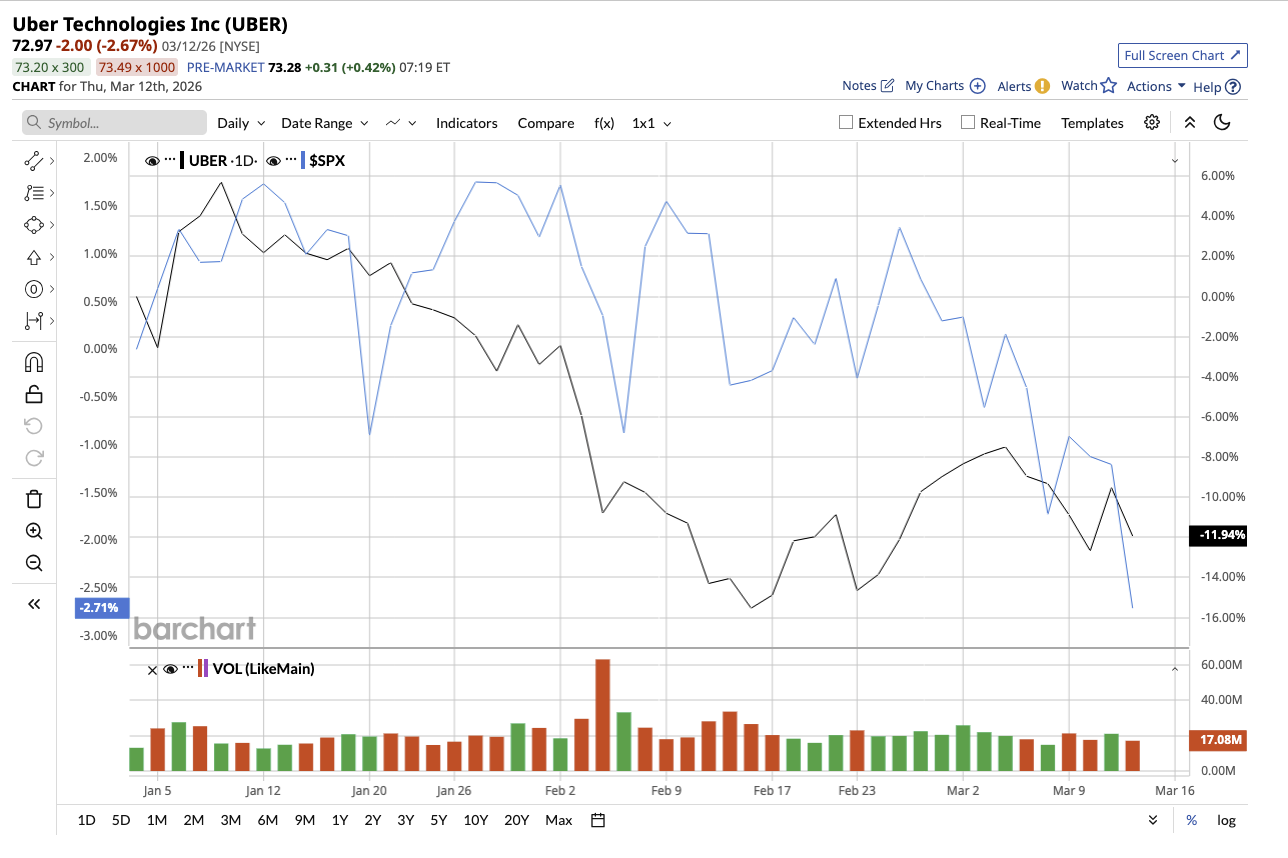
Uber stock is down 10% year-to-date (YTD) and 28.3% from its 52-week high. Is Uber stock a buy as the robotaxi market begins to take shape?
Uber, Nissan, and Wayve Plan Tokyo Robotaxi Pilot
On March 12, Uber announced a partnership with Nissan Motor and U.K. autonomous driving startup Wayve to develop robotaxis. The company plans to begin a test program in Tokyo by late 2026. According to the agreement, Nissan will provide electric vehicles (EVs), notably the Nissan Leaf, equipped with Wayve's autonomous driving technology. These vehicles will then operate on the Uber platform, allowing customers in Tokyo to hail robotaxis directly from the Uber app. The initial rollout will be carried out by trained safety drivers inside the vehicles to ensure safe operations.
Nissan CEO Ivan Espinosa stated that the launch will determine if the relationship will expand beyond Japan. The Tokyo trial program will be Uber's first AV collaboration in Japan. If successful, it will be a significant step toward the company's larger worldwide robotaxi goals.
Uber-Amazon's Zoox Partnership Expands U.S. Robotaxi Plans
Prior to this, Uber had announced its partnership with Zoox, Amazon’s self-driving unit. In 2020, the retail and tech giant acquired Zoox for $1.2 billion to develop purpose-built driverless vehicles designed specifically for ride-hailing. These vehicles have no steering wheel or pedals and are designed for totally autonomous operation. Under the partnership agreement, Zoox robotaxis will be available through the Uber platform for eligible trips in the U.S. The company is planning the first deployments in Las Vegas in summer 2026, followed by an expansion to Los Angeles in mid-2027.
What is Uber’s Unique Strategy in the Robotaxi Race?
Uber's strategy is unique. Unlike Waymo and Tesla, which want to manage their own fleets, Uber is adopting a platform strategy. Instead of manufacturing its own AVs, the company intends to collaborate with partners to create a worldwide robotaxi ecosystem. The benefits of this strategy include reduced R&D expenses for building AVs and faster scalability across cities and countries. Furthermore, Uber’s vast network advantage will generate enormous demand. According to the company, early data shows that AVs on Uber’s platform are already showing about 30% higher trips per vehicle per day compared to standalone AV fleets.
Uber’s core business is also firing on all cylinders. In the fourth quarter, trips on the platform reached an annual run rate of 15 billion, while the company’s global user base surpassed 200 million monthly active users. Uber’s earnings grew 27% in the quarter to $0.71 per share. The company generated $9.8 billion in free cash flow and ended the quarter with $7.6 billion in unrestricted cash, cash equivalents, and short-term investments. Financially, Uber is well positioned to invest in future growth areas like AVs.
AVs have the potential to drastically lower driver costs, which are now one of Uber's highest expenses. In addition, it will increase vehicle utilization. If robotaxis can scale successfully, they might significantly enhance Uber's profitability over time.
During its recent Q4 earnings call, management emphasized that AVs could unlock a multi-trillion-dollar opportunity for the company. Uber has already collaborated with over two dozen AV developers, including Waymo, Wayve, Waabi, Nuro, Avride, and Nvidia (NVDA). It intends to launch robotaxi services in up to 15 cities globally by the end of 2026.
What Are Analysts Saying About UBER Stock?
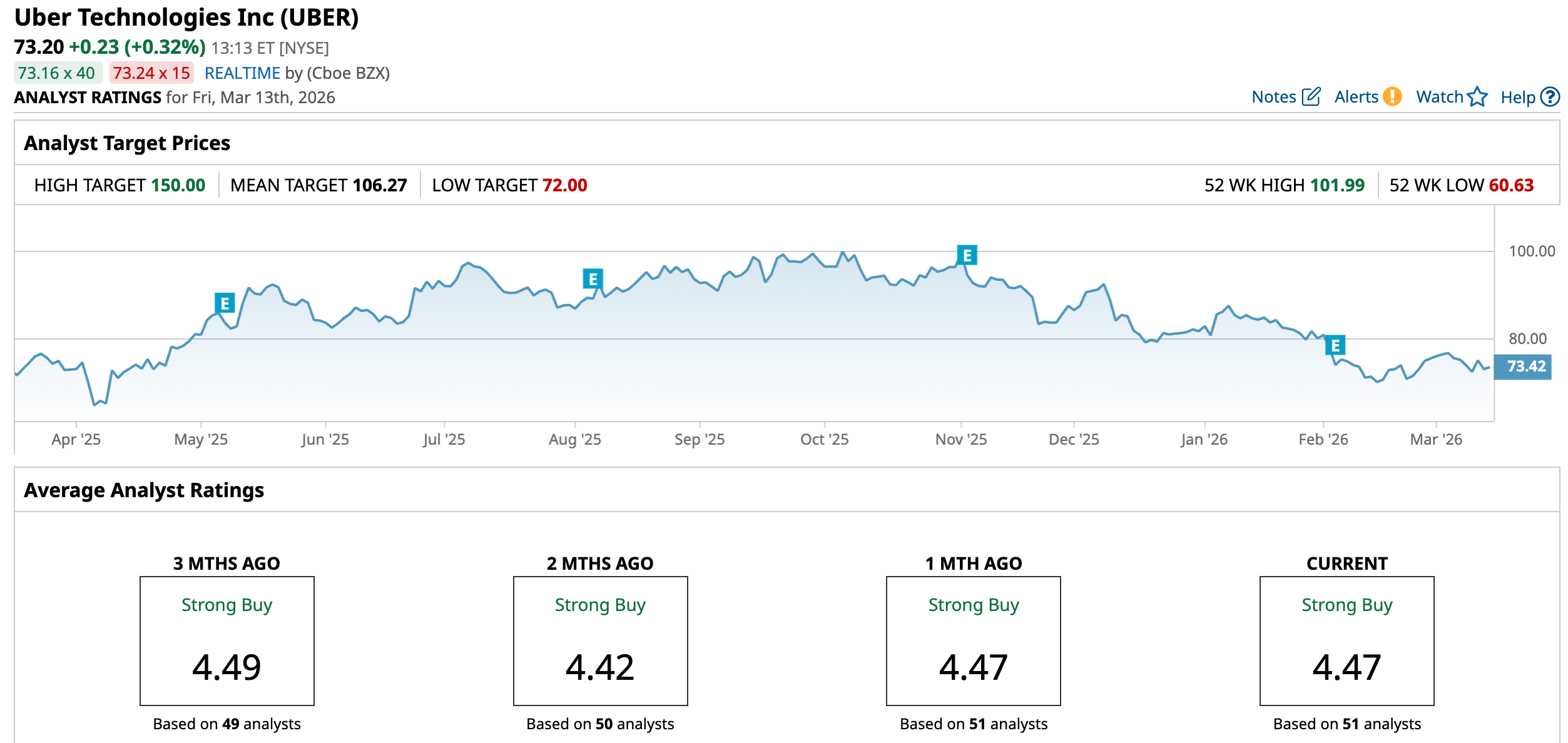
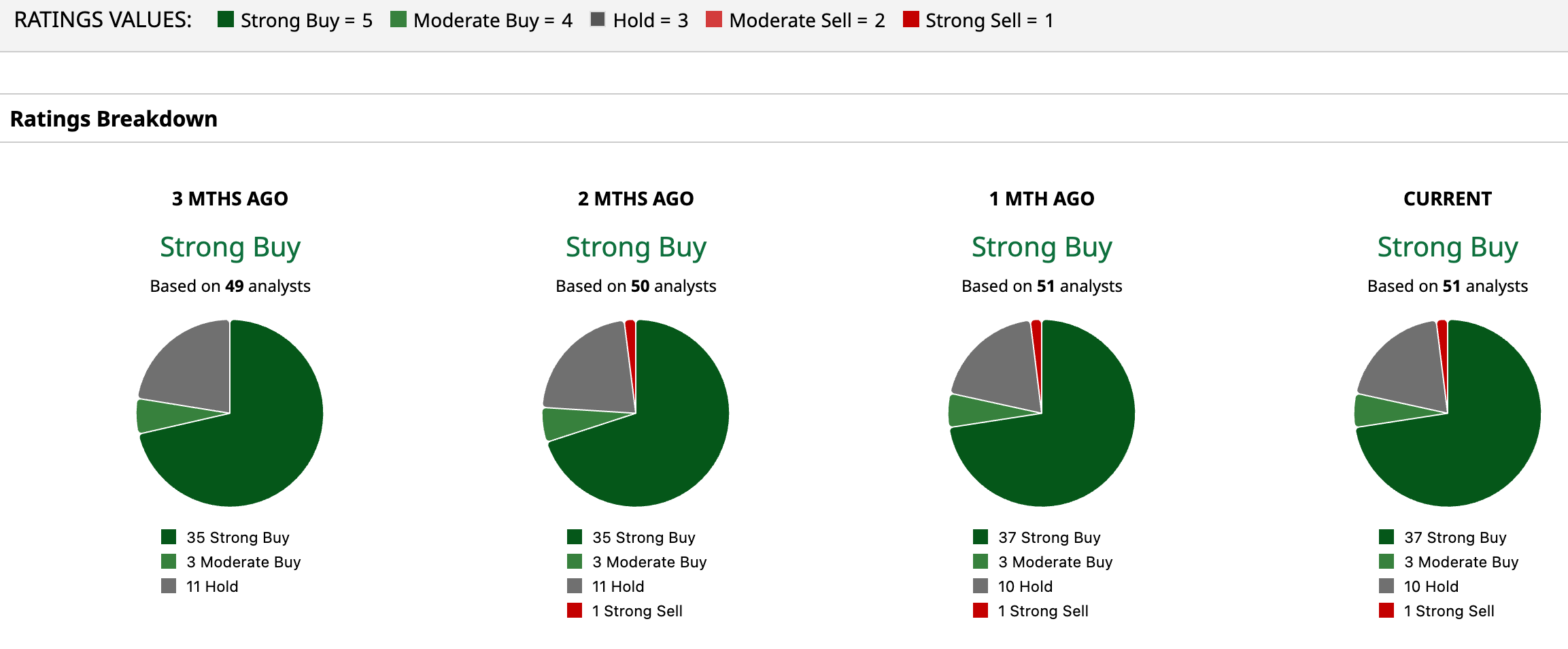
On Wall Street, UBER stock remains a “Strong Buy." Of the 51 analysts covering UBER, 37 have a “Strong Buy” recommendation, three have a “Moderate Buy” rating, and 10 suggest a “Hold,” and one says it is a “Strong Sell.” Based on the analysts’ average price target of $106.27, UBER stock has upside potential of 45.18% from current levels. Its high price target of $150 suggests the stock can climb as high as 104.9% over the next 12 months.
If robotaxis become mainstream over the next decade, Uber’s expanding robotaxi ecosystem could become a powerful long-term growth driver for the company. With strong profitability, accelerating user growth, and a rapidly expanding robotaxi strategy, Uber appears well-positioned for extended expansion, making the stock a good buy on the dip now.
On the date of publication, Sushree Mohanty did not have (either directly or indirectly) positions in any of the securities mentioned in this article. All information and data in this article is solely for informational purposes. For more information please view the Barchart Disclosure Policy here.
More news from Barchart