What a time it’s been for Twilio. In the past six months alone, the company’s stock price has increased by a massive 76.9%, reaching $257.65 per share. This was partly due to its solid quarterly results, and the performance may have investors wondering how to approach the situation.
Is there a buying opportunity in Twilio, or does it present a risk to your portfolio? See what our analysts have to say in our full research report, it’s free.
Why Is Twilio Not Exciting?
We’re happy investors have made money, but we’re sitting this one out for now. Here are three reasons we avoid TWLO, plus one stock we’d rather own.
1. Lackluster Revenue Growth
Long-term growth is the most important, but within software, a stretched historical view may miss new innovations or demand cycles. Twilio’s recent performance shows its demand has slowed as its annualized revenue growth of 14.7% over the last two years was below its five-year trend. We’re wary when companies in the sector see decelerations in revenue growth, as it could signal changing consumer tastes aided by low switching costs. 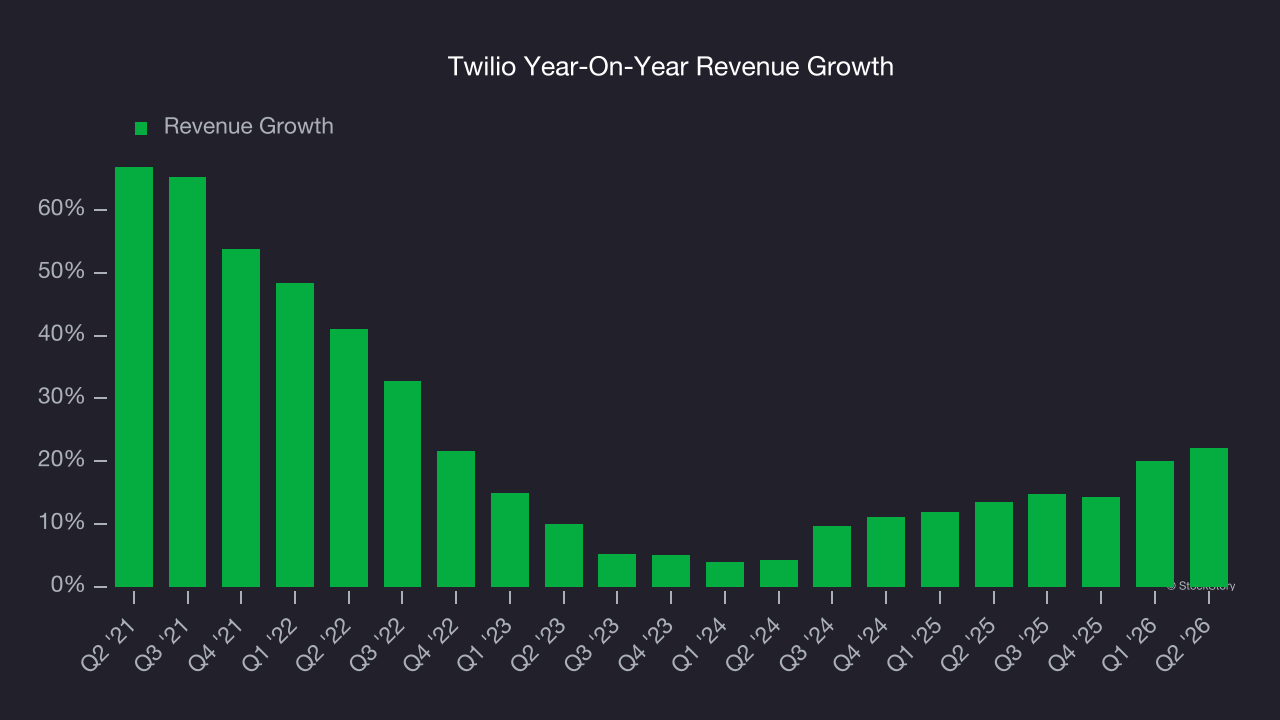
2. Low Gross Margin Reveals Weak Structural Profitability
For software companies like Twilio, gross profit tells us how much money remains after paying for the base cost of products and services (typically servers, licenses, and certain personnel). These costs are usually low as a percentage of revenue, explaining why software is more lucrative than other sectors.
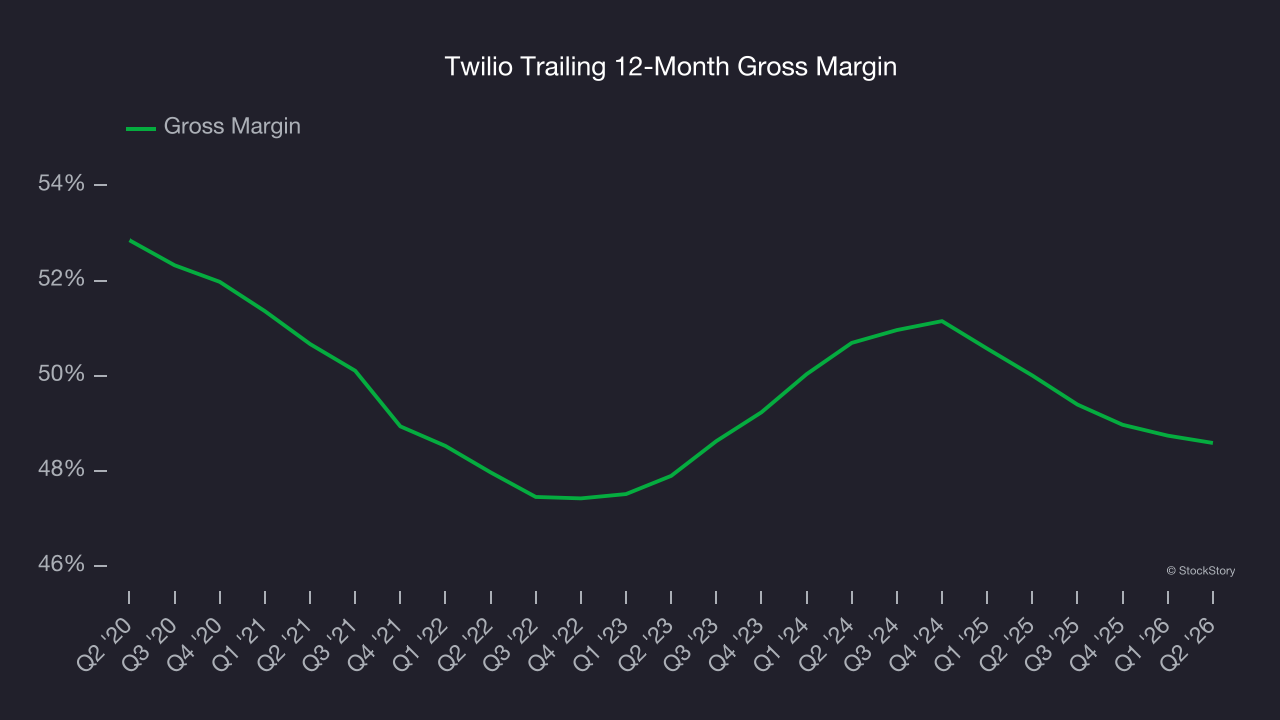
Twilio’s gross margin is substantially worse than most software businesses, signaling it has relatively high infrastructure costs compared to asset-lite businesses like ServiceNow. As you can see below, it averaged a 48.6% gross margin over the last year. That means Twilio paid its providers a lot of money ($51.41 for every $100 in revenue) to run its business.
The market not only cares about gross margin levels but also how they change over time because expansion creates firepower for profitability and free cash generation. Twilio has seen gross margins decline by 2.1 percentage points over the last 2 years, which is among the worst in the software space.
3. Operating Margin Rising, Profits Up
While many software businesses point investors to their adjusted profits, which exclude stock-based compensation (SBC), we prefer GAAP operating margin because SBC is a legitimate expense used to attract and retain talent. This is one of the best measures of profitability because it shows how much money a company takes home after developing, marketing, and selling its products.
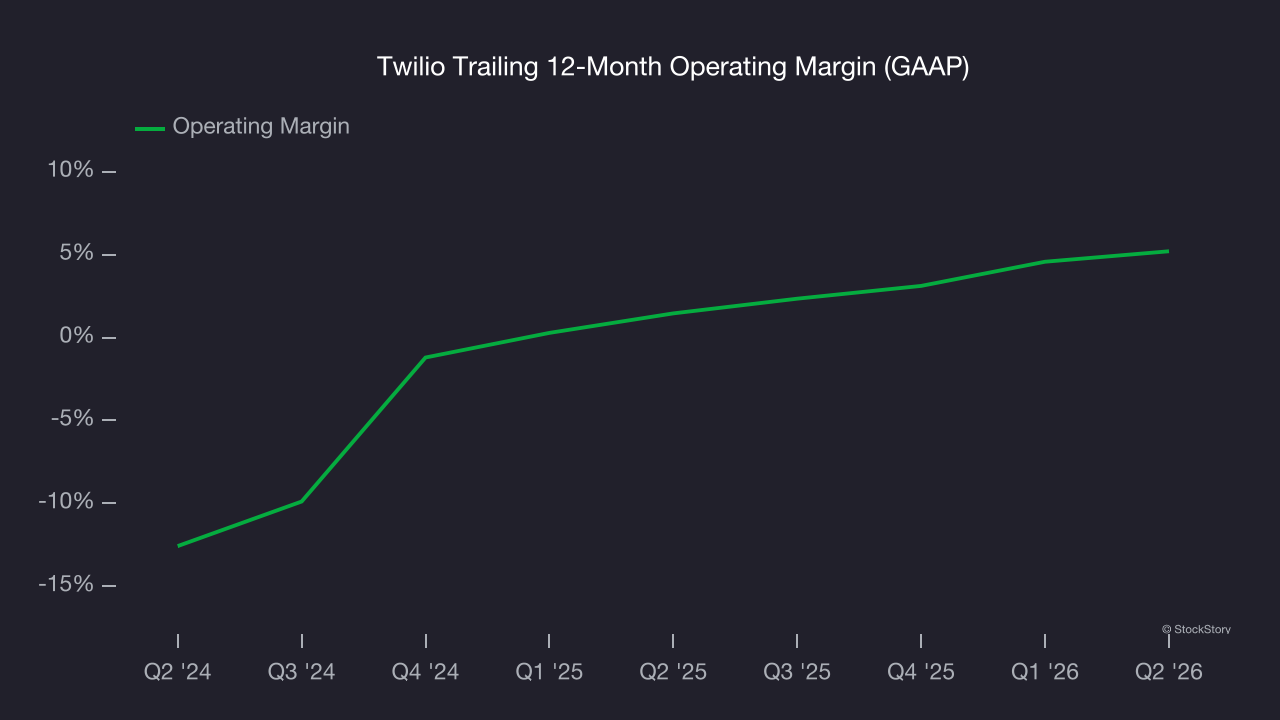
Looking at the trend in its profitability, Twilio’s operating margin rose by 3.7 percentage points over the last two years, as its sales growth gave it operating leverage. Its operating margin for the trailing 12 months was 5.2%.
Final Judgment
Twilio isn’t a terrible business, but it doesn’t pass our quality test. Following the recent rally, the stock trades at 6.2× forward price-to-sales (or $257.65 per share). This valuation multiple is fair, but we don’t have much faith in the company. We’re pretty confident there are superior stocks to buy right now. We’d suggest looking at the most entrenched endpoint security platform on the market.
Stocks We Would Buy Instead of Twilio
ALSO WORTH WATCHING: Top 5 Momentum Stocks. The best time to own a great stock is when the market is finally noticing it. These aren’t just high-quality businesses. Something is happening with them right now. Elite fundamentals meet near-term momentum — both boxes checked at the same time.
Find out which stocks our AI platform is flagging this week. See this week’s Strong Momentum stocks — FREE. Get Our Strong Momentum Stocks for Free HERE.
Stocks that have made our list include now familiar names such as Nvidia (+1,460% between June 2020 and June 2025) as well as under-the-radar businesses like the once-micro-cap company Tecnoglass (+1,552% between June 2020 and June 2025). Find your next big winner with StockStory today.